Introduction
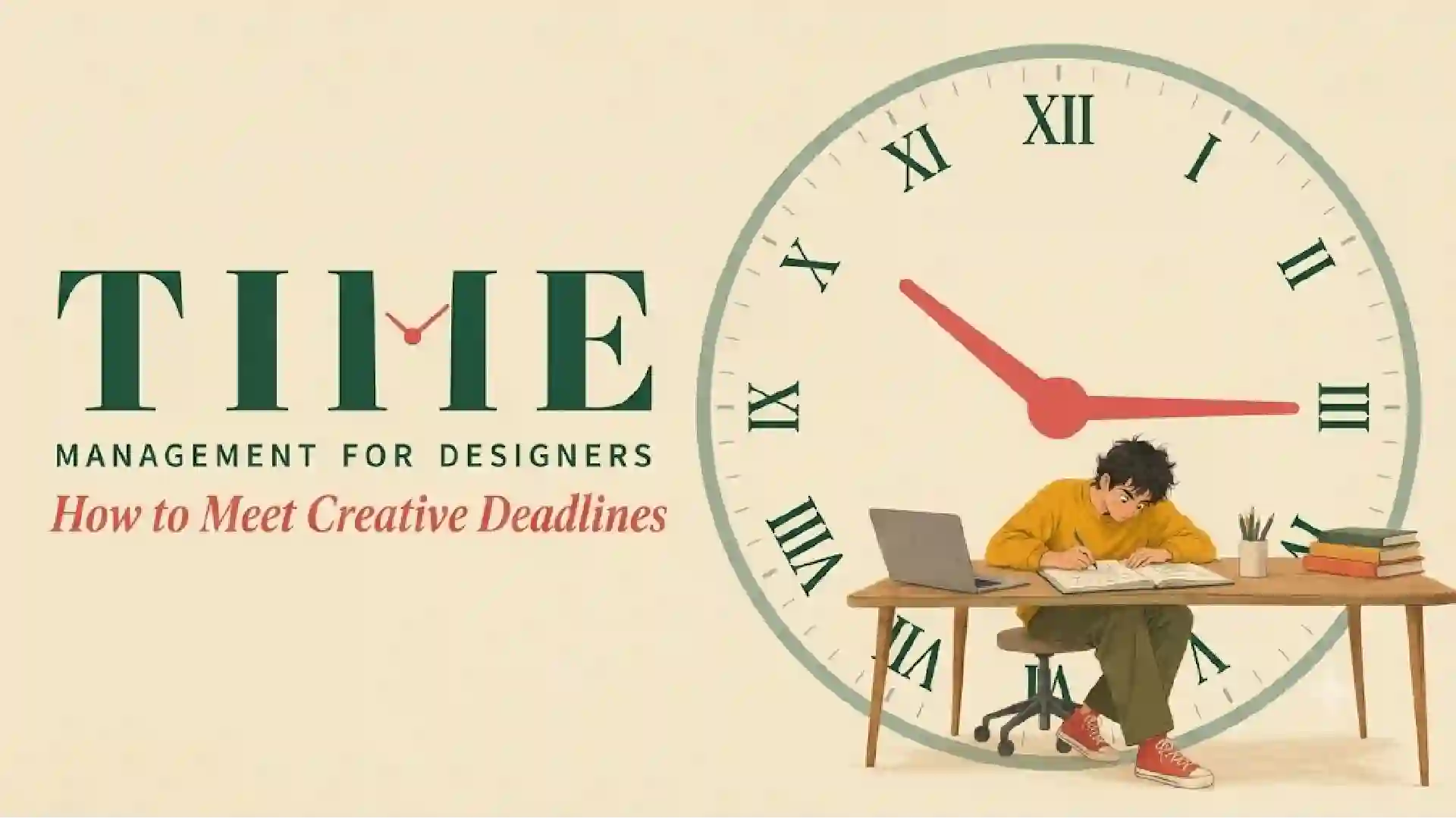
Every creative professional has lived this moment: the deadline was three weeks away, and somehow it is tomorrow. It is rarely a lack of skill that derails a project. It is a lack of structure around how time gets spent. A fashion design student might lose two days perfecting a sketch that needed thirty minutes. A filmmaking student might discover during final edits that half their footage needs reshoots. An animator might realize the render queue alone eats the last twenty-four hours they were counting on for polish.
Different fields, same pattern: creative work tends to expand to fill whatever time is available, and without a system, that time can run out at the worst possible moment. This is less a discipline problem than a structural one, and structural problems respond better to structural fixes than to good intentions or late nights. This is exactly where project management for designers becomes less about restricting creativity and more about protecting it.
Time management for creative students, whether in fashion, filmmaking, photography, or design, is not about working faster or caring less about the craft. It is about recognizing that every project moves through the same four phases, and each phase has its own time traps and its own fixes. Once those four phases are understood as one connected system rather than four separate battles, deadlines start to feel less like emergencies and more like something you can plan around.
The Four Phases Every Creative Project Moves Through
Whether the deliverable is a fashion collection, a UI prototype, a short film, or a photo series, the underlying pipeline looks similar: ideation, revisions, production, and delivery. Many creative professionals treat these as four separate problems, chasing better ideas, faster feedback, or more efficient tools in isolation. But time lost in one phase often shows up as a crisis in the next. An unbounded ideation phase can steal hours from production. An unstructured revision process can steal days from delivery. Learning how to manage design projects usually starts with seeing the pipeline as one connected system rather than four unrelated tasks.
Ideation: Timeboxing Creativity Without Killing It
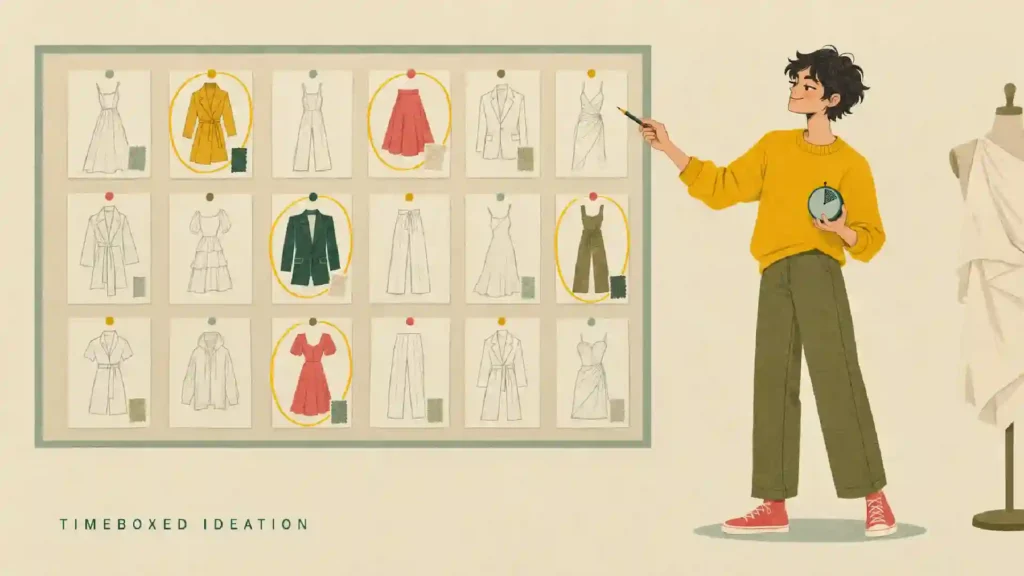
Ideation feels like the phase that should not be rushed, which is part of why it can consume more time than any other stage if left unchecked. Open-ended exploration feels productive in the moment, but without a boundary it can quietly absorb days that were meant for execution.
- Set a fixed exploration window, such as two hours, instead of working “until it feels right”
- Cap the number of concepts to develop, three to five is usually enough to compare real options
- Use constraints like brand guidelines, budget, or format to speed up decision-making
- Separate divergent thinking, generating many ideas, from convergent thinking, narrowing them down
- Write down the decision criteria before generating ideas, so the final choice is not made emotionally at the last minute
In practice: a fashion design student working on a garment concept might spend three hours sketching initial directions, one hour narrowing those down to a final silhouette, and then move directly into development rather than circling back to “just one more version.” The same structure works for a photography student scouting shoot concepts or a UI/UX student sketching wireframe directions, the exact hours will vary by project, but the principle of a fixed window and a hard cutoff stays the same.
Revisions: Building Feedback Loops That Do Not Eat Your Schedule
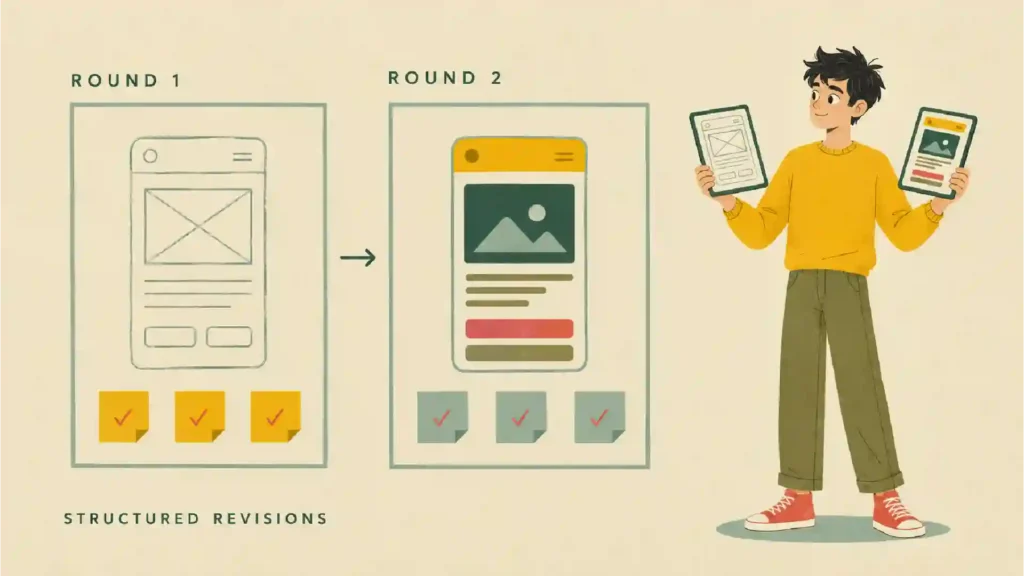
Revisions are often where creative timelines quietly slip, not because the feedback itself is unreasonable, but because it arrives without structure. A single unclear comment can trigger hours of second guessing, and an open door for feedback at any time can mean feedback effectively never stops.
- Batch feedback into scheduled review rounds instead of accepting comments at any time
- Set a clear limit on revision rounds before a project begins, and put it in writing when working with clients
- Use async tools like shared documents or comment threads to cut down on repeated meetings
- Present a client or instructor with two or three refined options instead of one open-ended draft
- Ask reviewers to give feedback against specific criteria, such as clarity, brand fit, or usability
In practice: a UI/UX design student might build in exactly two structured feedback rounds before final submission, one after the wireframe stage and one after the visual design stage, rather than accepting scattered comments throughout the entire project. An animation student showing storyboard drafts to a mentor benefits from the same structure, defined checkpoints tend to shorten revision cycles more reliably than an always open feedback window.
Production: Protecting Deep Work Time
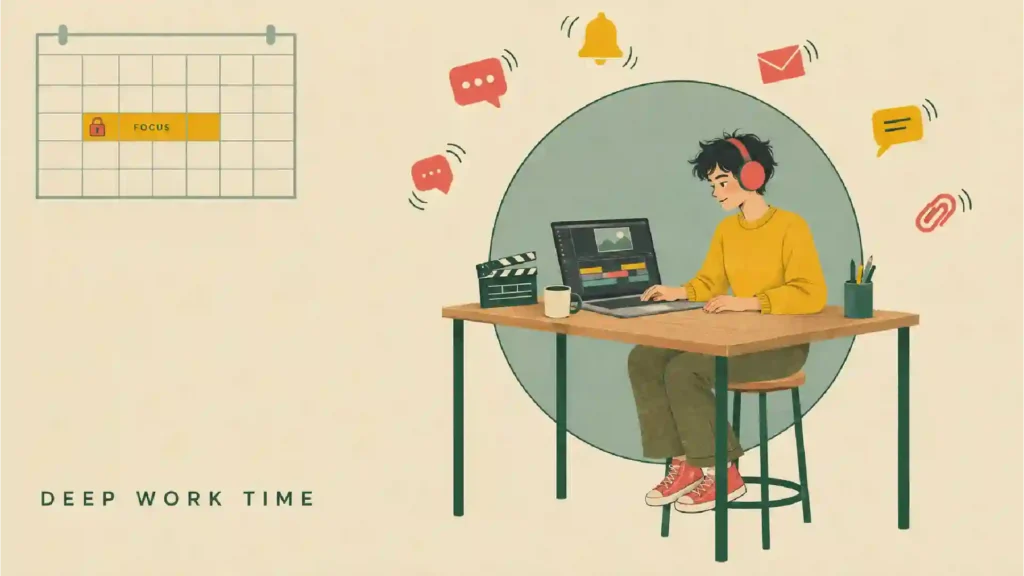
Production is where the actual creative labor happens, and it is also the phase most vulnerable to interruption. Notifications, small task switches, and unplanned requests can each chip away at the focus that production quality depends on.
- Block uninterrupted hours on the calendar and treat them as fixed commitments
- Build a personal library of templates, presets, or reusable assets to avoid repeating setup work
- Prepare a short response for scope creep requests, so a quick addition does not quietly become a redesign
- Batch similar tasks together, such as all file exports or all color corrections
- Track actual time spent per task for a week to identify where focus is being lost
In practice: a filmmaking student editing a short sequence might block two uninterrupted three-hour sessions for the rough cut alone, rather than editing in fragmented twenty-minute windows between other tasks. Frequent task switching can make it harder to maintain focus, and that cost adds up quickly across a project. A photography student retouching a full shoot faces the same drain from constant switching between images and other tasks.
Delivery: Buffer Time and the Art of the Realistic Deadline
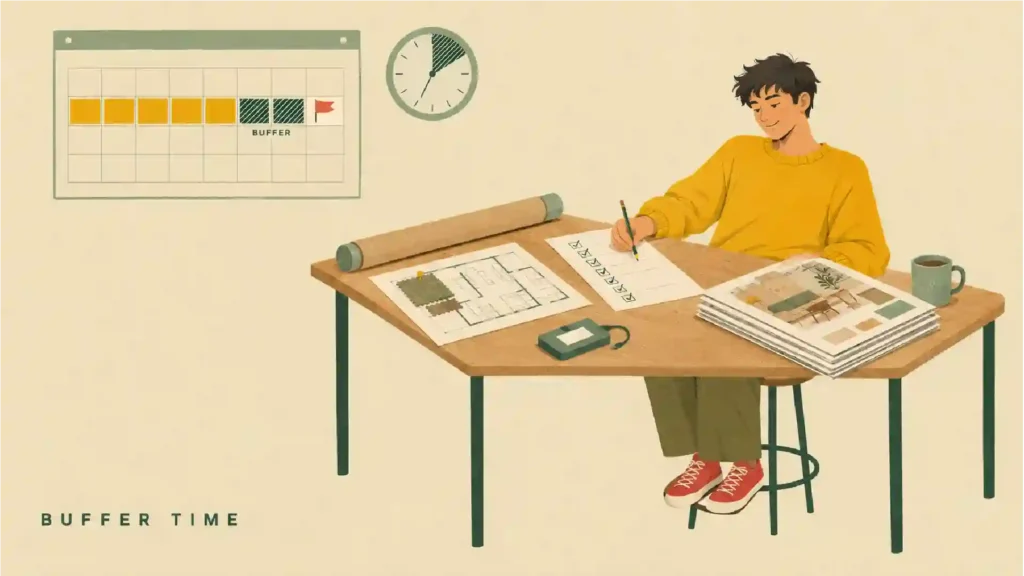
The final phase is where time pressure becomes most visible, but the underlying problem usually started earlier with an estimate that never accounted for anything going wrong.
- Build a 10 to 20 percent buffer into your initial estimate
- Run a final quality check against a written checklist rather than memory
- Prepare files, formats, and naming conventions in advance so handoff does not become its own emergency
- Treat the final review as a separate day from the day the work is technically finished
- Confirm delivery requirements, file types, resolutions, and platform specifications before the deadline
In practice: an interior design student finalizing a client presentation might build a two-day buffer into the original timeline specifically for last-minute plan revisions and print corrections, treating that buffer as non-negotiable rather than something to sacrifice if earlier phases run long. This single habit is one of the more effective ways to avoid missing creative deadlines, regardless of the discipline.
Tools and Systems Creative Professionals Use to Stay on Track
- Google Calendar or Sunsama: best for protecting dedicated production blocks and treating focus time as a fixed commitment
- Trello or Notion: useful for tracking a project’s progress across all four phases, from ideation through delivery, in one visual board
- Pomodoro technique: short focused intervals with breaks, useful for maintaining momentum during long production sessions
- Figma comments or Frame.io: useful when feedback and revisions are the main source of delay, since they keep comments attached directly to the work
- Toggl or similar time trackers: useful for building awareness of where hours are actually going, especially during the first few projects when time estimates tend to be inaccurate
These tools do not replace planning, but they make the planning visible, which is often the missing piece when students are managing their first real creative deadlines.
A Common Pattern Behind Missed Deadlines
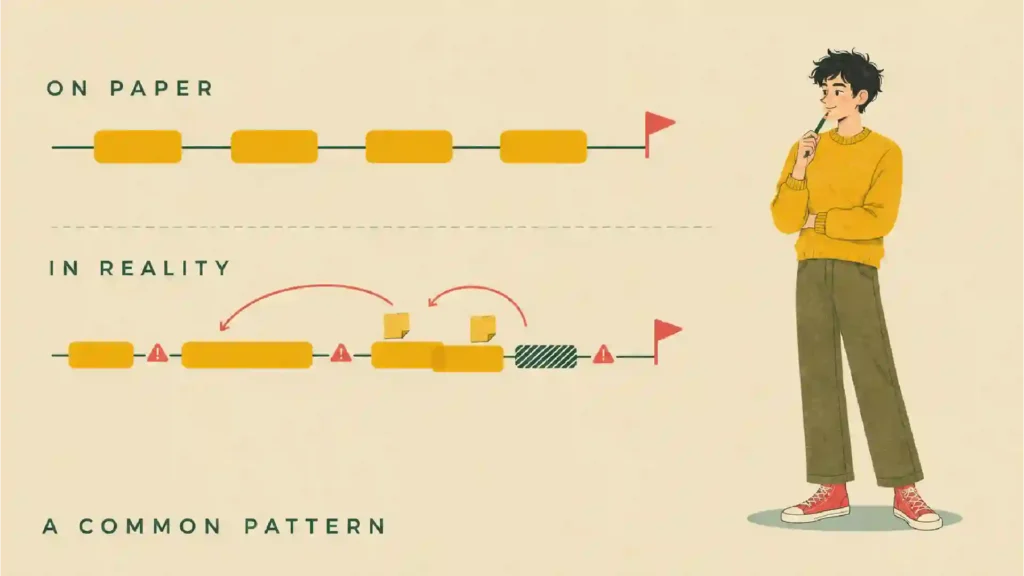
One pattern shows up often enough in creative project planning to be worth naming directly: schedules built around the ideal version of a project, one without feedback delays, technical issues, or last-minute changes.
- This tends to produce timelines that look reasonable on paper but leave little room for the unexpected
- Building revision time and buffer time into the original schedule, rather than adding it in only once a deadline is already at risk, tends to produce more reliable outcomes
- Reviewing how long past revisions actually took, rather than how long they were expected to take, can offer a more realistic planning baseline for future projects
This adjustment will not fix every scheduling issue, but it addresses one of the more common and preventable causes behind missed creative deadlines.
FAQ
Plan for at least one full revision cycle in addition to your first draft, and build in extra time if working with multiple stakeholders.
This depends on scope, but building a 10 to 20 percent buffer into your initial estimate is a reasonable starting point to account for feedback delays and unexpected issues.
Set clear boundaries at the start of a project regarding what is included, and have a polite, prepared response ready for out-of-scope requests.
Time management is generally considered a learnable skill, built through practice, structure, and the right systems, rather than an inborn trait.
The core principles, timeboxed ideation, structured revisions, protected production time, and delivery buffers, apply across creative fields, though the specific time allocations will vary depending on the medium, such as garment construction timelines versus digital editing timelines.
Conclusion
Creative projects often take longer than expected. Without a clear plan, deadlines can become stressful. Project management for designers helps you organize tasks, manage time, and protect your creativity. Instead of relying on late nights, you can build a system that keeps projects on track.
Time management for creative students is essential in fashion, filmmaking, photography, and design. It is not about rushing work or sacrificing quality. It is about understanding the four phases of a project. Each phase has unique challenges and requires a different approach. When these phases work together, managing deadlines becomes easier. You can plan ahead, reduce stress, and focus more on creating your best work.