Introduction
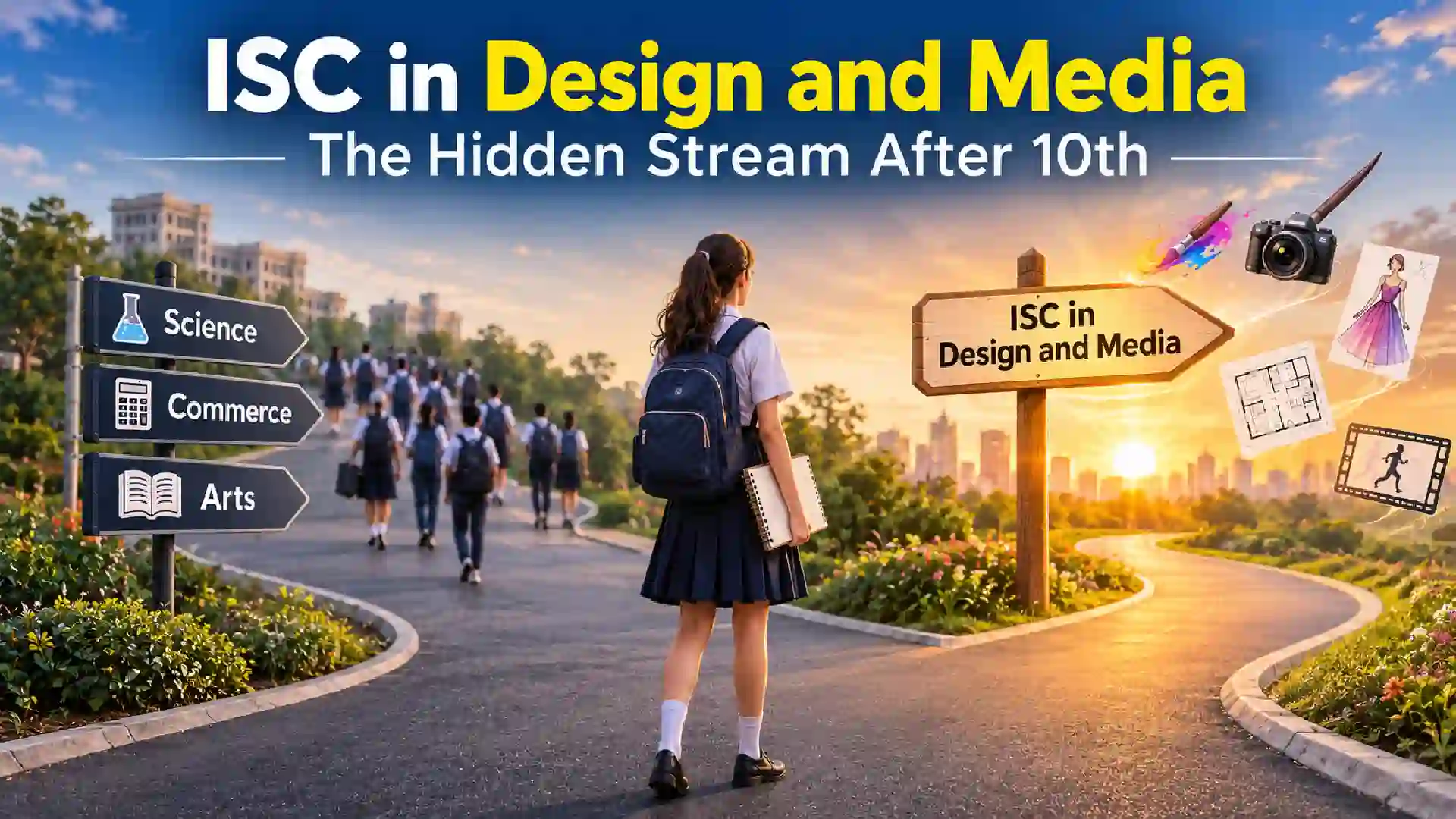
Every student knows the three big names: Science, Commerce, and Arts. Ask anyone what to study after 10th and you will hear the same three answers, usually followed by “choose Science if your marks are good.” But there is another option that stays hidden from most families, and it can change how a creative student’s next two years unfold.
That option is ISC with Design and Media. For students who sketch in the margins of their notebooks, edit videos for fun, or spend hours on photography and digital art, the usual streams can feel like the wrong fit. Many of them choose a stream anyway, then spend two years wondering why studying feels so heavy. The talent is there, but the stream gives it no room to grow.
This guide explains the common streams briefly, then looks closely at ISC with Design and Media: what it is, which creative fields it opens up, who it suits, and why it can be one of the strongest starting points for a creative career. By the end, you should be able to judge whether it deserves a place on your shortlist.
The Streams Everyone Knows, and the One They Do Not
Choosing a stream after 10th is usually treated as a three-way decision. Science, Commerce, and Arts are respected paths, and each leads to excellent careers. But they are built mainly around theory, exams, and academic subjects. A student who learns best by making, designing, and experimenting often has to wait until college to touch real creative work.
- Science: best for students drawn to engineering, medicine, and research
- Commerce: best for students interested in finance, business, and management
- Arts: best for students who enjoy reading, writing, and understanding society
A creative student can succeed in any of these, but the stream itself will not train creative skills. Drawing, filming, and designing remain hobbies squeezed in after homework. That gap is exactly what ISC with Design and Media is built to fill.
Quick Comparison: How the Four Options Differ
The table below shows how ISC with Design and Media compares with the streams most students already know. It is a general overview, since individual schools and programmes vary.
| Feature | Science | Commerce | Arts | ISC with Design and Media |
| Main focus | Theory, maths, lab work | Business, accounts, economics | Humanities, language, society | Design, creativity, media skills |
| Learning style | Problem-solving, practicals | Case studies, numbers | Reading, writing, discussion | Projects, studio work, critiques |
| Skills built by Class 12 | Scientific and analytical | Financial and commercial | Communication and research | Creative, technical, portfolio-ready |
| Portfolio by Class 12 | Not usual | Not usual | Sometimes (writing) | Yes, built from the first year |
| Typical next step | Engineering, medicine, research | CA, CS, BBA, B.Com | Law, journalism, civil services | Design, media, and creative degrees |
| Best for | Analytical thinkers | Business-minded students | Readers and communicators | Creative makers and visual thinkers |
What Is ISC with Design and Media?
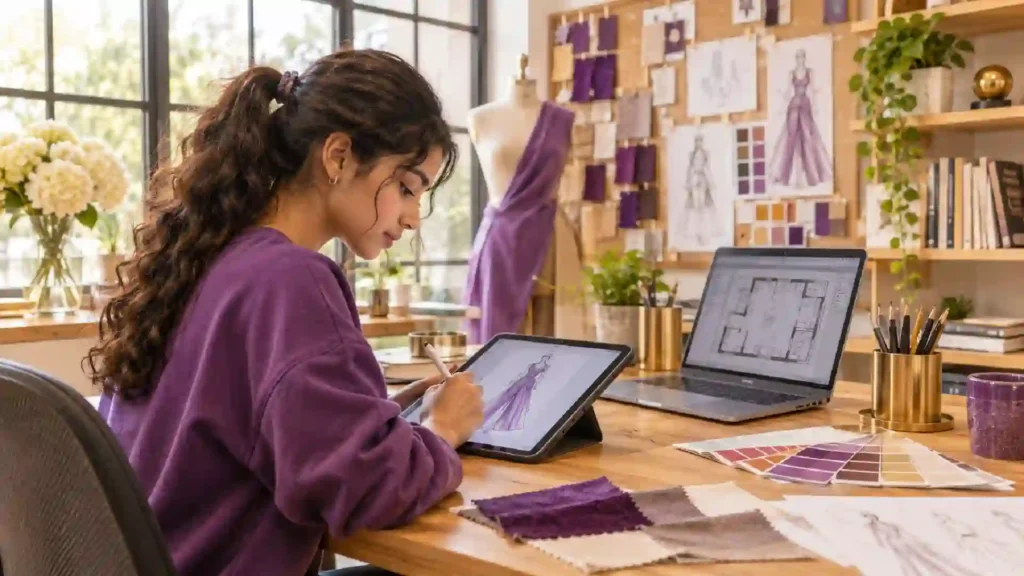
ISC with Design and Media is a creative-focused stream that lets students begin design and media learning while completing Class 11 and 12. Instead of treating creativity as a hobby, it treats it as a serious, structured subject with a clear career path.
- Hands-on learning through projects, studio work, and critiques
- Exposure to multiple creative fields before you commit to one
- Portfolio building from the first year
- Mentoring from design and media practitioners
- Preparation for design entrance exams and creative degree programmes
- Time to develop both creative and academic skills side by side
The biggest difference from a regular stream is how you spend your day. Instead of only listening, memorising, and writing exams, you spend a good part of your time making things: sketches, layouts, short films, photo series, and prototypes. Mistakes become part of the process, because every project is reviewed and improved.
In practice: a student who loves drawing might spend Class 11 exploring sketching, colour theory, and basic digital tools, then build a portfolio of ten to fifteen strong pieces by Class 12. That portfolio becomes useful for college applications, entrance exams, and early internships.
The Creative Fields You Can Explore
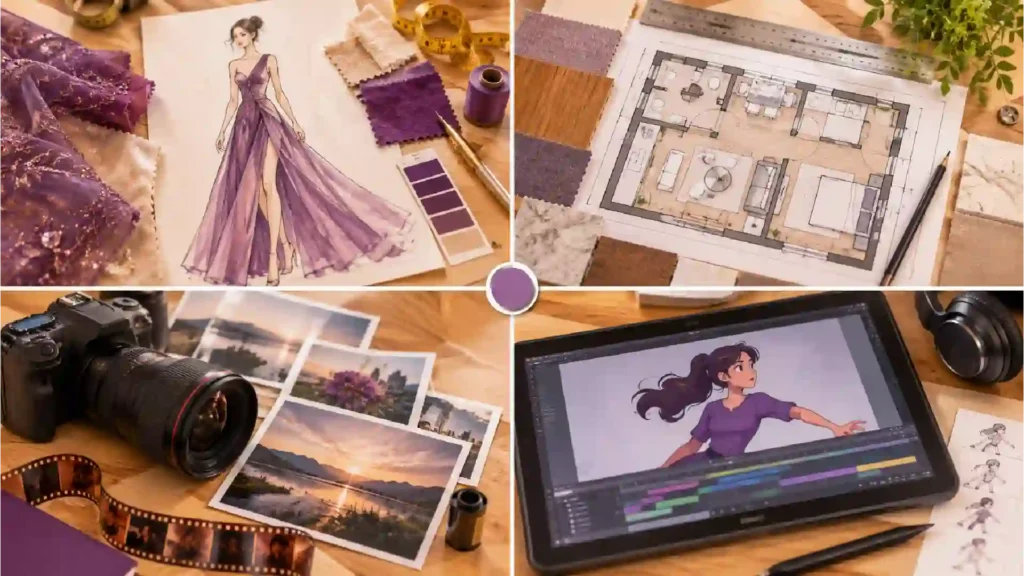
One of the biggest strengths of this stream is that you do not have to decide your exact career at 15. You can explore several fields and find your direction through real experience. Most students are surprised by which field they end up loving, and it is often not the one they walked in with.
Fashion and Textile Design
For students who think in fabric, colour, and silhouette. You learn sketching, garment concepts, and how trends become real clothing. You also learn to explain your ideas visually, which is a core skill for any designer.
Career options: fashion designer, stylist, textile designer, merchandiser, fashion entrepreneur.
Interior Design
For students who notice spaces, layouts, and how rooms make people feel. You learn space planning, materials, and visual presentation. Even simple exercises, like redesigning a classroom corner, teach you to think about function and mood together.
Career options: interior designer, space planner, set designer, exhibition designer.
Photography and Digital Filmmaking
For students who see stories through a lens. You learn composition, lighting, editing, and visual storytelling. You also learn the practical side: planning a shoot, managing time, and delivering a finished piece.
Career options: photographer, filmmaker, video editor, cinematographer, content creator.
Multimedia: Graphic Design, UI/UX, Animation and VFX
For students who love screens, apps, and digital worlds. You learn visual communication, interface design, and motion. These skills sit at the centre of how brands, apps, games, and entertainment are made today.
Career options: graphic designer, UI/UX designer, animator, VFX artist, game designer.
Fields and Careers at a Glance
| Field | What You Practise | Possible Career Paths |
| Fashion and Textile Design | Sketching, garment concepts, trend study | Fashion designer, stylist, textile designer |
| Interior Design | Space planning, materials, presentation | Interior designer, set designer, exhibition designer |
| Photography and Digital Filmmaking | Composition, lighting, editing, storytelling | Photographer, filmmaker, video editor |
| Multimedia | Graphic design, UI/UX, animation, VFX | Graphic designer, UI/UX designer, animator |
Why ISC with Design and Media Can Be the Best Choice
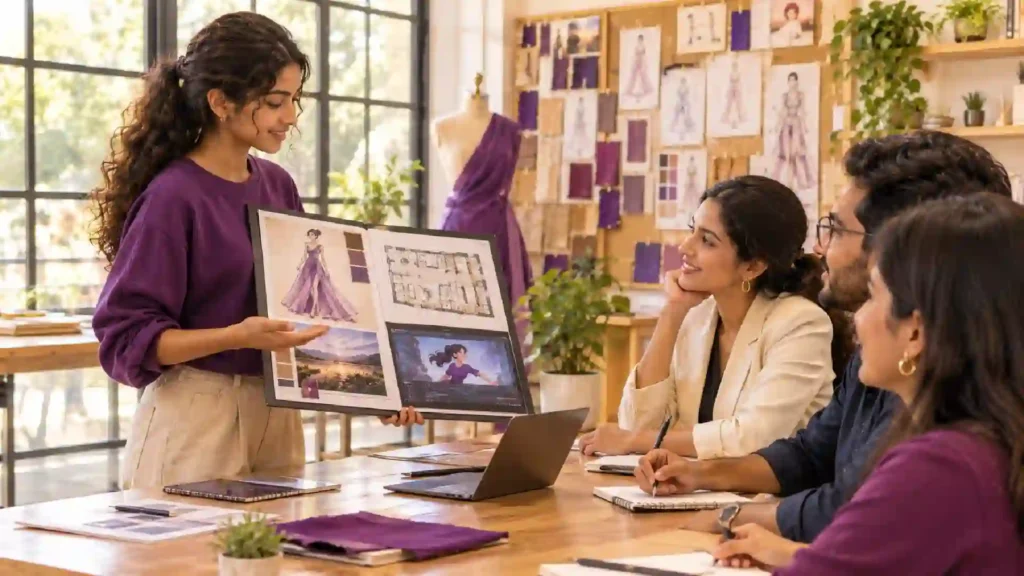
The strongest reason ISC with Design and Media can be the best choice after 10th is simple: you start building real skills years earlier than most students. Here is how that advantage shows up.
- Early skill advantage: by Class 12, you already have practical experience that others begin in college
- Portfolio ready: design colleges and employers care about your work, not just your marks
- Entrance exam support: creative exams such as NIFT, NID, and UCEED reward drawing, creativity, and design thinking
- Career clarity: exploring several fields helps you choose with confidence rather than guesswork
- Growing industry: design, animation, content, and digital media continue to create new job roles every year
- Better engagement: students who enjoy what they study tend to stay motivated and perform better
There is also a confidence benefit. Creative students in regular streams often feel like their best abilities do not count. In a design-focused stream, those abilities are the main subject. Your sketchbook, your edits, and your photographs become proof of progress, not distractions from it.
In practice: a student who joins at 15 and spends two years building projects can enter college with a portfolio, a clearer specialisation, and even small freelance experience, while classmates from other streams are just starting to explore.
An Example of How Two Years Could Look
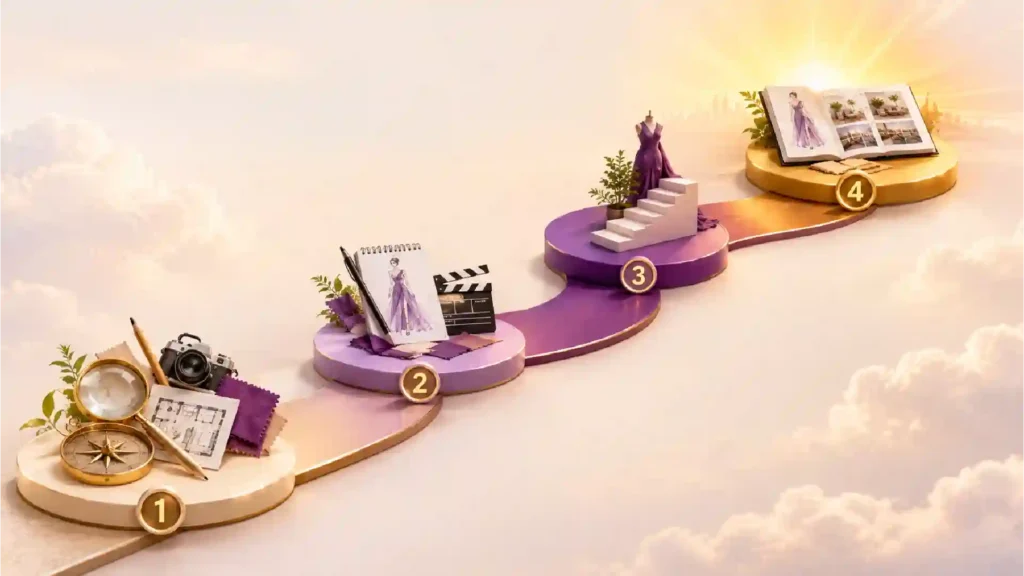
This is an illustration of how a student might use the two years, not an official syllabus.
| Stage | Focus | Outcome |
| Early Class 11 | Explore all creative fields, build basic drawing and digital skills | Discover what you enjoy most |
| Late Class 11 | Try small projects in two or three fields | Narrow down your interests |
| Early Class 12 | Deepen one or two fields, begin portfolio selection | A focused set of strong projects |
| Late Class 12 | Finalise portfolio, prepare for entrance exams and applications | Ready for design colleges and internships |
Who Should Choose This Stream?
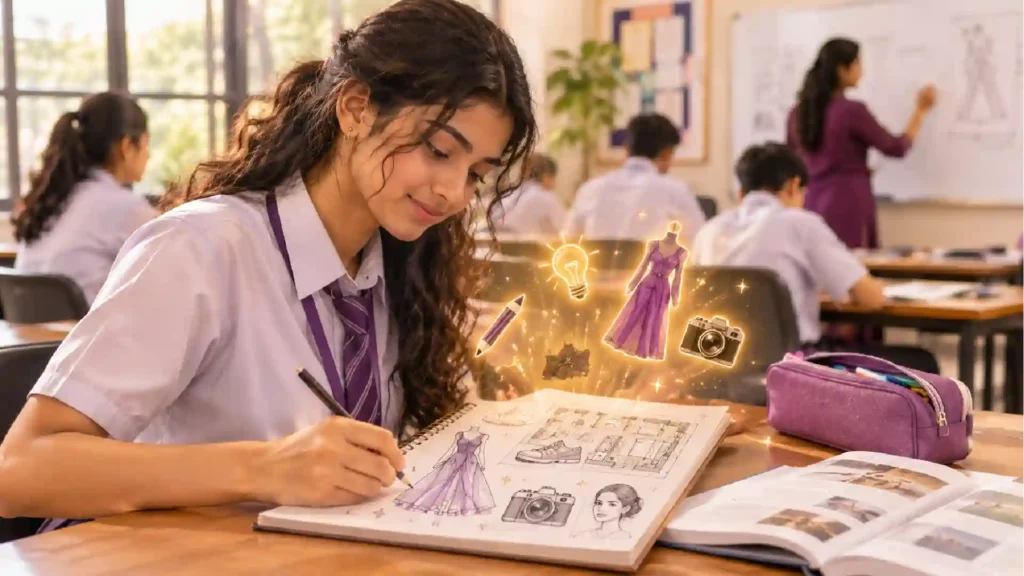
This stream works best if several of these sound like you:
- You enjoy drawing, designing, filming, editing, or creating things in your free time
- You learn better by doing than by memorising
- You prefer projects and portfolios over only written exams
- You are curious about careers in fashion, interiors, media, or digital design
- You want to start a creative career early instead of waiting until after graduation
- You often notice design details, such as layouts, colours, and clothing, that others miss
If you are unsure, try a simple test: which activity could you do for three hours without noticing the time? If the answer is sketching, editing, styling, or shooting, that is a strong sign. Interest matters more than current skill, because skill grows with guidance and practice.
Resources That Help You Decide
- Official design institute websites: Useful for understanding eligibility, entrance patterns, and career paths
- Portfolio reviews: Helpful for seeing where your skills stand today
- Campus visits and open days: Show what studio life really looks like
- Conversations with designers and students: Give a realistic picture of creative work
- Online tutorials and design communities: Let you test your interest before committing
These resources do not make the decision for you, but they replace assumptions with real information, which is often what students and parents are missing.
A Common Mistake Students Make
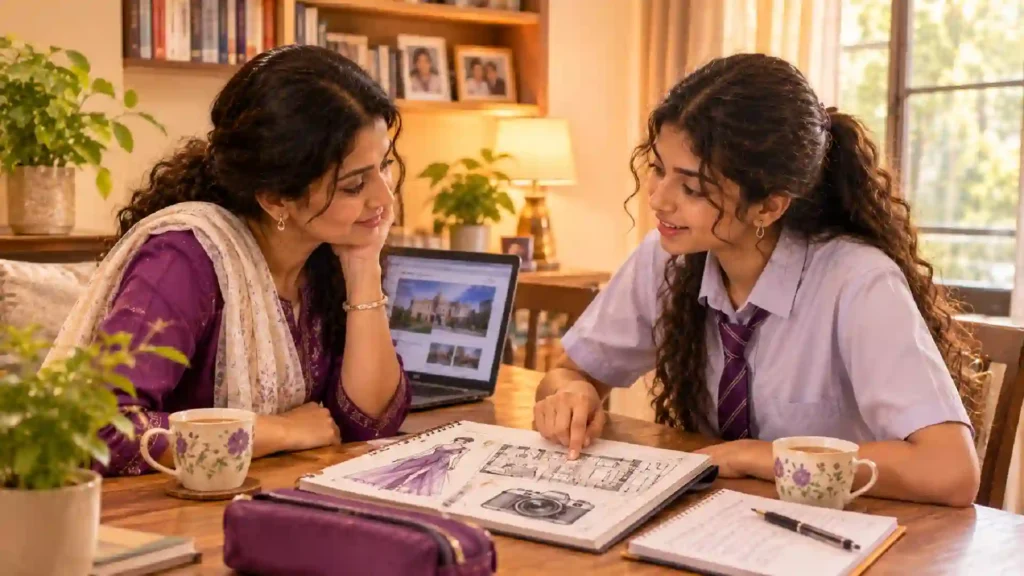
One pattern shows up often among students deciding after 10th choosing a stream because it looks safe or prestigious, while ignoring where their real talent lies.
- Creative students are often told design is “just a hobby”
- Choosing Science only because of high marks can lead to years of disinterest
- Parents may not know that structured design education exists at school level
- Reviewing what you naturally create, not just what scores well, offers a more honest guide
- Waiting until college to start creative training means starting behind students who began earlier
Creativity is a skill that grows with practice, and starting early is a real advantage. A few weeks of research now can save years of second-guessing later. Talk to your parents with facts: show them the career options, the entrance exams, and the portfolio route. A clear plan is far more convincing than a passing interest.
FAQ
It can be, because it values creativity and practical skill alongside academics. You will still need to complete your school subjects, but your strengths in design can shine.
Not necessarily. Interest and willingness to learn matter more. Drawing skills develop with practice and guidance.
Yes, many designers come from those streams. ISC with Design and Media simply gives you a head start in skills and portfolio.
Fashion design, interior design, photography, filmmaking, graphic design, UI/UX, animation, VFX, and many related creative careers.
It keeps creative and design careers wide open. If you want a different path later, discuss your options with a counsellor early.
Yes, the stream is designed to balance both. Good time management, such as planning your week around projects and study, makes the workload manageable.
Conclusion
Choosing a path after 10th does not have to mean picking from the same three options everyone else does. For students who think visually, build things, and love to create, ISC with Design and Media offers a structured, practical, and exciting way to begin.
It lets you explore fashion, interiors, filmmaking, photography, and digital design while still completing school, and it helps you build a portfolio that opens doors. If you are a creative student who has always felt like the usual streams were not made for you, this hidden option may be the one that fits.
Fashion and Textile Design
Interior Design
Photography and Digital Filmmaking
Multimedia (Graphic Design, UI/UX, Animation and VFX)