Introduction
Choosing between the many career options in the creative industry can feel overwhelming. Should you design clothes, plan interiors, edit films, or build apps? Every path promises creativity, but each one demands different skills, training, and work styles.
This guide explains the top career options in design and media so you can compare them with confidence. For each path, you will see what the work involves, who it suits, which skills you need, and how to get started. Whether you are a student or a graduate planning a change, knowing your career options early saves time, effort, and money.
Many students pick a path because friends choose it or it looks popular online, then find the daily work does not suit them. Understand the roles first, then match them to your personality, skills, and goals.
In this guide, you will learn:
- What each path involves day to day
- Skills, portfolio, and training needed
- How similar roles differ
- A five-step method to choose
Quick answer: For this guide, we group creative career options into two broad areas: design (fashion and interior design) and media (graphic design, UI/UX, video, animation, photography, and filmmaking). Design suits hands-on creators who like materials and spaces, while media suits those who enjoy software, screens, and storytelling. The right choice depends on your strengths, your interests, and the kind of training you are ready to commit to.
Why the Creative Industry Offers Strong Career Options
Creative skills are needed in almost every sector, and India’s media and entertainment industry shows how quickly demand is growing. The latest data:
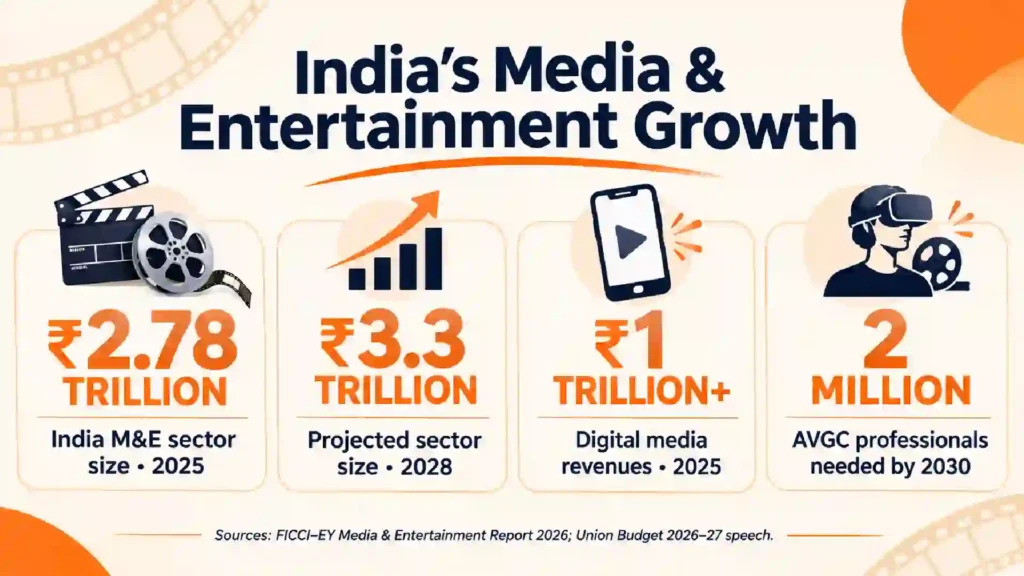
- Sector growth: the FICCI-EY Media & Entertainment Report 2026 found that the sector grew 9% to ₹2.78 trillion in 2025 and is projected to reach ₹3.3 trillion by 2028. Digital media became the largest segment, crossing ₹1 trillion for the first time, and digital advertising rose 26% to ₹947 billion, a shift that favors digital design, video, and motion skills. Growth is uneven, though: animation and VFX, which the report lists among the expected growth drivers, grew just 2% in 2025 (source).
- Talent demand: the Union Budget 2026-27 speech describes India’s animation, visual effects, gaming and comics (AVGC) sector as a growing industry projected to require 2 million professionals by 2030. It also proposes supporting the Indian Institute of Creative Technologies (IICT), Mumbai in setting up AVGC Content Creator Labs in 15,000 secondary schools and 500 colleges (source: Union Budget 2026-27 speech, paragraph 60).
Career Options in Design
Design careers focus on shaping physical products, garments, and spaces. The two main paths are fashion design and interior design.
Fashion Design Career Options
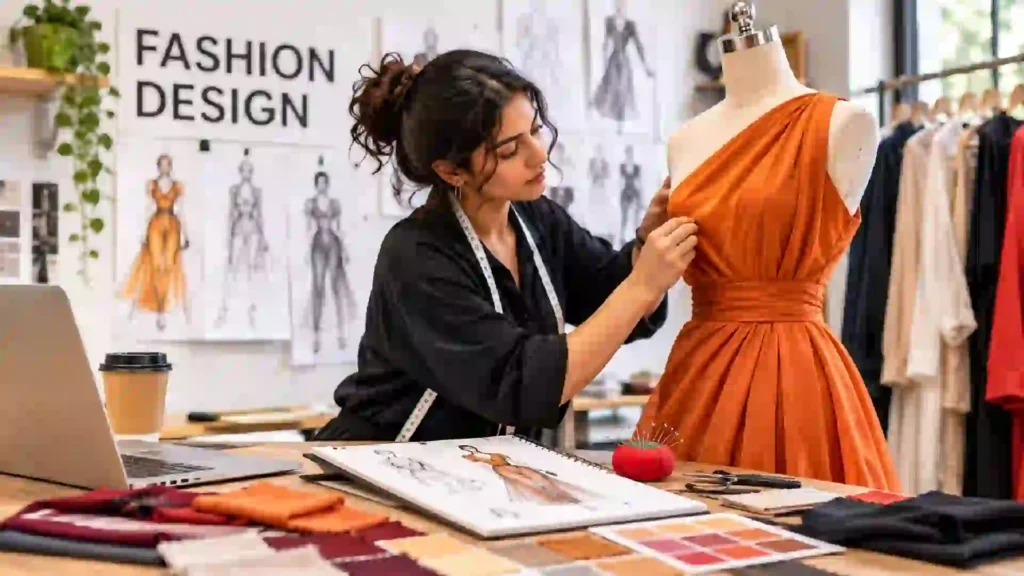
- What you do: Turn trends and ideas into sketches, patterns, and finished garments.
- Best for: People who love fabric and color, enjoy hands-on making, and follow trends closely.
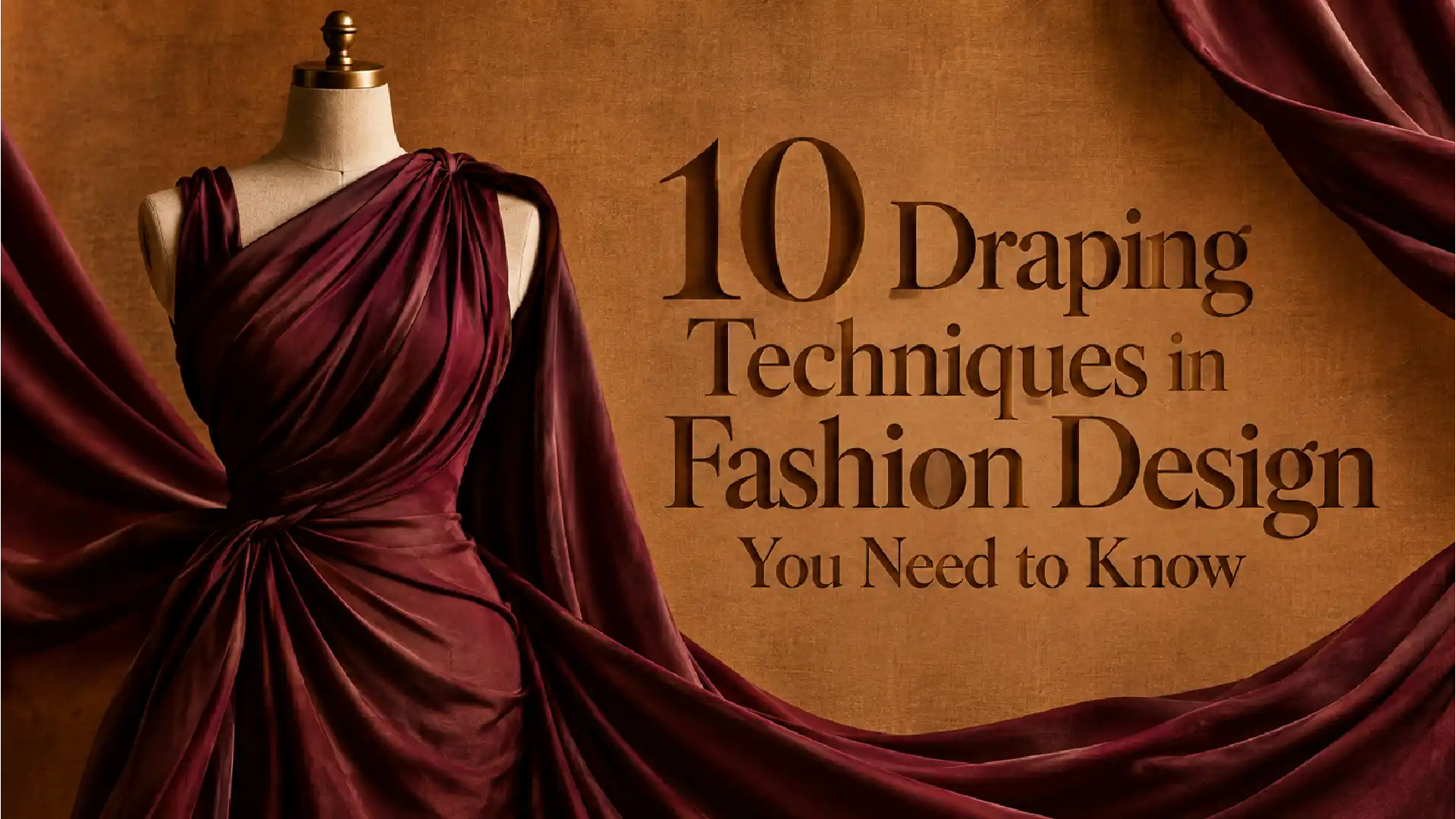
- Key skills: Sketching, draping, pattern making, textile knowledge, and an eye for fit.
- Typical workday: Researching trends, sketching designs, choosing fabrics, and reviewing samples with tailors or suppliers.
- Portfolio to build: A small capsule collection with sketches, swatches, technical drawings, and photographs of finished pieces.
- Where you can work: Fashion houses, boutiques, export units, and retail brands, often starting as a design intern, assistant designer, or pattern maker.
- Roles compared: A fashion designer creates garments, a stylist combines existing pieces into looks, a textile designer develops fabrics and prints, and a merchandiser plans what to make and sell.
- What to study: A diploma or certificate in fashion and textile design, such as LeMark’s fashion and textile design courses.
Interior Design Career Options

- What you do: Plan and style functional, attractive spaces, from concept to finished site.
- Best for: People who enjoy visualizing spaces, solving layout problems, and working with clients.
- Key skills: Space planning, technical drawing, material knowledge, 3D visualization software, and client communication.
- Typical workday: Meeting clients, drawing layouts, selecting materials and furniture, and visiting sites to check progress.
- Portfolio to build: A few complete projects showing floor plans, mood boards, 3D renders, and material selections.
- Where you can work: Interior design firms, architecture studios, and furniture or decor brands, often starting as a junior designer or design assistant.
- Roles compared: An interior designer handles the full space, a space planner focuses on layout and flow, and an exhibition designer creates temporary displays for events and showrooms.
- What to study: A diploma or certificate in interior design, such as LeMark’s interior design courses.
Career Options in Media
Media careers focus on visual communication, digital tools, and storytelling. They suit people who enjoy software, screens, and ideas that move audiences.
Graphic Design, UI/UX, and Animation Career Options
Roles in this group include graphic designer, UI/UX designer, video editor, motion graphics artist, and 2D/3D animator.
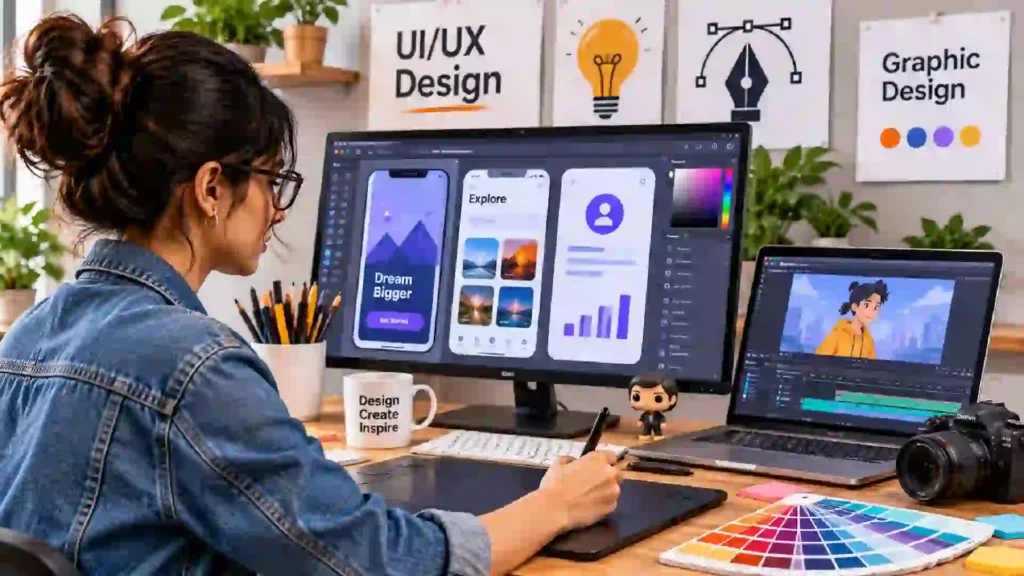
- What you do: Create visuals, interfaces, and animated content for brands, apps, and screens.
- Best for: People who are comfortable with software, enjoy problem solving, and like seeing their work on screens.
- Key skills: Design software, typography, color, layout, video editing, and animation principles. UI/UX adds user research and wireframing.
- Typical workday: Receiving a brief, creating drafts, collecting feedback, and revising until the client approves.
- Portfolio to build: A brand identity project, a mobile app or website case study, an edited video, and a short animation.
- Where you can work: Design agencies, advertising firms, startups, animation studios, and in-house brand teams, often starting as a junior designer, video editor, or animation assistant.
- Roles compared: Graphic designers create visuals for print and brand identity, while UI/UX designers shape how apps and websites work and feel to use.
- What to study: Graphic design, UI/UX and animation courses range from 6-month professional certificates to 3-year professional diplomas.
Photography and Filmmaking Career Options
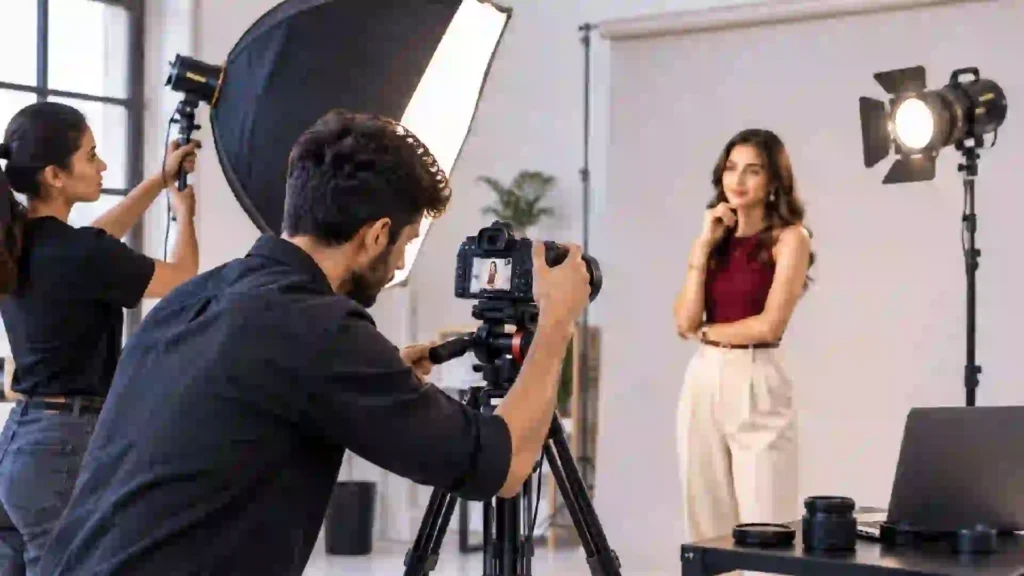
- What you do: Capture and shape stories through still and moving images.
- Best for: People with a strong visual eye, patience, and a love of storytelling.
- Key skills: Camera handling, lighting, composition, editing, and storytelling.
- Typical workday: Planning a shoot, setting up lights and equipment, shooting, then editing and delivering files.
- Portfolio to build: A photo series, a short film, and a sample brand or product shoot.
- Where you can work: Production houses, studios, agencies, media companies, and event teams, often starting by assisting a photographer or film crew.
- Roles compared: A photographer focuses on still images, a filmmaker manages story, direction, and production, and a content creator makes regular photo and video content for platforms.
- What to study: A diploma or certificate in photography or digital film making, such as LeMark’s photography and digital film making courses.
Design vs Media
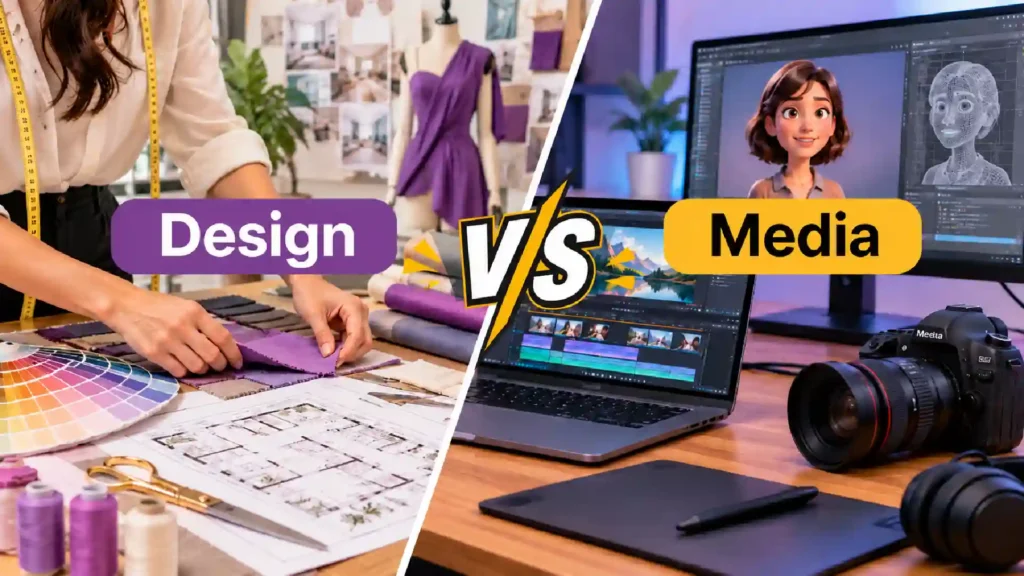
| Factor | Design (Fashion & Interior) | Media (Digital & Visual) |
| Main focus | Physical products, garments, and spaces | Digital visuals, video, and storytelling |
| Key skills | Sketching, materials, technical drawing | Software skills, editing, visual storytelling |
| Work settings | Studios, boutiques, project sites, design firms | Agencies, production houses, studios, remote work |
| Typical roles | Fashion designer, interior designer | UI/UX designer, animator, photographer |
| Best for | Hands-on, tactile creators | Tech-friendly, story-driven creators |
How to Pick the Right Career Option for You
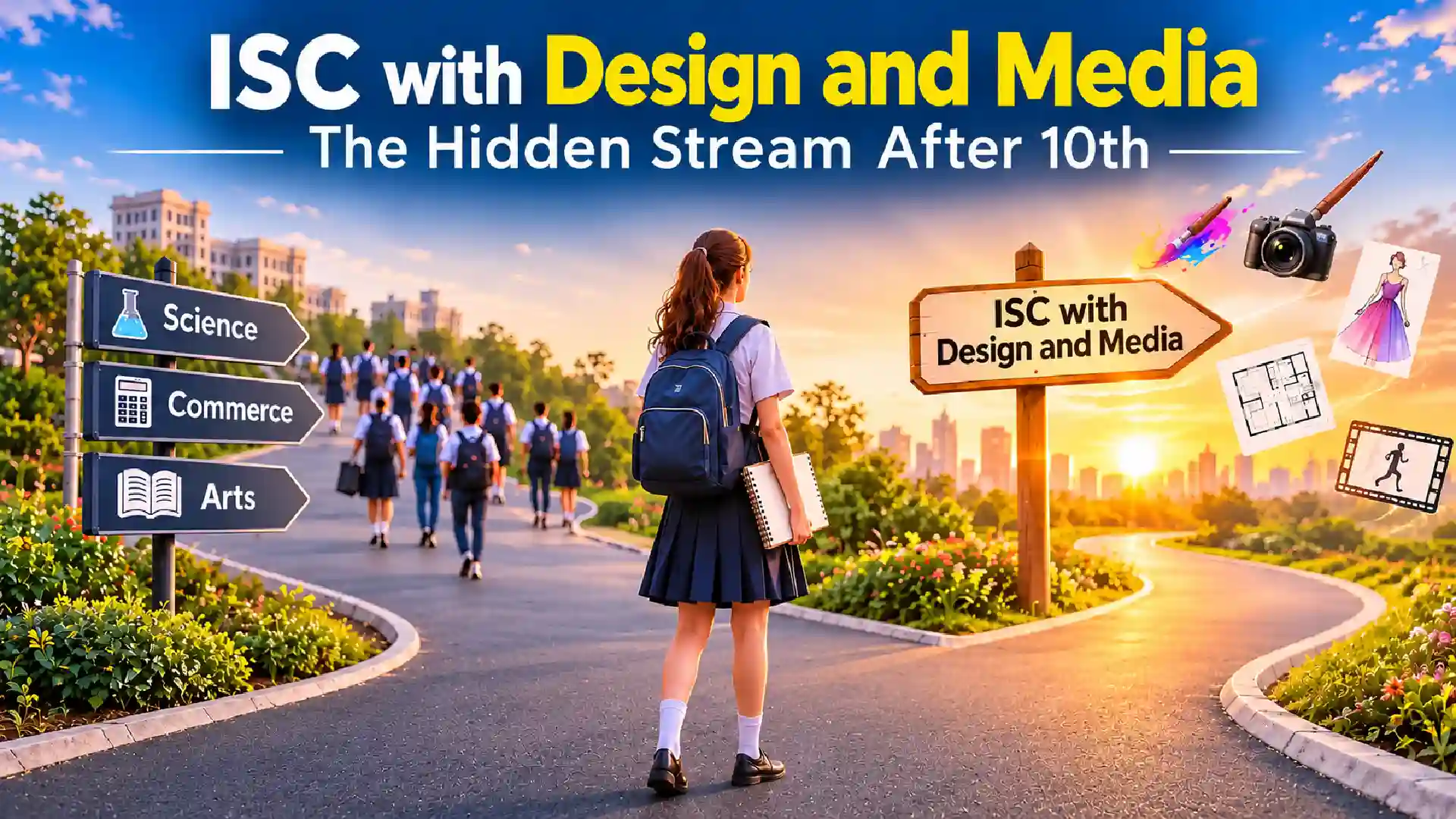
Not sure where to begin? Fashion and interior design suit hands-on makers, while graphic design, UI/UX, animation, photography, and filmmaking suit those who love screens and stories. Use these five steps to narrow down your career options:
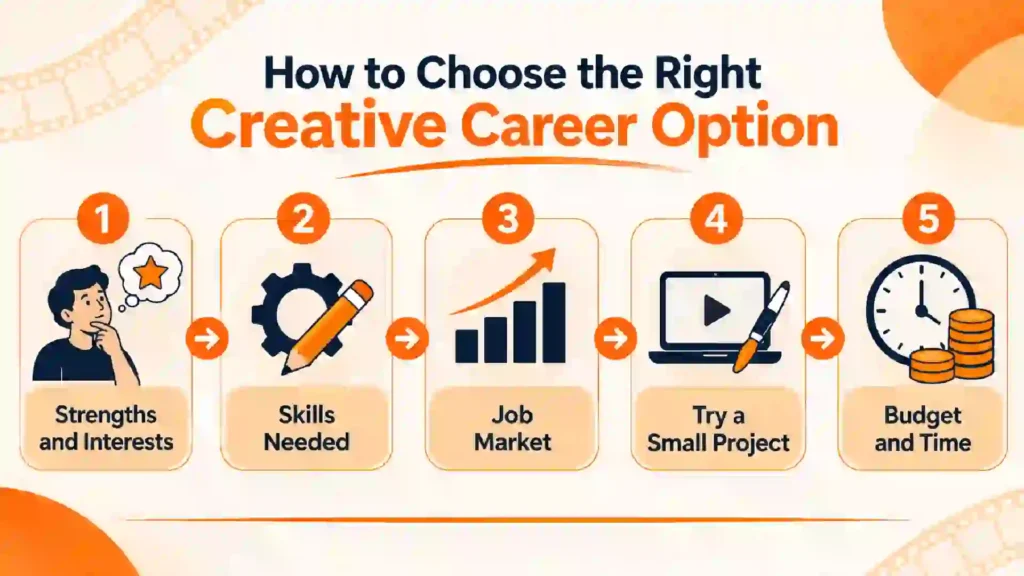
- Identify your strengths and interests. Do you prefer working with your hands or with software? Do you enjoy fabric and spaces, or cameras and screens? Notice which projects make you lose track of time.
- Understand the skills each path needs. Compare the key skills listed above with what you enjoy practicing, and be honest about which ones you are ready to build over months of training.
- Check the job market. Research job listings and freelance demand in your city and online. Look at the roles, tools, and portfolios employers ask for.
- Try before you commit. Build a small project, such as a mood board, a short video, or a logo, or join a workshop to test your interest.
- Consider your budget and time. Compare course duration, fees, and how soon you want to start working. Shorter certificates suit a quick start, while longer diplomas suit deeper training.
Common Mistakes to Avoid When Choosing Career Options
- Following trends only: A popular role may not suit your strengths. Look at daily tasks, not just the glamour.
- Choosing by salary alone: Early pay varies in creative fields, and passion and skill drive long-term success.
- Skipping a portfolio: Employers hire based on what you can show, so start building one early.
- Not researching training: Choose programs with practical, industry-focused learning over theory alone.
- Waiting too long: Starting early gives you more time to build skills and refine your career options.
FAQs
Popular career options include fashion designer, interior designer, graphic designer, UI/UX designer, animator, video editor, photographer, and filmmaker. The best one depends on your skills and interests.
Not always. Many employers value a strong portfolio and practical skills, and diploma or certificate courses can help you build both.
Earnings depend on skills, experience, location, and portfolio. Specialized roles such as UI/UX design and animation can grow as your experience and work samples grow.
Yes. Visual thinking, color, and composition transfer well. For example, a fashion illustrator can move into graphic design, and a graphic designer can move into UI/UX.
Start with what you enjoy doing. If you like hands-on making with fabric, materials, or spaces, design may suit you. If you prefer software, screens, and storytelling, media may fit better.
It depends on the course. Short professional certificates take around 6 months, while longer diplomas run up to 3 years. Building a portfolio alongside your course helps you get hired sooner.
Conclusion
The best career options in the creative industry are the ones that match your skills, interests, and goals. There is no single right answer, only the path that fits you best.
- Design offers hands-on paths in fashion and interior design, where you shape garments, products, and spaces.
- Media offers digital paths in graphic design, UI/UX, animation, video, photography, and filmmaking, where you shape visuals and stories.
Understand your strengths, test your interest through small projects, and commit to training that builds practical skills and a strong portfolio. Whichever of these career options you choose, structured guidance from experienced mentors can make the journey faster and more confident.
Ready to take the next step? Explore Le Mark Institute courses in fashion design, interior design, multimedia, and photography.
Explore Le Mark Institute’s courses and take your first step