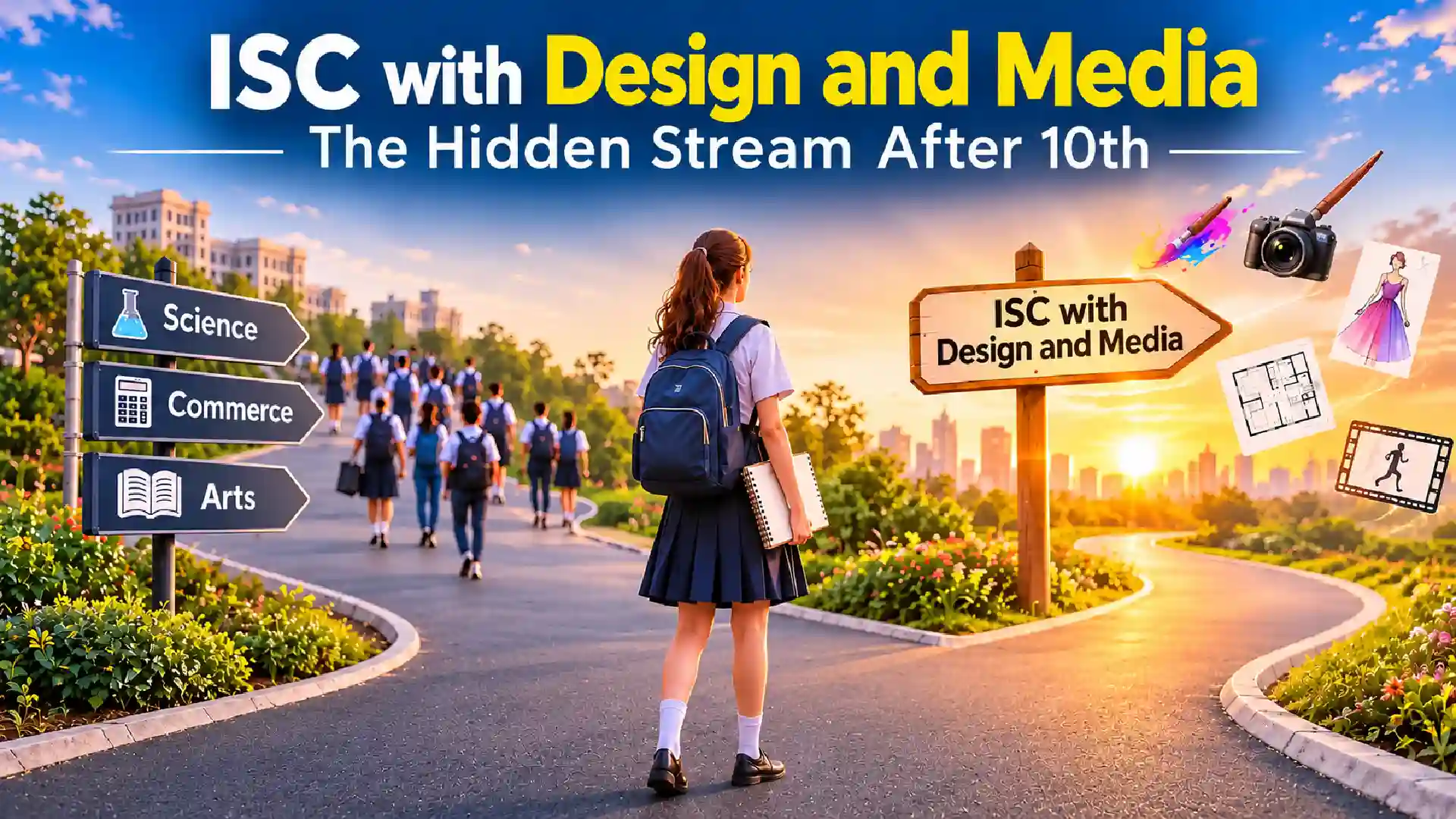
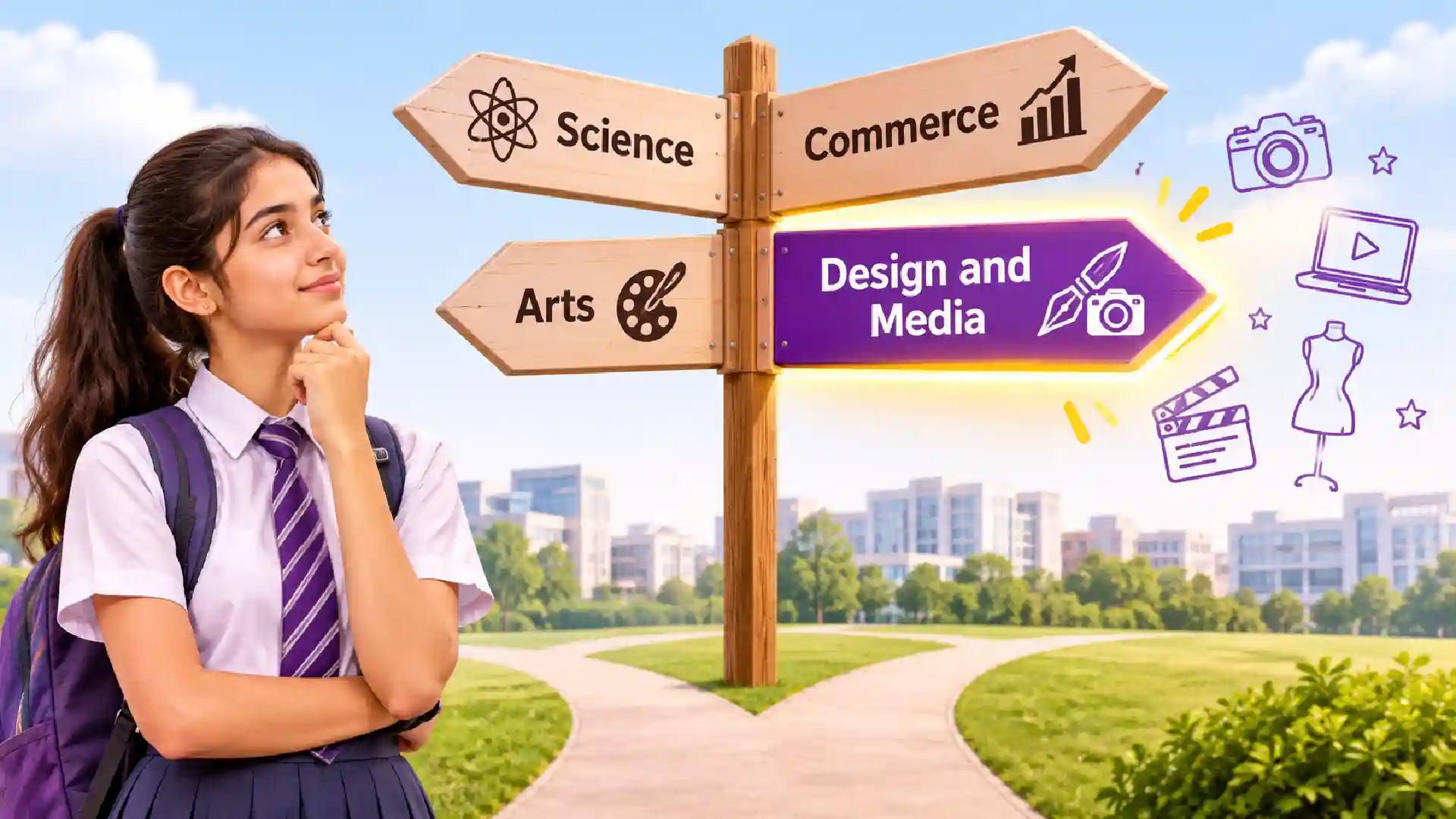
Every year, lakhs of students face the same question right after their board results: which stream should I pick? If you are deciding what to do after 10th, you have probably heard only three answers: science, commerce, or arts. There is a fourth path most families never hear about, and for creative students it may be the smartest one: ISC with Design and Media.
ISC (Indian School Certificate) is the Class 11 and 12 qualification offered by the CISCE board. The Design and Media stream suits students who enjoy sketching, storytelling, styling, photography, filmmaking, or digital creation and want to turn their passion into a profession. This blog explores what the stream offers, why it stands out, the career opportunities it opens up, and the common mistakes students should avoid.
Why the Stream You Choose Matters
The two years of Classes 11 and 12 shape more than your marks. They shape your habits, your confidence, and the doors that open when school ends. A stream that matches how you think and what you enjoy makes you work harder without feeling forced. A stream chosen only because friends or relatives picked it often leads to burnout and a mid-course change of direction.
Many students choose Science because it sounds safe or Commerce because it seems practical. Both streams offer excellent opportunities for the right students. However, students who spend their free time drawing, editing videos, or designing outfits need a stream that nurtures those interests. Creative ability grows with practice, and starting early helps students develop stronger skills.
This is where ISC with Design and Media stands out. While many schools treat creativity as a hobby outside academics, this stream makes creativity a central part of learning. Students study theory while creating designs, layouts, frames, fabric concepts, and models. By the end of Class 12, they earn an ISC board certificate and build a portfolio of creative work that they can present to colleges.
What Is ISC with Design and Media?
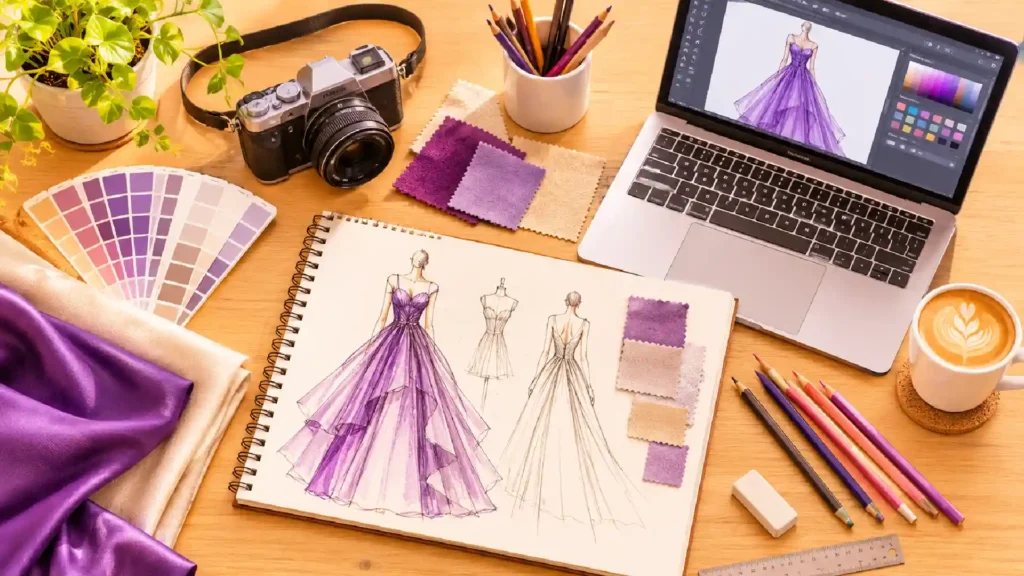
ISC with Design and Media is a stream for Classes 11 and 12 that combines creative subjects with strong general education. It is meant for students who want to enter design, media and communication fields without waiting until college to begin learning the basics.
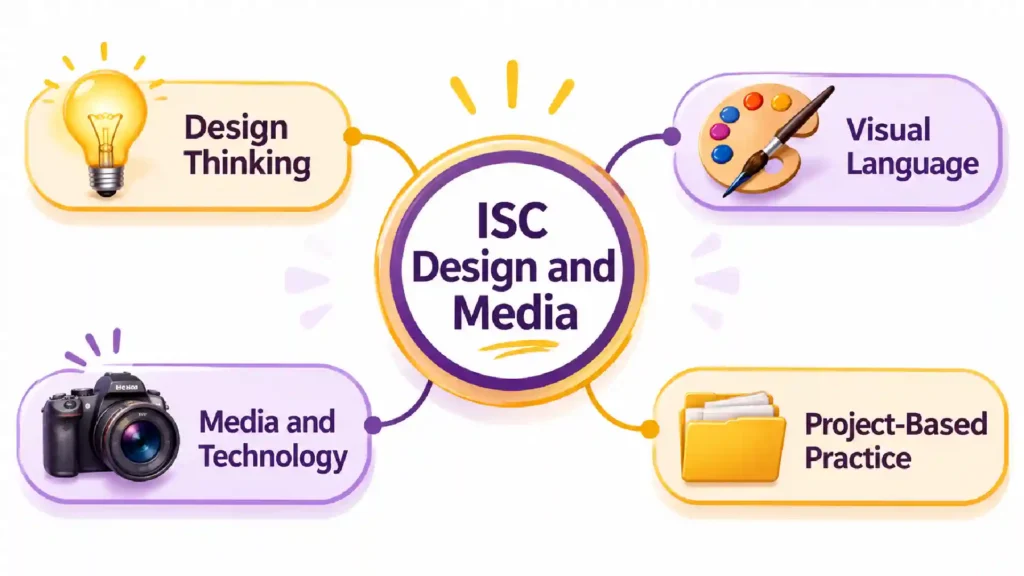
The stream blends several areas:
- Design thinking: how to understand a problem, generate ideas, and refine them into a finished product.
- Visual communication: color, composition, typography, layout, and the principles behind them.
- Media and technology: digital tools, image making, audio-visual storytelling, and multimedia production.
- Practical project work: assignments where you create something real, not just answer questions about it.
The exact subject combinations and assessment structure can be updated by the board, so always confirm the current details on the official CISCE website before you take admission. A good school offering this stream will also explain how its practical work is assessed and what facilities students get.
The point to remember is that this stream is not a lighter option. It asks for discipline, regular practice, and the ability to take feedback. Students who treat it as an easy escape from science or math are often surprised by the effort it requires. Students who treat it as serious training for a creative profession tend to thrive.
Why ISC Is the Best Stream for Creative Careers
When students ask which option is best after 10th, the honest answer is that it depends on your strengths. For a creative student, though, ISC with Design and Media has a clear advantage: it is the only stream where your talent is part of the syllabus rather than something you must protect from it.
Here is how it compares with the streams everyone knows:
| Factor | Science | Commerce | Arts | ISC Design and Media |
| Core focus | Scientific concepts and problem solving | Business, accounts, and economics | Humanities and social subjects | Design, media, and creative production |
| Practical creative work | Limited to lab work | Minimal | Varies by subject | Central to the course |
| Portfolio building in school | Rare | Rare | Occasional | Built in |
| Preparation for design entrance exams | Indirect | Indirect | Indirect | Direct and relevant |
| Best suited for | Future engineers, doctors, researchers | Future CAs, managers, analysts | Future writers, civil servants, teachers | Future designers, filmmakers, photographers, creators |
Three reasons make this stream especially strong.
First, you start early. Design colleges and creative industries reward students who have practiced for years. Beginning in Class 11 gives you a two-year head start over students who only discover design after school.
Second, you build proof of skill. Employers and admission panels in creative fields care about what you can show. A school portfolio filled with real projects is far more persuasive than marks alone.
Third, you stay flexible. Design and media skills such as visual thinking, communication, and digital fluency are useful in marketing, technology, advertising, entertainment, and entrepreneurship. You are not locked into one narrow job.
Skills You Build in This Stream
Marks fade from memory, but skills stay useful for decades. Here are the core abilities this stream develops.
Creative problem solving. You learn to look at a challenge from several angles and test more than one solution.
In practice: A student is asked to redesign a school notice board that nobody reads. Instead of simply making it colorful, she observes where students actually stop and look, tests three layouts, and picks the one that gets the most attention.
Visual communication. You learn how color, spacing, and imagery shape the way people feel and understand.
In practice: Two posters carry the same message about a science fair. One is crowded with text; the other uses a bold image and a single line. Comparing them teaches you why the simpler poster gets noticed.
Technical fluency. You become comfortable with digital tools that creative professionals use every day.
In practice: A student edits a three-minute short film, learns to cut on action, balances audio levels, and exports the final video in the right format for screening.
Time and project management. Creative work has deadlines, and learning to plan matters as much as talent.
In practice: Before a fashion assignment is due, a student breaks it into research, sketching, fabric selection and final presentation, then assigns a day to each instead of rushing the night before.
Presentation and confidence. You learn to explain your ideas and defend your choices.
In practice: After finishing an interior layout, a student presents it to the class, explains why the sofa faces the window, and handles questions calmly.
Career Paths This Stream Opens Up
The strongest argument for any stream is where it can take you. The careers below are the natural destinations for ISC Design and Media students, and the options after 10th do not get more exciting than a stream that points directly at them.
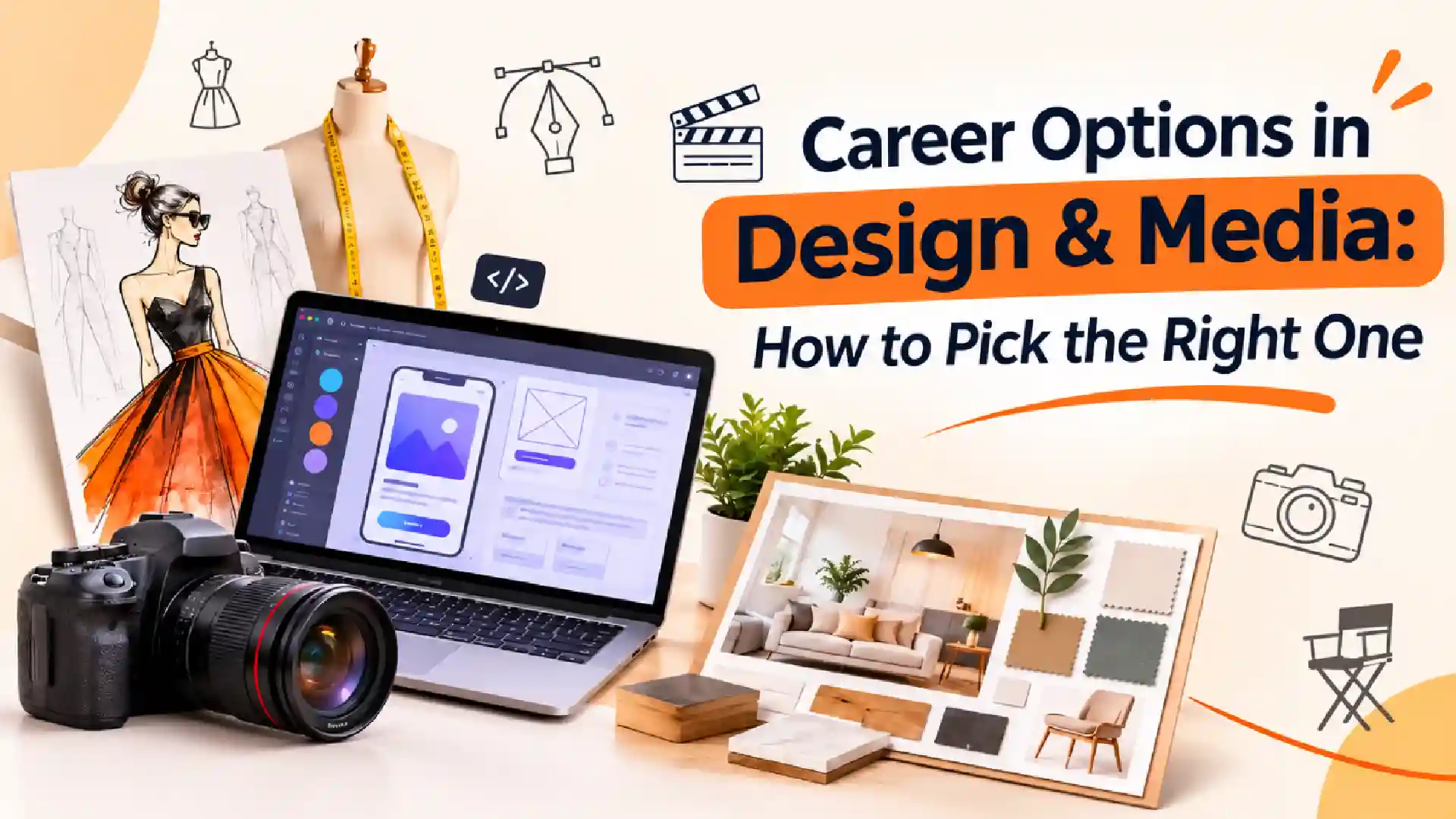
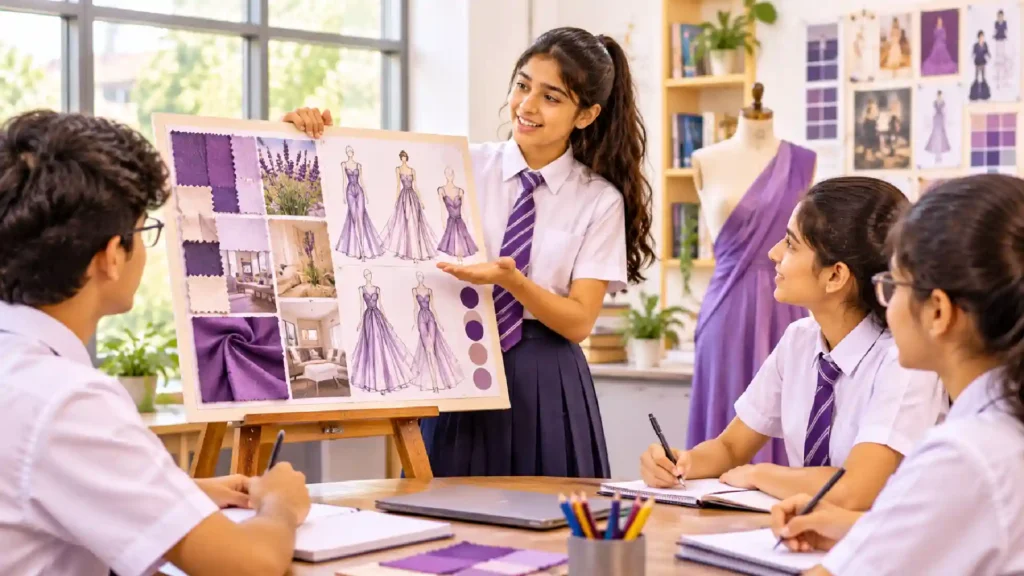
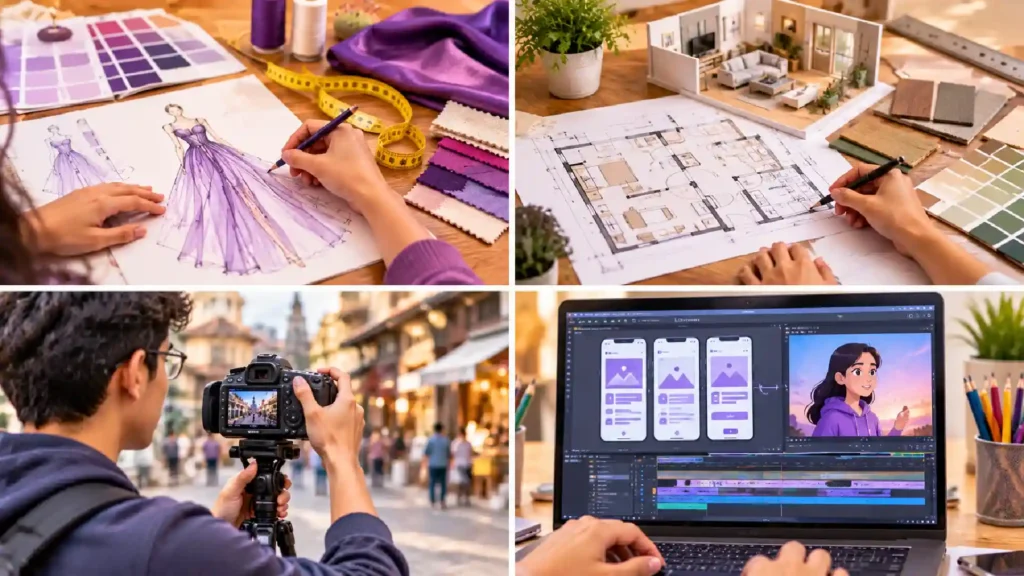
Fashion and Textile Design. Students can move into fashion design, garment technology, textile design, costume design, and styling or start their own labels. Strong sketching, an understanding of fabric and a feel for trends are the foundation.
In practice: A student who spends Class 11 learning to draw figures and Class 12 building a small collection of five outfits enters a fashion institute with a ready portfolio.
Interior Design. This path covers residential and commercial interiors, space planning, furniture design and exhibition design. It rewards students who enjoy both aesthetics and logic.
In practice: A student measures her own room, drafts a floor plan, and proposes two layouts with different lighting. That one project shows spatial thinking better than any answer sheet.
Photography and Digital Filmmaking. Careers include photography, cinematography, video editing, documentary making, advertising films, and content production for digital platforms.
In practice: A student photographs a local market over a month, picks twelve images, and sequences them into a visual story. That series becomes the centerpiece of her portfolio.
Multimedia. This is the broadest category, covering animation, graphic design, motion graphics, game design, UI and UX design, and digital marketing creatives.
In practice: A student designs a simple mobile app screen for a library, tests it with five classmates, and revises the buttons based on their confusion.
After Class 12, many students aim for leading design institutes through entrance exams. Examples include NIFT for fashion and allied fields, NID for design, and UCEED for design programmes at IITs. Because the ISC stream already trains you in drawing, visual reasoning, and project work, you begin your preparation with a real advantage.
Resources to Get Started
You do not need to wait for Class 11 to begin. These official sources will help you plan with accurate information:
- CISCE official website: check the latest ISC syllabus, subject options, and board notices.
- NIFT: explore fashion, textile, and accessory design programmes and their admission process.
- NID: see design programmes, studio culture, and entrance details.
- UCEED: learn about the exam for design programmes at IITs.
Beyond these, start a simple sketchbook, photograph one thing every day, and visit a design school’s open day if you can. Small, steady habits matter more than big, occasional bursts.
A Common Mistake to Avoid
The most common mistake is choosing a stream by looking only at what is popular instead of looking at what you actually enjoy and do well. A student who loves design but picks Science to please others often spends two years uninterested, then struggles to explain the gap in a creative portfolio.
A related mistake is the reverse: choosing Design and Media only because it seems easier. Creative fields are competitive. Success comes from consistent practice, openness to criticism, and willingness to finish what you start. Before you decide, ask yourself honestly: do I enjoy making things, even when it takes hours and the first attempt is poor? If yes, this stream deserves serious consideration.

Frequently Asked Questions
No. Drawing helps, but design also involves thinking, planning, photography, digital tools and storytelling. Many successful designers improved their drawing through steady practice.
Often, yes, but eligibility depends on the course and the institution. Some professional courses require specific subjects, so check the entry requirements of any field you might want before you commit
Design, media and content industries employ people in advertising, fashion, film, gaming, technology and publishing. Like any career, success depends on skill, portfolio quality and persistence
Not at the beginning. A sketchbook, a phone camera and free or low-cost software are enough to build early skills. Your school and later your college will provide more advanced facilities.
Conclusion
Choosing a stream is not about picking the most respected label. It is about choosing the place where your strengths can grow. If you are standing at the crossroads after 10th and your mind keeps wandering to sketches, cameras, fabrics or screens, take that signal seriously. ISC with Design and Media gives you two years of focused training, a portfolio to show for it, and a clear route into creative careers that are growing every year.
Do your research, check the latest details with CISCE, talk to schools about their practical facilities, and choose the stream that makes you want to show up and create. A career built on genuine interest tends to last, and it tends to be a happier one.
Explore the creative fields this stream leads to:
- Fashion and Textile Design
- Interior Design
- Photography and Digital Filmmaking
- Multimedia