
Introduction
Quick answer: Creative thinking in design is a habit you can build, not just a talent you are born with. Seven ways: keep a swipe file, sketch first, set constraints, borrow from outside design, use mind maps, take breaks, and share early work.
Creative thinking in design is not something you are simply born with. It is a skill you can develop through habits that help you generate, connect, test and refine ideas. Still, every design student meets the moment when a blank artboard or an empty shot list stares back and nothing arrives. Many beginners take that silence as proof that other people were born with ideas.
That belief is worth questioning. Most working designers have stared at a blank page, and the ones with endless ideas often rely on routines. This guide explains what creative thinking is, lays a simple foundation, and then walks through seven practical ways to build it, each backed by a working designer, with an exercise you can finish in minutes. Whatever you study, from fashion to filmmaking, treat the list as a menu: try a few, keep what works, and drop what does not.
What Is Creative Thinking in Design?
Creative thinking in design is the ability to generate original ideas and solve design problems in fresh ways. It is not artistic talent or drawing skill. It is a way of working that combines curiosity, experimentation and judgment. Four parts make it up:
- Generating: producing many options before choosing one, instead of settling on the first idea.
- Connecting: linking things that do not obviously belong together, such as a seashell and a chair.
- Testing: sketching, prototyping or sharing an idea early to see whether it holds up.
- Choosing: judging which ideas fit the brief, the audience and the constraints.
In practice this looks different in each field. A fashion student reworks a silhouette, a UI/UX student rethinks a checkout flow, a photographer changes the angle, and an animator finds a new way to show weight. The process is the same, so the seven ways below work across fields.
Before the List: The Foundation of Creative Thinking
Five ideas make the seven ways below easier to use.
- Creativity is a skill, not just a personality trait. Creative ability can be developed through practice and experimentation. Some people have simply practiced more, and regular effort helps close that gap, the same way it does for drawing or editing.
- Ideas need input. You cannot pull good ideas from an empty tank, so collecting, observing and experimenting come before producing. Every reference you save today becomes raw material for a future project.
- Getting stuck is normal. The designers in Adobe Design’s Q&A on creative blocks all describe hitting walls and explain how they get moving again. A block is a signal to change your approach, not proof that you lack talent.
- Small actions beat big plans. One 10-minute exercise this week is worth more than a perfect routine you never start. Small wins also build the confidence to try harder ones.
- Your process is personal. What sparks ideas for a classmate may leave you cold, so pay attention to what works for you. Keep a short note of which methods help, and repeat those.
1. Build a Swipe File
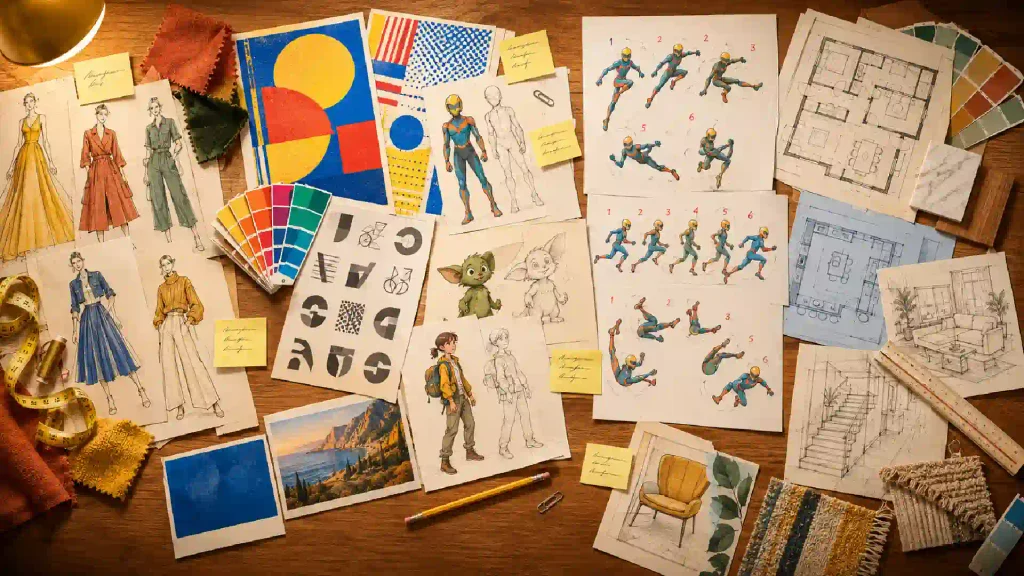
A swipe file is a folder of inspiration you save before you know how you will use it.
- Designer voice: App designer Amir Khella of Keynotopia spends a couple of hours a day browsing UI inspiration and recreates the designs that inspire him so they become part of his visual vocabulary. Webflow designer Pravin Kumar saves screenshots with a short note on why he saved each one, and warns against chasing trends.
- Beginner mistake: Saving everything and never asking why. A folder without notes is just a pile.
- Try this: Save five pieces this week, such as a fabric drape, a poster layout or a film still, and write one line on why each caught your eye.
2. Sketch Before You Open the Software
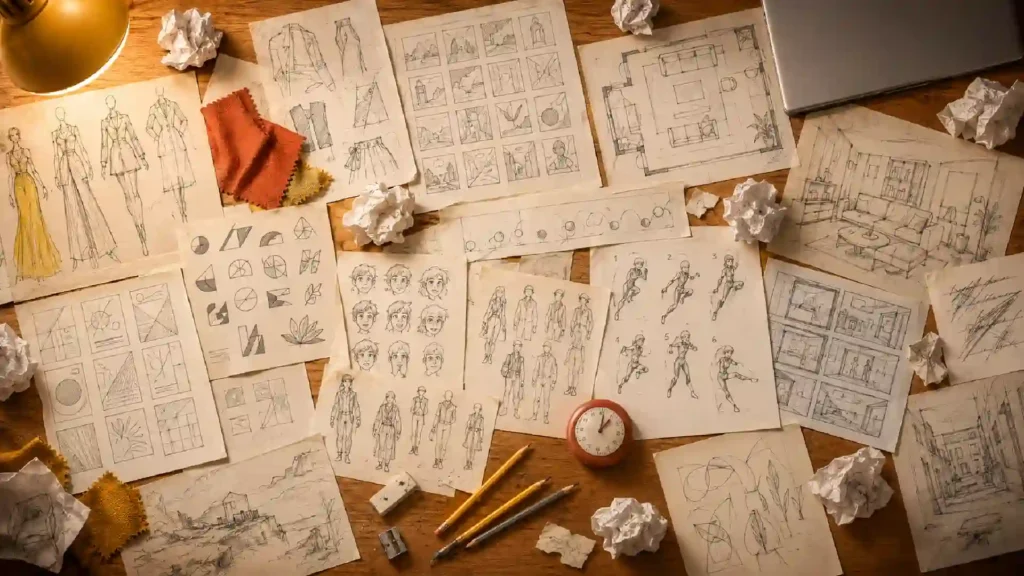
Rough sketches let you test many ideas before software makes the first one look finished.
- Designer voice: Lusine Dashtoyan, a senior experience designer on Adobe’s Workfront team, keeps a weekly three-hour sketching ritual that gives her a tactile break from screens and leaves her more productive afterward.
- Beginner mistake: Polishing the first idea instead of exploring several.
- Try this: Set a timer for 10 minutes and draw 20 small thumbnails. Fashion students can draw silhouettes, and filmmakers can draw shot frames.
3. Set Constraints on Purpose
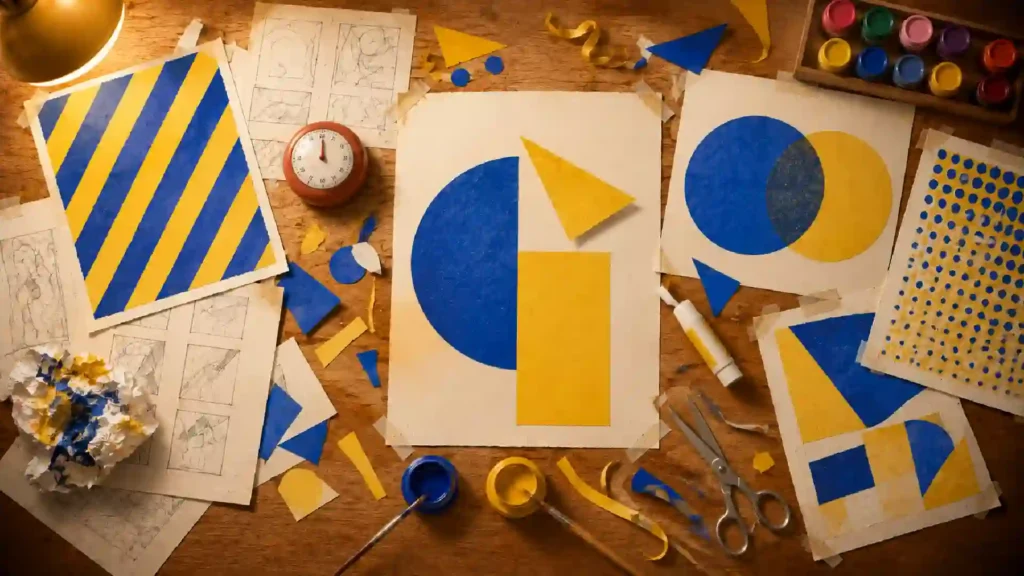
Limits give you direction, so you spend less time wandering and more time solving.
- Designer voice: Patrick Cox, a UX designer and researcher at Instructure, argues that self-imposed limits push designers out of their comfort zone, such as using only standard web fonts or one software tool.
- Beginner mistake: Waiting for a client brief to set the rules. You can set your own.
- Try this: Design a poster with two colors and one typeface in 30 minutes. Photographers can shoot with one focal length for a day.
4. Borrow Ideas From Outside Design
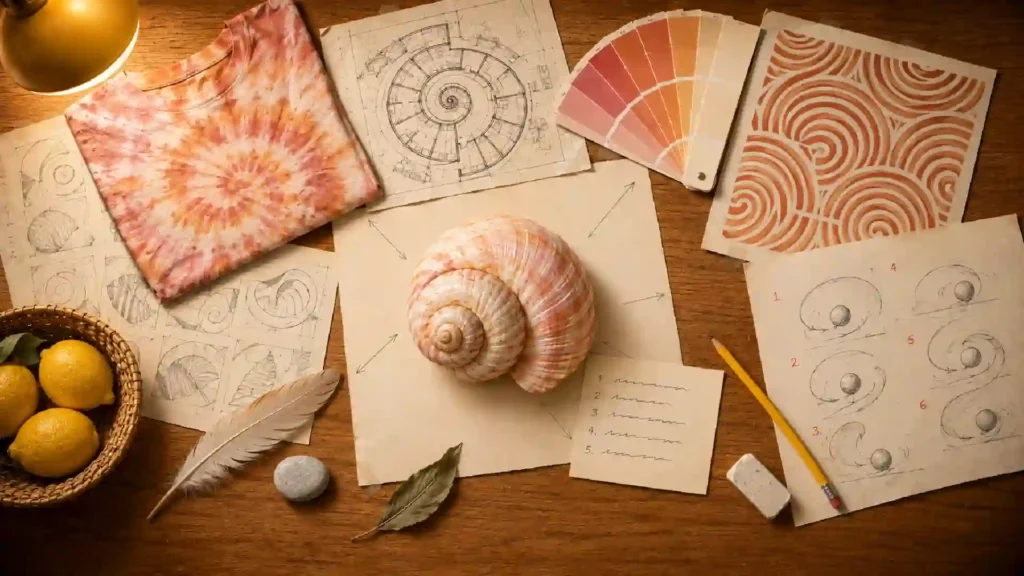
Ideas from other fields give you raw material your classmates are probably not using.
- Designer voice: Designer Michele Rosenboom says her best inspiration is almost always outside the type of design she is working on. For an interior, that could be art, music, architecture, poetry or science. She also warns against relying on Pinterest, which shows what has already been done.
- Beginner mistake: Following only your own field, so your ideas look like everyone else’s.
- Try this: Pick a non-design object, like a seashell or a street market, and list five things about its shape, rhythm or color. Turn one into a rule for your next project.
5. Use Mind Maps to Push Past the Obvious
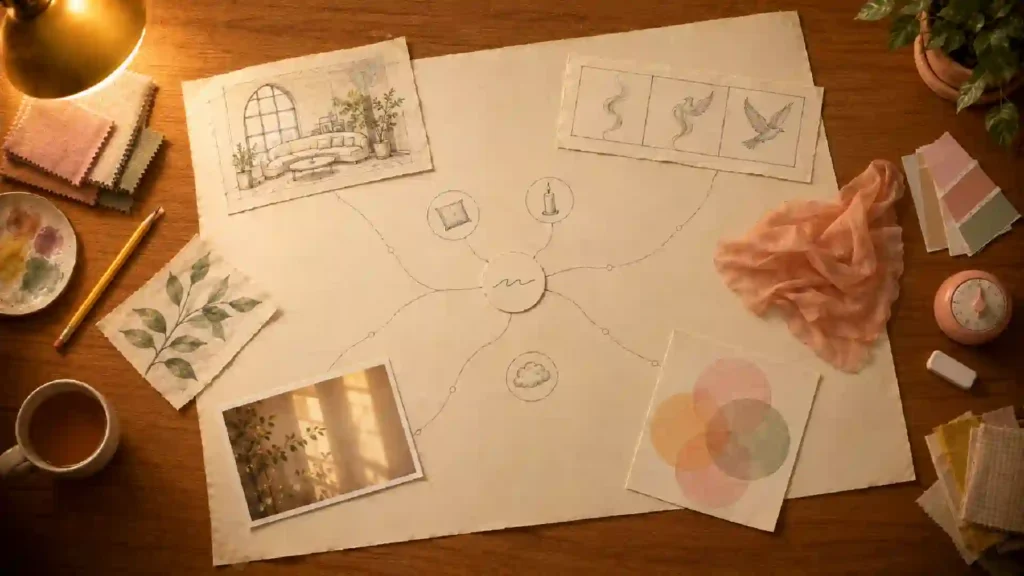
Your first idea may be the most obvious one. A mind map helps you go further.
- Designer voice: David Kelley, founder of IDEO, is quoted by The Graphic Design School as saying he makes lists for analytical work and mind maps when he needs ideas, and that better ideas come as he moves farther from the center.
- Beginner mistake: Stopping at the first few branches, or judging ideas while you map.
- Try this: Write one word from your brief in the center and branch out for five minutes, then keep going for two more after the obvious ideas run dry. Interior students can start with “calm” and VFX students with “smoke”.
6. Take Breaks and Change Your Environment

Stepping away often gets you unstuck faster than pushing harder.
- Designer voice: Graphic designer Stefan Sagmeister has described closing his New York studio for a yearlong sabbatical every seven years to refresh his creative outlook. You do not need a year; a short walk or new workspace is the beginner-sized version.
- Beginner mistake: Staring at one screen for hours, repeating the same ideas.
- Try this: When you have been stuck for 45 minutes, take a 15-minute walk without your phone. Video editors can step away from the timeline and return with fresh eyes.
7. Share Early Work and Invite Feedback
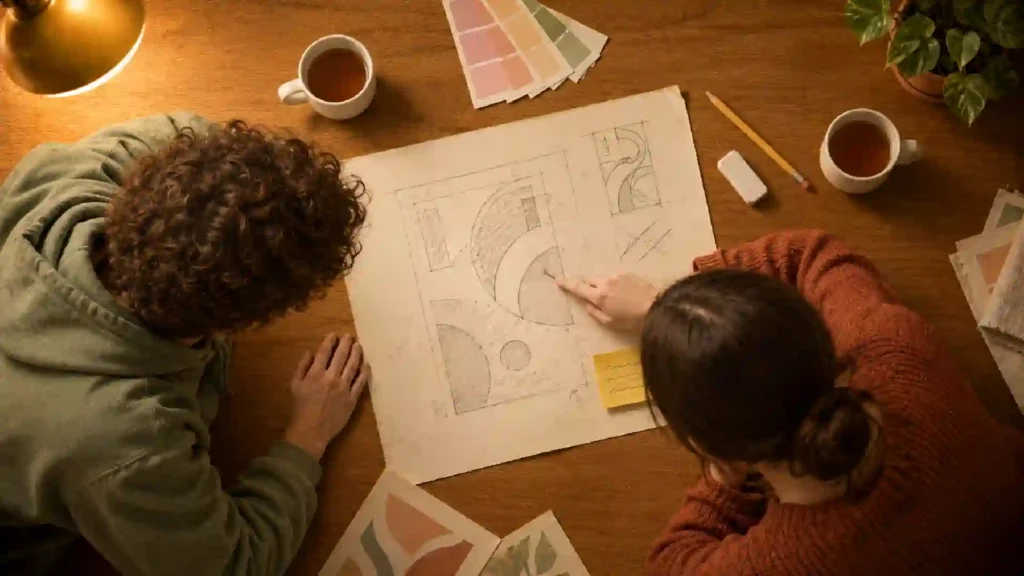
Fresh eyes spot possibilities you have missed.
- Designer voice: Unez Akbar, a senior experience designer at Adobe, makes a point of sharing in-progress work, and says even unpolished work can gather early feedback that reveals blind spots and sparks fresh ideas.
- Beginner mistake: Waiting until the work looks finished, when changes are harder to make.
- Try this: Show one rough draft to a classmate today and ask “What do you notice?” instead of “Do you like it?” Photography students can share a contact sheet.
Putting It Together: A Simple Weekly Routine
You do not need all seven ways at once. Combine two or three into a routine small enough to repeat.
- Monday, collect (10 minutes): Add three items to your swipe file, each with a one-line note on why you saved it.
- Midweek, explore (about 20 minutes): Mind map your current brief, then sketch 20 thumbnails from the strongest branches.
- Friday, share (10 minutes): Show one rough result to a classmate and ask what they notice.
- Anytime, step away: When you stall, take a short walk before you try again.
Add a constraint, such as two colors or one lens, whenever the work feels too open. After a month, keep the combination that gives you the most ideas.
Conclusion: Make Creative Thinking a Habit
Creative thinking grows from small, repeatable habits: collecting inspiration, sketching freely, working within limits, looking beyond your own field, mapping ideas, resting, and sharing early work. Each takes only minutes, and you do not need all seven at once. Start with one this week, give it a fair try, and notice what changes in how you begin your next project. Over time, the blank artboard stops feeling like a test and starts feeling like a starting line. Habits stick faster with real projects and regular feedback, and Le Mark Institute offers creative programs in fashion, graphic and UI/UX design, interior design, photography, animation and VFX, and digital filmmaking.
FAQs
It is the ability to generate original ideas and solve design problems in fresh ways.
Start with a swipe file and 10-minute sketching, then add constraints and mind maps.
Not entirely. Working designers point to routines and practice, so it can be built.
The swipe file or quick sketching. Both take minutes and need no special tools.
No. Thumbnails can be rough, because the goal is exploring ideas, not producing finished art.
It varies, but a few weeks of short, regular practice is a reasonable first test.
Yes. Regular projects and feedback give you repeated practice. Le Mark Institute offers creative programs across several design fields.
Choose your field, book a demo class at Le Mark Institute, and take your first step toward a creative career.