Introduction
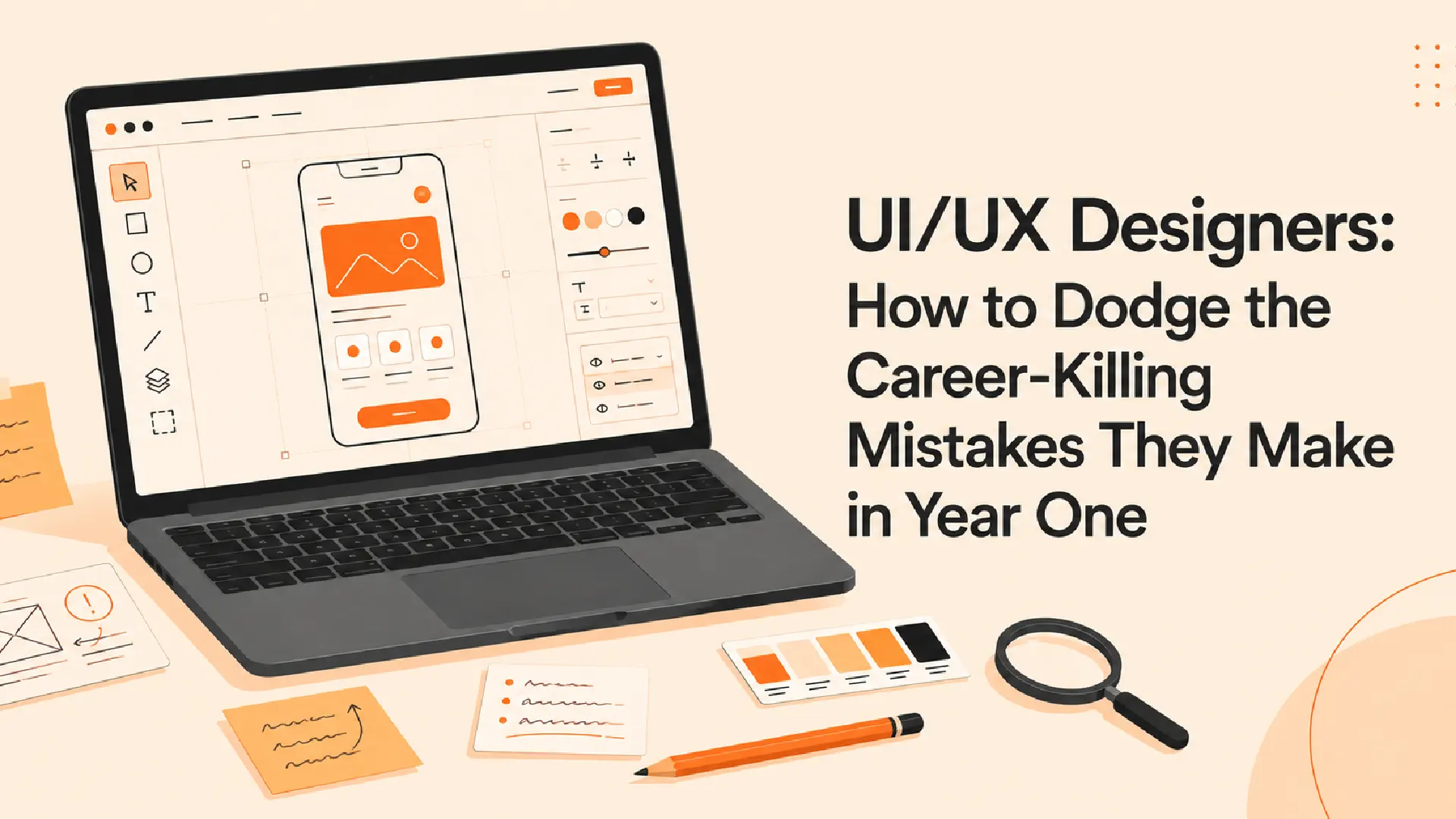
Very few UI/UX Designers lose their first year due to a shortage in talent but rather because of common mistakes they never hear about in the beginning. A static portfolio, a slow salary increase, or an employment search that becomes lengthy: most times these occur as a result of a few avoidable blunders, nothing to do with effort or talent.
There was a 40% rise in the number of UI/UX designers vacancies between 2024 and 2026, and job searching has gained more gravity because of places like Mumbai, where the fintech, media, and advertising industries offer a whole lot more than just more positions to fill. But higher demand doesn’t translate to finding the first job with less effort, only to highlight the divergence between slow-moving designers and those fast movers, who are faster than before.
These are the 5 major pitfalls designers meet in their first year, followed by 4 genuine, attested stories from people who were there to share their first hand experience
The Five Mistakes That Quietly Cost Designers Their First Year
As a new UI/UX designer, whether you attended school in SF or a boot camp in New York, there are a few common traps you will probably fall into:
- Focusing too much on aesthetics and not enough on user research designs will look nice but without reasoning.
- Creating a “screens”-based portfolio instead of “case studies”: the designs will be final images, but there will be no record of what or how we got here.
- Saying yes to everything burns you out by saying “yes” too early.
- Skipping developer collaboration, the handover is their responsibility and not ours.
- Not networking or finding a mentor early: “We’ll just get feedback on our portfolio once it is ready enough.”
Mistake #1: Chasing Visual Polish, Skipping Research
Designer: Subhrajit Dutta, UI/UX Designer
This post from Dutta talks about how they got lost in the aesthetics of mobile app UX design and how user research took a backseat. The downside? It resulted in usability issues and the inclusion of some redundant features.
Source: 10 mistakes I made as a UI/UX Design Beginner — Subhrajit Dutta, Medium
What to do differently:
- Do lean research (even just five user interviews) before you commit to a design direction.
- For each significant design decision you make, write a single sentence to describe “why.”
- Your beautiful screen is not the destination; it’s how you get there.
- Test low-fidelity wireframes with users before investing time in visual polish.
- Keep a running list of assumptions you’re making, and validate them before shipping.
Mistake #2: A Portfolio of Screens, Not Case Studies
Designer: Akash Solanki, UI/UX Designer and Web Designer
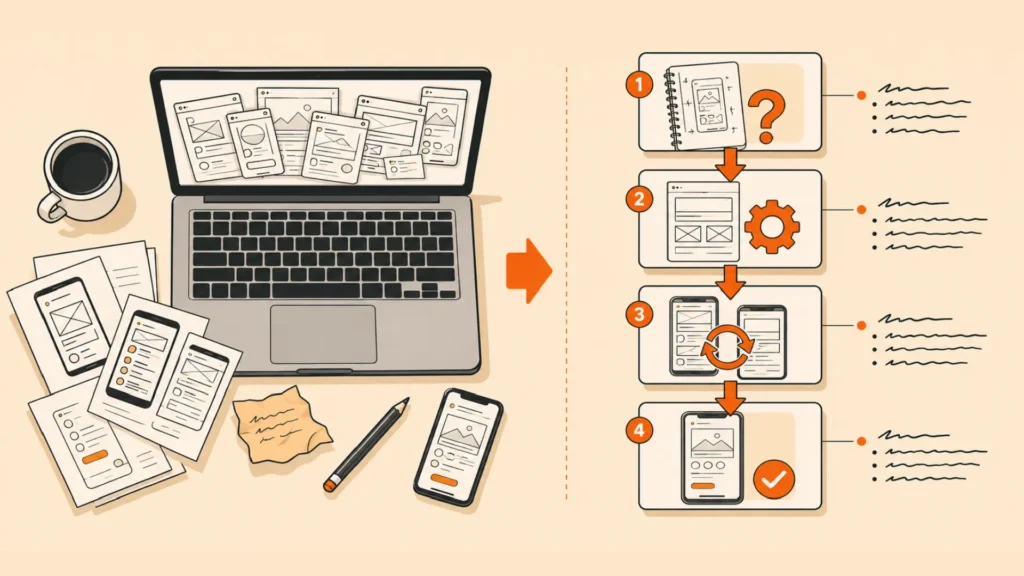
“The biggest professional regret I have is that I never took the time to write down the design process when I was building products, and I did this for over 25 products,” said Solanki. “And because I didn’t do that, I didn’t have a ton on my Behance and Dribble portfolio, and it definitely held me back when interviewing for roles. Recruiters really want to understand what thinking is going on behind the product.”
Source: My Dark Regret as a UI/UX Designer and Web Designer — Akash Solanki, Medium
What to do differently:
- Write notes as you work, not later: Before you even start taking screenshots or writing content.
- Grab 2–3 projects and document them as fully detailed case studies instead of a collection of screens.
- Be open about the approaches you explored that didn’t quite pan out and what they taught you: it shows a sense of maturity and wisdom, not a lack of success.
- Take screenshots of early sketches and drafts so you have proof of your process later.
- Write a short retrospective after each project while the details are still fresh.
Mistake #3: Saying Yes to Everything, Then Burning Out
Designer: Jane Li, Design Lead
Li shares a tale of being overcome with burnout from having taken on every responsibility and refusing to decline a single task because she felt that every problem in her life was hers to solve until her self-imposed standards and time and energy didn’t align with what she was actually allocated. She needed to begin intentionally enforcing her boundaries, or letting things go that were beyond her influence, to heal.
Source: To all UX Designers: it’s okay, you don’t need to solve everything—Jane Li, Medium (Bootcamp)
What to do differently:
- Pick work with purpose; don’t just do what’s in front of you.
- Define your capacity and stick to it (realistically)
- Stop blurring the lines between “do the best with what you have” and “do the work perfectly.”
- Practice saying no or negotiating deadlines instead of defaulting to yes.
- Build in recovery time after intense projects instead of moving straight to the next one.
Mistake #4: Treating Developer Handoff as Someone Else’s Job
Designer: Shannon Bain, Product Designer
Earlier in her career, Bain notes that she didn’t fully grasp how dependent her successes were on her relationship with engineers because designers aren’t building what they design; engineers are. Bain’s recommendation for the junior designers she now mentors is crystal clear: build a rapport with your developers much earlier than the handoff and invest time with them before the handoff even occurs.
Source: The Design-Developer Relationship: More Than Just the Handoff — Shannon Bain, Medium
What to do differently:
- Bring your engineers in during the design process early, not when you’re ready to hand it over.
- Structure your design files intentionally: naming, components, and specs.
- Develop a real connection with your engineers and reap the rewards every time a design needs tweaking.
- Ask developers about technical constraints before finalizing a design, not after.
- Sit in on a few sprint planning or standup sessions to understand how your work gets built.
Mistake #5: Delaying Networking Until “You’re Ready”
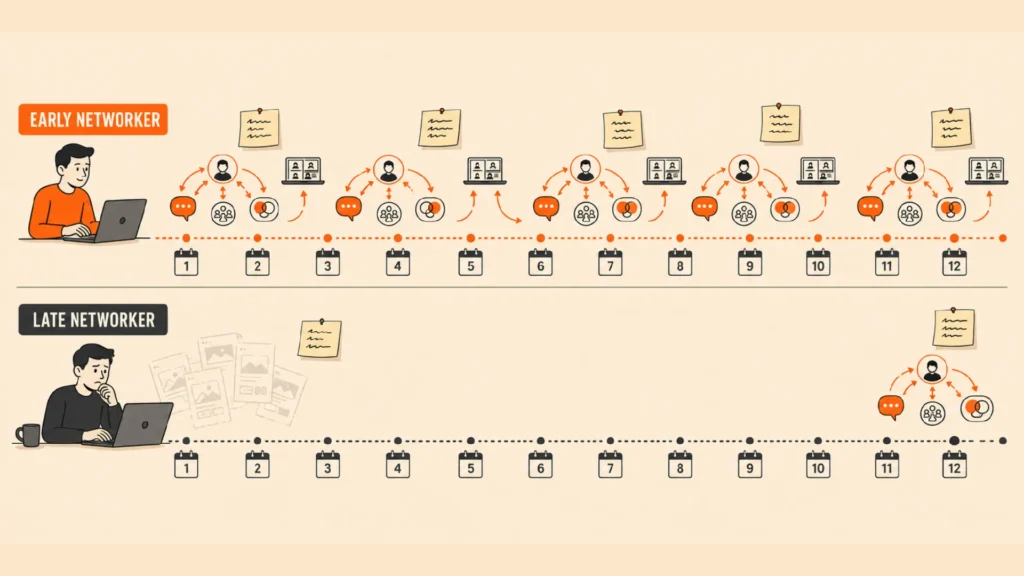
Here’s one that feels not as loud but less dramatic and more in line with the topic of the day one that won’t make the headlines, but you’ll still regret it. One of the most common misconceptions for new designers is that they don’t want to network until their portfolios look good enough. Then networking is the only way you’ll get a sense of what “good enough” is in the first place.
Waiting to get advice and feedback until you think you are worth it will cost you months that you could have spent course-correcting.
The designers that make the biggest strides in their first year aren’t always the ones who entered the field with the most talent. It is they who identified and sought early external feedback to get them back on track immediately.
What to do differently:
- Within your first month, join an active design community (a local meetup, a Slack or Discord community, or LinkedIn); don’t wait until the twelfth month.
- Don’t wait until your portfolio is “ready”; ask another designer for feedback on your work.
- Get a one-month subscription to at least one relevant design resource or community (e.g., Nielsen Norman Group, Medium.com, an Adobe CC suite)
- Attend at least one industry event or workshop in your first six months.
FAQs
If we assume two to three months to create a solid case study, it would take roughly six to nine months to complete three to four strong projects. It’s much better to have two to three thoroughly explored case studies in your portfolio rather than ten super basic ones, as recruiters will have more to assess.
Yes, from 2024 to 2026, job opportunities in the UX/UI sector in India have been increasing by around 40% year on year,, with robust job opportunities coming from fintech, e-commerce, and startups. The media and fintech industries in Mumbai add an extra layer to job openings.
Well, no, but programs help to accelerate the learning process. For example, taking the Diploma in Graphic & UI/UX Design from Le Mark will help you with research and portfolio building in a structured environment rather than figuring these things out the hard way like some self-taught designers do.
Yes, definitely; it offers the perfect blend of creativity with good earning potential. What you’ll need to remember, however, is that most designers learn on the job through research and teamwork skills you won’t get while only learning to visually design products.
Document. Designers who take the time to document their process of designing a product or app not only make for stronger portfolios but can also answer interview questions better compared to designers who’ll only remember things once the case study is done.
Conclusion
This is the story of four designers, each making their own mistake, but ultimately, it’s a similar tale: not practicing one foundational habit now means it will cost you many times that in the future. The designers I spoke to aren’t talent-less what they lacked was a system to spot these mistakes early before they became costly.
So, if you’re just entering the UI/UX space and don’t want to be “educated through the school of hard knocks” (which I didn’t need to say because it’s such a cliché) with building these foundations in place, then the Diploma in Graphic & UI/UX Design at Le Mark Institute has the building blocks in place from day one research, case-study build, collaboration, and access to a mentor.