Introduction
Every fashion design aspirant in Mumbai eventually hits the same wall: certificate, diploma, or advanced diploma, which one? The worry rarely sounds like “which course is best.” It sounds more like “what if I choose the wrong one and end up starting over?”
Course pages tend to list durations, modules, and eligibility criteria but rarely explain how one level connects to the next, or which fits a specific starting point. Add in mixed advice from friends, seniors, or social media, and it’s easy to feel like there’s a “correct” answer you’re missing.
There isn’t one. Certificate, diploma, and advanced diploma aren’t ranked “basic” to “best.” They’re built for different starting points, each answering a different question about where you are. The right fit depends on your current experience, how much time you can commit, and how sure you already are that this is the career you want.
Quick answer: Choose a Certificate if you’re new to fashion design and want a lower-commitment, six-month way to test your interest. Choose a Diploma if you already know fashion design is your direction and want a one-year, hands-on skill-building program. Choose an Advanced Diploma if you already have some design foundation and want a two-year program that adds branding, merchandising, and business skills on top.
At a Glance: Certificate vs. Diploma vs. Advanced Diploma
| Aspect | Certificate | Diploma | Advanced Diploma |
| Duration | ~6 months | ~1 year | ~2 years |
| Best for | Complete beginners testing interest | Students ready to specialize | Students wanting design + business/branding |
| Core focus | Sketching, textiles, basic sewing, design foundations | Pattern making, garment construction, surface design, digital visualization | Draping, textile science, branding, merchandising, AI-assisted design |
| Portfolio outcome | Basic foundational projects | Focused, genre-informed portfolio | Full portfolio with business/brand layer |
| Commitment level | Low, fits around school/work | Moderate, full specialization | High, broadest scope |
This comparison is based on each program’s structure, duration, and how they progress into one another, rather than on marketing claims about any single course.
1. What If I Start Too Basic and Waste Time?
Short answer: No, a professional certificate in fashion design won’t waste your time. It’s a deliberate, low-commitment first step, not a lesser version of the diploma.
Built for roughly six months, it covers fashion sketching, understanding fabrics and textiles, basic sewing, and design-thinking foundations. Why it doesn’t cost you later:
- It’s intentionally light on specialization; its job is to tell you, affordably, whether fashion design is worth going deeper into.
- The skills you build become the foundation a diploma builds on, so you’re not redoing this stage.
- It doubles as a low-pressure trial run to test your interest before committing more time and money.
- Many students use these six months to figure out which direction within fashion (garment design, styling, textiles) genuinely holds their attention, which makes the next course choice easier.
2. What If I Jump in Too Deep and Can’t Keep Up?
Short answer: The Advanced Diploma is manageable if you already have some design exposure. It becomes overwhelming only if it’s your very first introduction to fashion design.
An Advanced Diploma in Fashion Design & Brand Communication is a two-year program covering draping, advanced pattern making, textile science, fashion branding, merchandising, and AI-assisted design processes, built on the assumption you already have some design vocabulary.
- If you’ve sketched, worked with fabric, or completed a shorter course, the jump makes sense.
- If this would be your first sketchbook, build that base first rather than treating the advanced diploma as the “safe” default.
- A useful gut check: if “draping” and “textile science” make you nervous rather than curious, start with a shorter foundation course first.
- The two-year length also means a bigger financial and time commitment upfront, so it’s worth being honest about your readiness before enrolling rather than after.
3. What About the Middle Option, the Diploma?
Short answer: The Diploma in Fashion Design is the right fit if you already know fashion design is your direction but aren’t ready for the advanced diploma’s full business and branding scope yet.
The one-year diploma builds on certificate-level basics with pattern making, garment construction, surface design and embellishment, digital design visualization, and an introduction to AI-assisted design workflows.
- It’s the stage where you stop “trying fashion design” and start “practicing” it seriously, with fashion history and a focused portfolio project.
- It suits students straight out of school who are confident about the field, or certificate graduates ready to specialize.
- Versus the advanced diploma: the diploma sharpens hands-on design and construction skills, while the advanced diploma layers business and branding on top; neither is “more serious,” they solve different problems.
- Because it sits in the middle, it’s also the level where students often discover whether they lean toward pure design or toward the business side, which makes the next decision (stop here or go further) much clearer.
4. What If I Can’t Change My Mind Later?
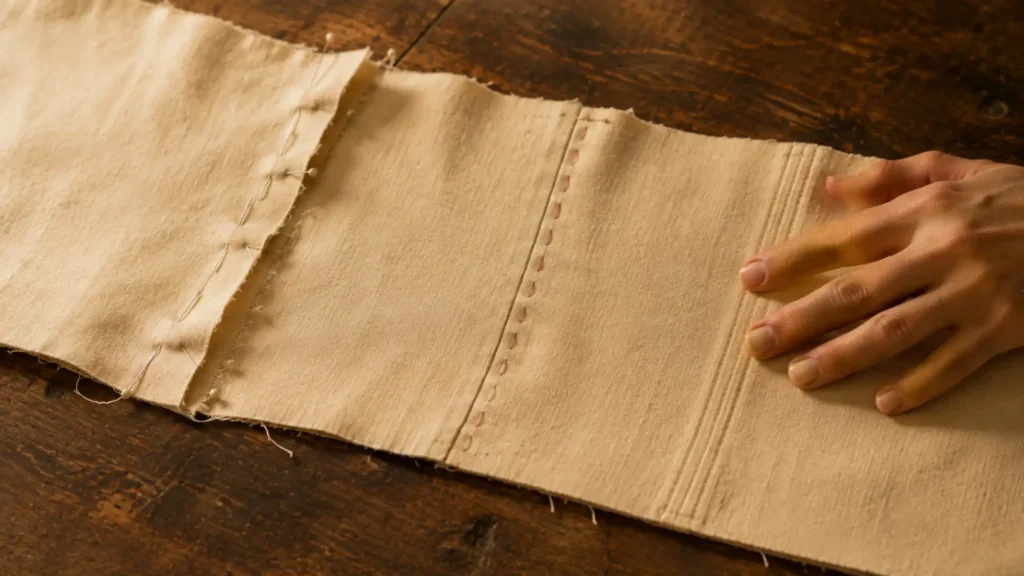
A close-up look at fabric construction, stitching, and hands-on garment-making techniques.
Short answer: You won’t get locked in. Certificate, diploma, and advanced diploma are connected levels, not one-way choices, so you can progress upward at any point.
These levels are generally designed as a connected pathway, though exact routes can vary, so confirm specifics with admissions before you enrol:
- A certificate can provide a foundation for moving into the Diploma, subject to the institute’s current admission criteria.
- A diploma can similarly provide a foundation for progressing into the Advanced Diploma, adding draping, branding, and merchandising skills, again subject to current admission criteria.
- Students can also explore the Professional Diploma in Fashion Design & Business Management for a broader, business-facing route.
You’re not choosing a permanent identity when you pick a starting course; you’re choosing a starting point on a pathway you can keep building on, and the earlier levels are designed to feed skills forward rather than sit apart as isolated qualifications.
5. A Quick Way to Check Which Path Fits You
- Have you formally studied fashion or built practical design experience? If completely new, the certificate is safer. If you already have some foundation, you may be ready for the diploma.
- How much time can you realistically commit? Six months fits around school or work; a one- or two-year commitment signals you’re ready to specialize.
- Do you already know which part of fashion excites you (design, styling, business, or textiles)? If unsure, the certificate helps you find out first.
- Are you testing a hobby, or are you already certain this is your career? The former points to a certificate; the latter to a diploma or advanced diploma.
If your answers land between two levels, lean toward the earlier one; it’s easier to move up once you’re sure than to feel out of depth in a program that assumed more experience than you had. Treat this less like a test with a right answer and more like a quick honesty check with yourself before you commit money and time.
6. What Actually Changes Career-Wise Between the Paths
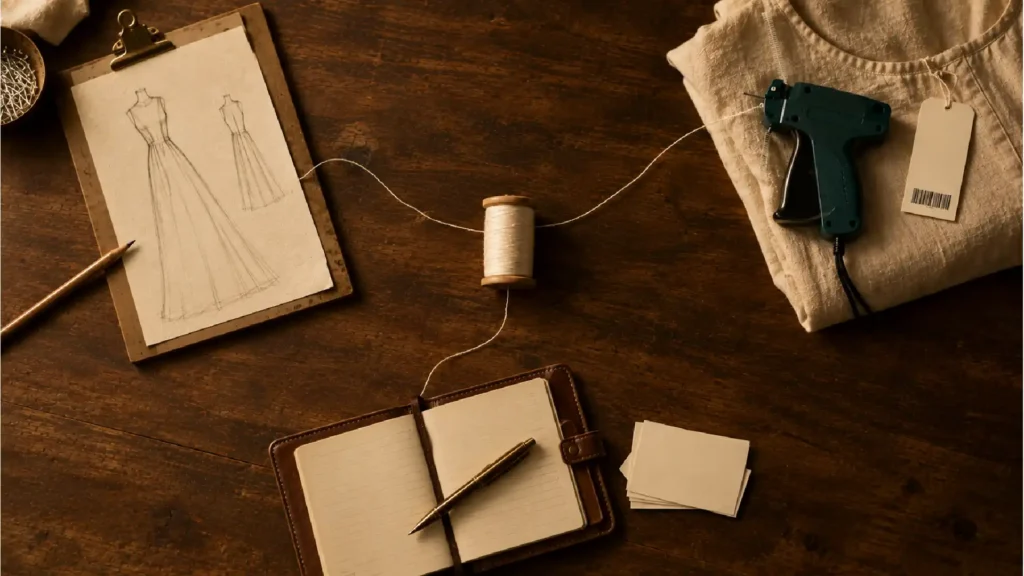
Essential tools and creative materials that bring fashion design ideas to life.
Course level widens the range of roles you’re prepared to pursue; portfolio quality, specialization, internships, and hands-on experience carry at least as much weight as the qualification itself.
- A certificate can open entry points like assistant roles or small-scale styling work or help you decide on a diploma.
- A diploma, paired with a focused portfolio, can make roles such as apparel designer, textile designer, pattern maker, or fashion illustrator more accessible.
- An advanced diploma’s branding and business training can support roles like brand manager, visual merchandiser, or fashion entrepreneur, alongside core design roles.
- Regardless of level, employers hiring for a specific niche, say bridal wear or activewear, tend to favor a candidate whose portfolio clearly reflects that focus over someone with a broader but shallower body of work.
Mumbai adds a real advantage: the city regularly hosts major national fashion platforms like Lakmé Fashion Week X FDCI at venues such as the Jio World Convention Centre, giving students direct proximity to designers, buyers, and industry events.
7. The One Mistake to Avoid
The most common mistake isn’t picking the “wrong” level; it’s picking based on duration or fees alone. A shorter course isn’t automatically the safer choice, and a longer one isn’t automatically the better investment, because neither duration nor cost tells you whether the course actually matches where you are right now.
- A student already sure about fashion design as a career, but who picks a certificate purely for speed and cost, may end up re-enrolling for a diploma within a year anyway, effectively paying twice and losing months in the process.
- A beginner who jumps straight into an advanced diploma to “save time” may spend the first several months just catching up on fundamentals other students already have, which can be more stressful and time-consuming than starting a level lower.
- Fees and duration are worth planning around, but they work best as a second filter, applied only after you’ve matched the course level to your actual starting point and goal, not as the first thing you screen courses by.
- If two courses look similar on price and length but differ in what they actually prepare you for, that difference in outcome matters more than the difference in cost.
Let your starting point and goal decide the level first; treat everything else, including fees and duration, as details to sort out once you know which level you’re actually choosing between.
FAQ
It depends on your prior experience and the institute’s current admission criteria. Beginners may benefit from starting with the certificate, while students with existing design exposure may be eligible to enter the diploma directly.
No. It broadens your skill set into branding, merchandising, and business, useful whether you freelance, join a design house, or start your own brand.
Diploma and certificate courses generally require a 10th-grade pass, and degree-level courses a 12th-grade pass, with no entrance exam.
Not in skill-building terms; certificate basics feed directly into the diploma and advanced diploma. Confirm the exact progression process with admissions.
If you’ve already worked with fabric or design concepts, and you’re confident this is the career you want, it’s a reasonable starting point rather than a stretch.
Conclusion
Choosing between a certificate, diploma, and advanced diploma doesn’t have to be stressful when you judge each option against your own experience, time, and career goals. Whichever level you begin at, treat it as a starting point rather than a final verdict on your potential as a fashion designer. Almost every working designer has a different starting story, and what matters most once you’re in the program is how consistently you show up for it.
So, which fashion design course is right for you? If you’re new to the field, starting with the certificate gives you a strong foundation. Those who already know fashion design is their direction can choose the diploma to develop practical, hands-on skills. For students ready to combine design with branding and business, the Advanced Diploma offers preparation for a broader professional role. Explore Le Mark Institute’s Certificate, Diploma, and Advanced Diploma programs in Fashion & Textile Design, or book a demo class before you commit.