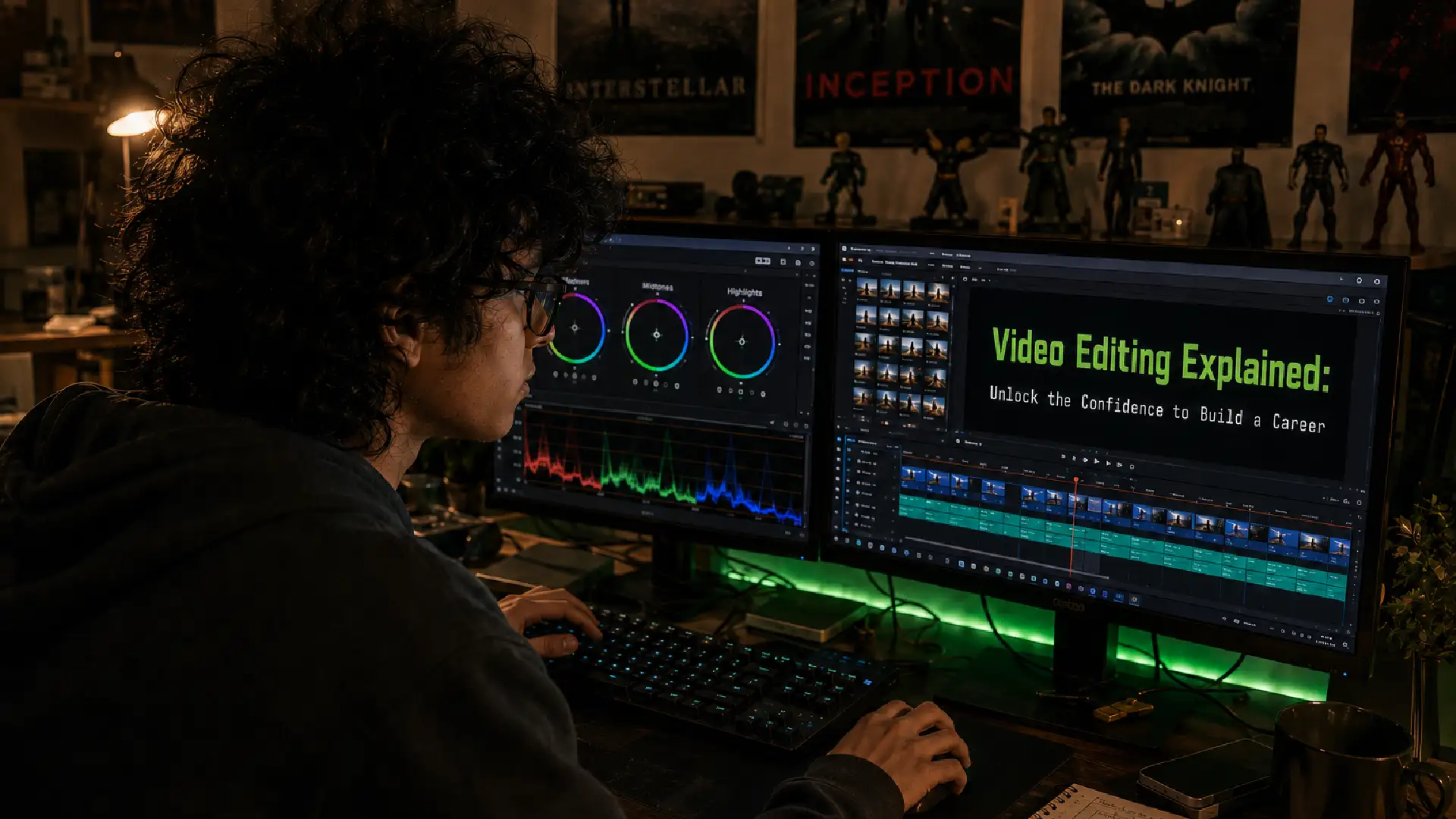
Every time you scroll past a Reel that just works, the cut lands on the beat, and the text pops in at the right second; that’s video editing doing its job. At its core, it’s the process of turning raw footage into a finished piece: trimming clips, sequencing them, adding transitions, correcting color, syncing sound, and exporting for Instagram, YouTube, or a client campaign. The basic workflow: cut → color → sound → export. Software matters, but pacing, storytelling instinct, and knowing which three seconds of footage actually matter are what push an edit from amateur to professional.
For students considering a video editing course after 12th, the real question is whether those skills translate into a career and which structured path gets you there. This guide breaks that down.
Certificate vs Diploma: The Real Difference
| Certificate | Diploma | |
| Duration | 6 months | 1 year (progression from the certificate) |
| Curriculum depth | Editing fundamentals, storytelling through sequencing, audio sync, basic colour correction, post-production finishing | Everything in the certificate, plus advanced editing workflows, motion graphics, colour grading, AI-assisted workflows, digital content production |
| Ideal for | Starting fast, testing the field, adding editing as a second skill | Committing to editing as a primary career path |
| Prepares you for | Entry-level editing roles and freelance work | Broader entry-level agency, studio, and post-production roles |
Choose a certificate if you want a shorter, focused program; you’re testing whether editing is right for you; you want editing as an additional skill alongside a degree or job, or you’re starting from zero and want a manageable first step.
Choose a diploma if editing is your primary career goal, you want broader post-production skills (color, sound, and motion graphics), you want more time for a deeper portfolio, or you’re aiming for agency, studio, or production-house roles.
At Le Mark Institute, students progress from the 6-month Professional Certificate in Video Editing into the 1-year Diploma in Video Editing & Post-Production; the diploma continues directly from the certificate rather than requiring a restart.
What You Learn at Each Level
Certificate level: editing fundamentals, storytelling through sequencing, audio sync, basic color correction, titles/graphics, and post-production finishing. This stage is about building muscle memory: understanding a timeline, learning how a cut changes rhythm, and getting comfortable exporting a finished file that actually plays correctly across platforms. Most students start here with little to no prior software exposure, so the pace is deliberately built around repetition and small, completable projects rather than one large assignment.
Diploma level (builds on the above): advanced editing workflows, motion graphics, color grading, AI-assisted creative workflows, digital media production for social, film, and advertising, and a full portfolio project from raw footage to final delivery. This is where students move from executing a brief to shaping one, learning how to make creative calls on pacing, mood, and visual tone rather than just following instructions. The extra time also allows for specialization, so a student can lean harder into color grading or motion graphics depending on where their interest and career goals point.
Which Software Should a Video Editor Learn?
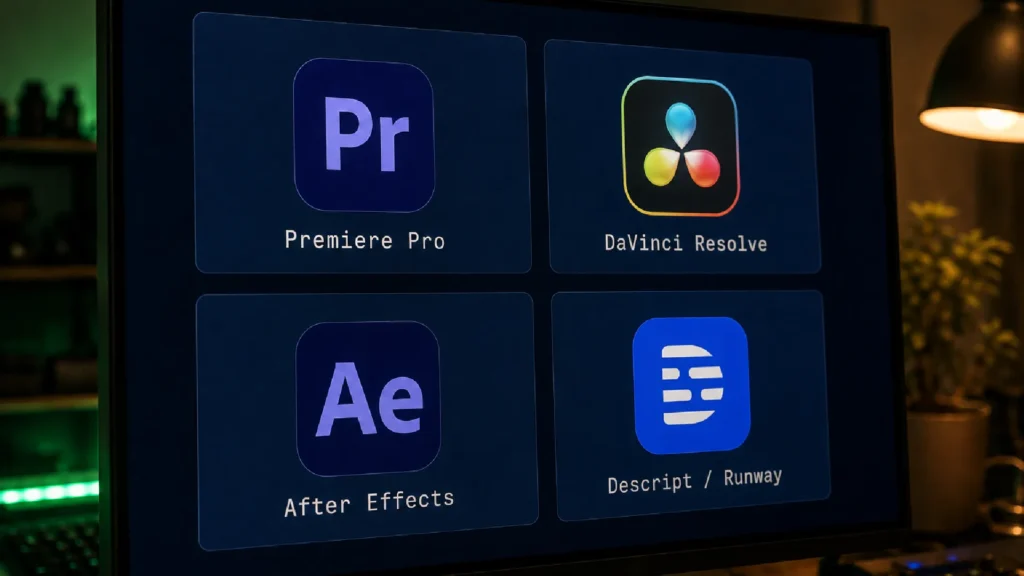
Knowing the software is what turns creative decisions into a finished edit. Here’s what’s typically covered:
- Adobe Premiere Pro: the core tool for professional editing, timeline management, cutting, sequencing, and delivery.
- DaVinci Resolve: used for editing and especially advanced color correction and grading.
- Adobe After Effects: motion graphics, titles, animation, and visual effects.
- AI-assisted tools (Descript, Runway): transcription, captioning, content repurposing, and other repetitive post-production tasks.
A practical path is to build fundamentals first, then layer in color grading, motion graphics, and AI-assisted workflows, roughly how the certificate-to-diploma progression works. AI speeds up transcription, rough cuts, and background cleanup, but it doesn’t replace the judgment calls around pacing and what holds a viewer’s attention.
How Long Does It Take to Learn Video Editing?
Basic skills can be picked up relatively quickly, but becoming job-ready takes consistent practice, feedback, and portfolio work on top of that. A 6-month certificate builds a solid foundation; a 1-year diploma allows more time for color grading, motion graphics, sound design, and full post-production workflows. There’s no fixed timeline that guarantees “professional” status; it depends on how deliberately you practice and build your portfolio alongside coursework.
Two students on the same course can end up at very different skill levels simply based on how much they edit outside of class, so structured feedback and repeated hands-on practice tend to matter more than the calendar. Treating the course as a floor rather than a ceiling, and continuing to edit personal projects after each module, is usually what separates someone who finishes the program from someone who is actually ready to take on paid work.
Career Paths This Opens Up
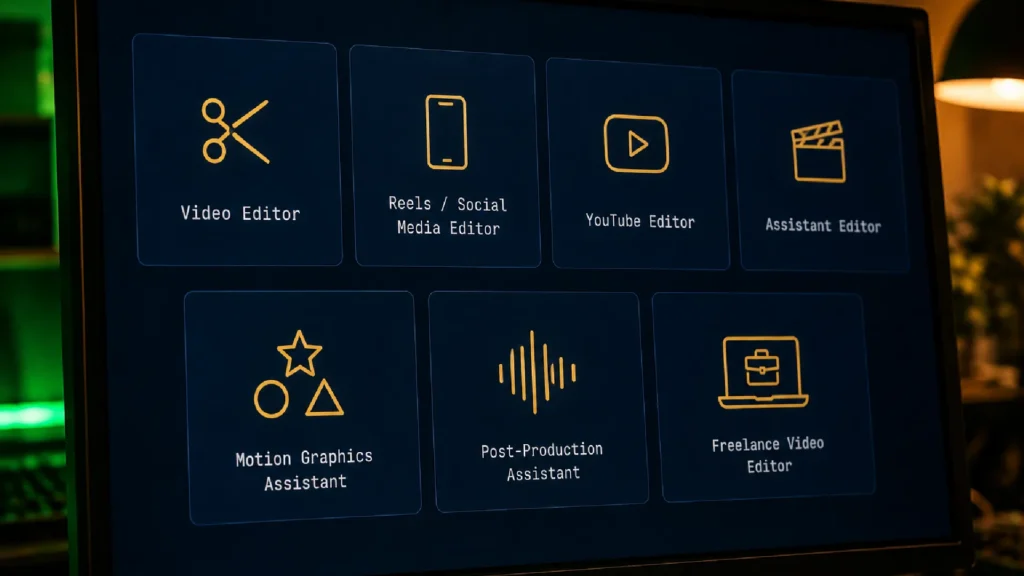
| Role | What They Typically Work On |
| Video Editor | Long-form and short-form video content |
| Reels / Social Media Editor | Instagram, YouTube Shorts, social content |
| YouTube Editor | Creator and channel content |
| Assistant Editor | Larger productions and post-production support |
| Motion Graphics Assistant | Titles, animation, graphic elements |
| Post-Production Assistant | Editing, sound, colour, delivery |
| Freelance Video Editor | Client-based projects across industries |
Social/Reels editing is a growing entry point as brands and creators lean more on short-form video, though how fast any one role grows depends on the specific industry and platform.
What Skills Do Employers Look For?
- Pacing and rhythm across a cut
- Storytelling instinct
- Cutting and sequencing
- Colour correction
- Sound editing and audio sync
- Motion graphics basics
- On-screen typography
- Platform-specific editing (vertical vs. horizontal, length limits)
- File and project management
- Clear communication with directors or clients
- Deadline discipline
- A varied, format-flexible portfolio
- Comfort with AI-assisted workflows
- Ability to take feedback without getting defensive
- Explaining editing choices in plain, non-technical language
What You Can Actually Earn
Editor pay in India varies by experience, portfolio strength, location, and whether you’re freelance or full-time.
| Career Stage | Indicative Monthly Range |
| Fresher / entry-level | ₹15,000 – ₹30,000 |
| 1–3 years experience | ₹30,000 – ₹50,000 |
| Experienced / specialised editor | ₹50,000+ |
| Freelance editor | It depends on the project, clients, and specialization. |
These are indicative ranges, not guarantees; actual pay depends on portfolio quality, experience, location, specialization, and content type. Fueler’s 2026 salary breakdown puts fresher starting pay at roughly ₹2.5–4 lakhs annually, with Mumbai among the higher-paying cities for the role
Industry outlook: A 2026 hiring-trends report from PW notes entry-level offers are increasingly shaped by portfolio quality and AI tool proficiency rather than years of experience. The same report tracks the global video editing software market growing from roughly $2.5 billion in 2025 to $3.4 billion by 2030, driven by demand for social and OTT video.
Can I do a video editing course after 12th?
Yes. Students from arts, commerce, and science backgrounds can pursue video editing courses after Class 12. No specific academic stream or prior editing experience is required, which makes this one of the more accessible creative career paths for students who didn’t take a design-focused subject in school.
The Le Mark Institute inquiry process lists 10th Pass as an eligible tier alongside 12th Pass and above, so certificate-level entry typically starts from 10th Pass. No entrance exam is required. Admission is based on eligibility and a counseling conversation, where the focus is usually on understanding a student’s interests and current comfort level rather than testing prior editing knowledge. This makes the course equally suited to someone starting completely from scratch and to someone who has already been editing casually on their phone and wants to formalize those skills.
What Should Your Portfolio Actually Include?
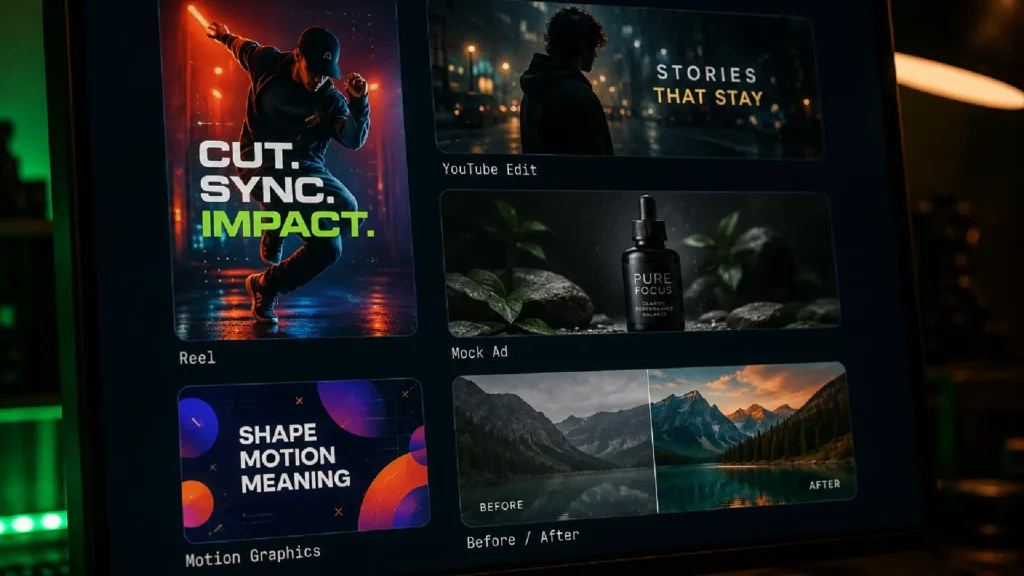
A beginner portfolio could reasonably include the following:
- A short-form social video (20–30 second Reel)
- A YouTube-style edit (3–5 minute narrative or educational piece)
- A mock advertisement (30–60 second product or brand video)
- A before/after edit demonstrating colour and sound improvement
- A motion graphics piece showing titles, typography, and animation
A structured course’s real value is forcing you to build a portfolio like this through real assignments and feedback. If comparing programs, ask how much hands-on portfolio work is built into the curriculum, not just which software is taught.
Why Mumbai Is a Strong Market for Video Editing Careers
Mumbai is one of India’s biggest hubs for media, entertainment, advertising, and digital content, making it an exciting place to build a career in video editing. From advertising agencies and film or TV production houses to digital marketing companies, YouTube channels, social media teams, wedding filmmakers, fashion brands, corporate production, and OTT-related content, editors have opportunities to work across a wide range of creative industries.
For students, learning video editing in Mumbai also means being closer to the ecosystem where much of this content is created. A hands-on, industry-focused program can help aspiring editors build practical skills, develop a strong portfolio, and prepare for opportunities across the city’s fast-moving creative and media landscape.
FAQ
For students who enjoy storytelling, technology, and visual communication, yes. Demand for edited content across social media, YouTube, and digital marketing is strong. Employability still comes down to skills, portfolio quality, and practical experience rather than the course alone.
Cuts, transitions, and timeline management first; then color correction and sound design; and at the diploma level, motion graphics and AI-assisted post-production tools.
Yes, arts, commerce, and science students are all eligible.
Not necessarily. The diploma goes deeper and suits a full editing career; the certificate is quicker if you want to start working sooner or are still testing the field.
Yes, at Le Mark Institute, the diploma is a direct progression from the 6-month certificate, not a separate track.
Months for the basics; job readiness takes ongoing practice and portfolio building alongside a structured course.
Conclusion
Programs: A Professional Certificate in Video Editing (6 months) and a Diploma in Video Editing & Post-Production (1 year), with the diploma structured as a direct progression from the certificate.
What students learn: At the certificate level, editing fundamentals, storytelling through sequencing, audio sync, basic color correction, and post-production finishing. At diploma level, advanced editing workflows, motion graphics, colour grading, and AI-assisted creative workflows
Portfolio development: Yes, both levels include hands-on projects and portfolio development as part of the curriculum.
Campuses: Andheri and Ghatkopar.
Eligibility: No prior design or software experience required; the certificate builds from the fundamentals.
Curious whether this is the right path for you? You can book a demo class to sit in before committing.
Students interested in the broader photography and filmmaking side of visual storytelling can also explore Le Mark’s diploma and certificate courses in photography and digital filmmaking or read about career paths in photography and videography on the Le Mark blog. For students who want to go further into animation and visual effects alongside editing, the Animation and VFX career guide covers that path in more depth.