
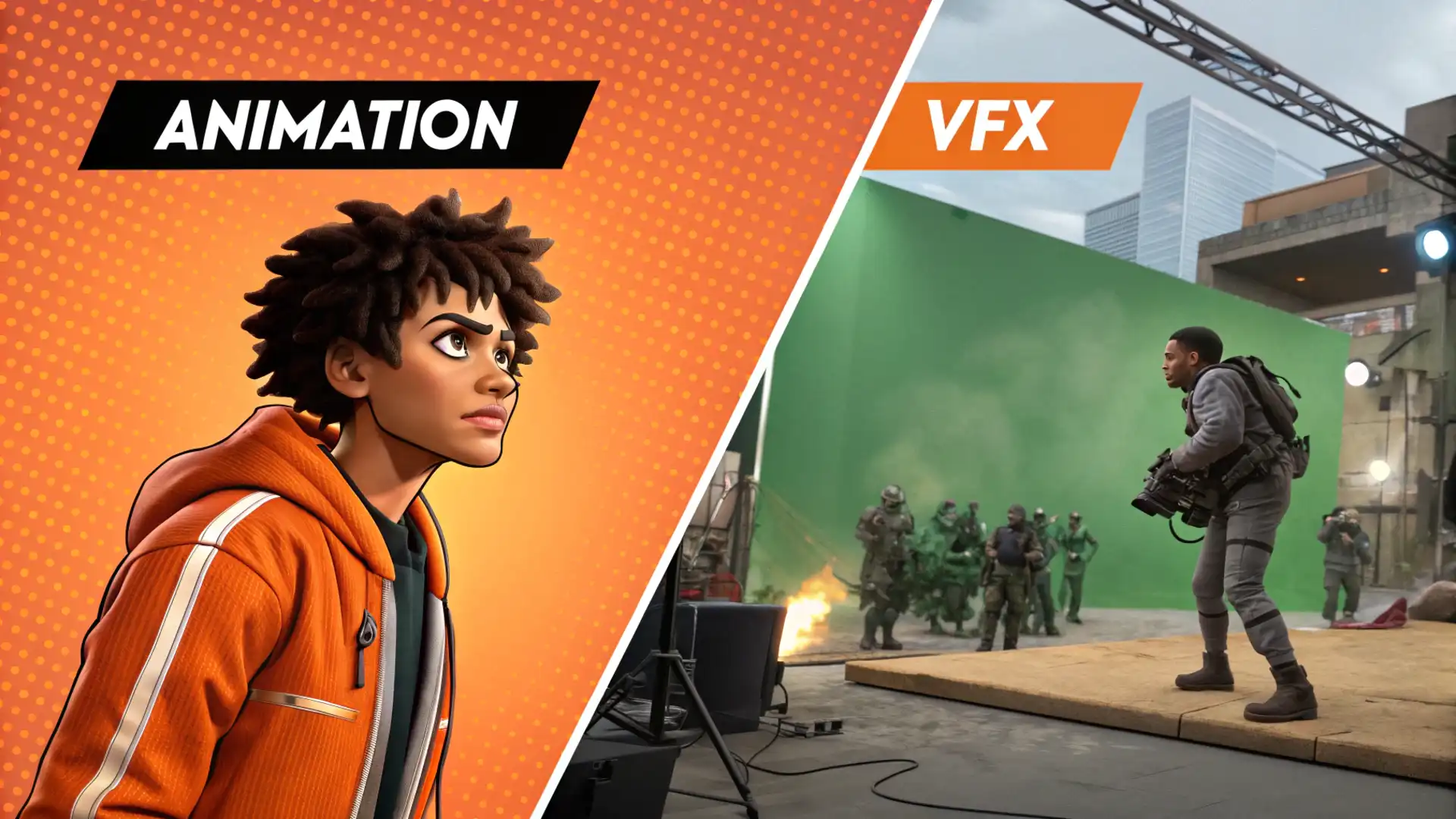
With the rise of OTT platforms, video games, and films packed with stunning visuals, careers in animation and visual effects are booming. The growth of VFX in India is well-documented in this report by FICCI-EY. Taking an Animation and VFX course is now one of the best ways to enter this fast-growing industry. Both fields offer exciting career paths but they are not the same.
So, if you’re considering an Animation & VFX course, you’re probably wondering:
Which career path is right for me Animation or VFX?
This blog takes a clear look at both careers what they’re about, what skills you need, career options, and how to choose the one that suits your interests, strengths, and career aspirations best.
What is Animation?
Animation is the art of creating motion in static images. It brings characters, objects, and entire worlds to life using sequential frames, timing, and movement.
Animation is used in
- Animated films and cartoons
- TV shows and OTT content
- Explainer videos and product demos
- Mobile and PC games
- YouTube, branding, and digital content
Types of Animation
- 2D Animation:
Flat characters drawn frame-by-frame or digitally vectorized (e.g., classic cartoons, anime). - 3D Animation:
Realistic or stylized characters and environments rendered in three-dimensional space (e.g., Toy Story, Avatar). - Stop-motion Animation:
Physical models are photographed frame-by-frame (e.g., Shaun the Sheep). - Motion Graphics:
Animated logos, infographics, and transitions used in digital branding and advertising.

These are the core components of Animation you’ll explore in an Animation and VFX course, helping you master movement, timing, and storytelling.
Core Animation Skills
- Strong sense of storytelling and imagination.
- Good drawing or visual composition skills (especially for 2D).
- Understanding of timing, rhythm, and performance.
- Familiarity with principles of animation (squash & stretch, anticipation, etc.)
- Software expertise: Tools like Autodesk Maya, Nuke, and Blender are industry staples.
Popular Job Roles in Animation:
| Job Role | What You Do |
|---|---|
| 2D Animator | Create movement using vector-based or hand-drawn characters |
| 3D Animator | Animate 3D characters, objects, and scenes |
| Character Designer | Design the look, attire, and expressions of characters |
| Storyboarding Artist | Sketch and plan scenes visually before animation begins |
| Rigging Artist | Build the “bones” or controls for 3D characters |
| Motion Graphics Designer | Animate brand assets, titles, and elements for videos |
Career Scope in Animation
Animation is a great fit if you love building original characters, visual storytelling, or creating content that emotionally connects with audiences. Industries like entertainment, e-learning, digital advertising, and gaming constantly hire animators.
What is VFX?
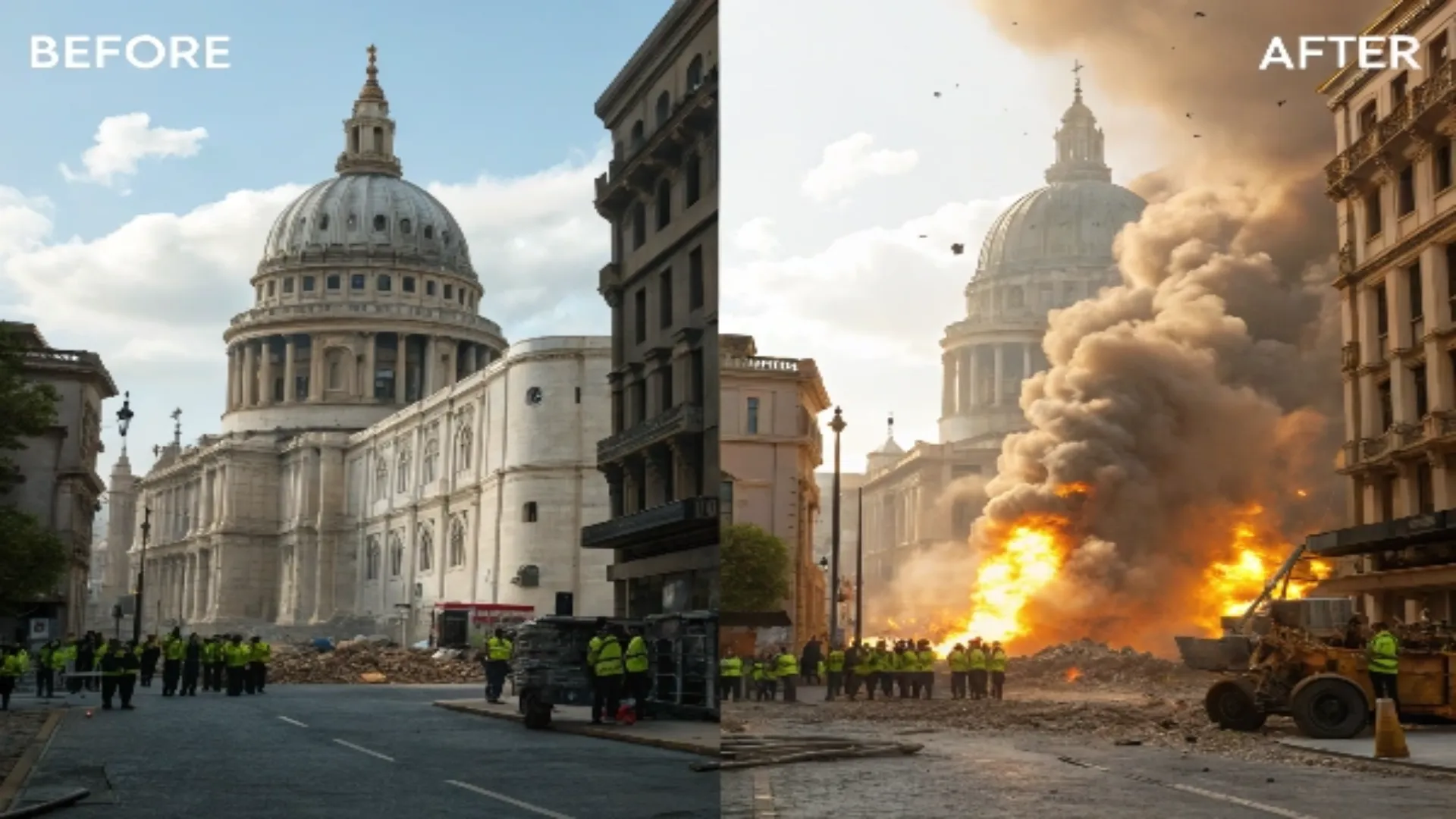
VFX, or Visual Effects, is the process of manipulating and enhancing live-action footage using computer-generated imagery (CGI). It allows creators to build things that can’t be captured with a camera like dragons, destruction, space travel, or magical elements.
VFX is used in
- Live-action feature films and OTT series.
- Action scenes with stunts, explosions, or supernatural elements.
- Ads and branded content.
- Music videos, VR/AR experiences, and simulators.
Types of VFX
- Compositing:
Combining live footage with digital elements seamlessly. - Rotoscoping:
Tracing over footage to isolate characters or remove backgrounds. - Matchmoving:
Aligning digital objects with live-action camera movement. - Simulations:
Creating fire, water, smoke, cloth, or destruction effects. - CG Environments:
Generating complete or partial background settings.
These techniques are essential parts of any modern Animation and VFX course, where you’ll work hands-on with live footage and digital effects.
Core VFX Skills
- Detail-oriented visual sense and precision.
- Problem-solving mindset with technical understanding.
- Ability to match lighting and textures with real footage.
- Advanced use of tools like Nuke, Houdini, After Effects, Maya, and Mocha.
- Understanding of color grading, green screen techniques, and physics-based simulations.
Popular Job Roles in VFX
| Job Role | What You Do |
|---|---|
| VFX Artist | Add fire, explosions, or other effects to footage |
| Compositor | Blend digital elements with real footage |
| Matchmove Artist | Track and integrate 3D elements into live scenes |
| Roto Artist | Isolate characters from the background for compositing |
| FX Technical Artist | Create realistic simulations like fluids, smoke, etc. |
| Lighting & Rendering Artist | Adjust how scenes are lit and exported realistically |
Career Scope in VFX
VFX is ideal if you’re fascinated by technology, love solving visual challenges, and enjoy enhancing reality through digital means. The film, gaming, advertising, and post-production industries offer vast opportunities for skilled VFX professionals.
Animation vs. VFX: Side-by-Side Comparison
| Aspect | Animation | VFX |
|---|---|---|
| Focus | Character movement and storytelling | Realism, enhancement, and special effects |
| Skills Needed | Artistic, storytelling, timing, expression | Technical, detail-oriented, realism-based |
| Software Used | Maya, Blender, Toon Boom, Animate | Nuke, After Effects, Houdini, Mocha |
| Common Output | Cartoons, games, motion graphics | Films, OTT, high-end ads, action sequences |
| Personality Fit | Imaginative, expressive, performer-type | Precise, logical, problem-solver |
| Career Entry | Through animation diplomas/degrees | Through VFX training and compositing courses |
| Top Employers | DreamWorks, Pixar, Nickelodeon, Ubisoft | DNEG, MPC, Red Chillies VFX, Framestore |
How a Course Helps You Choose the Right Path
Most Animation & VFX courses start with a foundation module where you are introduced to both areas. This helps students:
- Understand their strengths early on
- Get exposure to tools used in each domain
- Work on sample projects to find their interest
- Choose a specialization (Animation or VFX) with better clarity
At Le Mark Institute, for example, students are guided through both Animation and VFX streams with hands-on training, software mastery, project-based learning, and one-on-one mentorship so they can confidently decide their creative direction.
Who is Eligible for an Animation and VFX Course?
One of the biggest advantages of Animation and VFX education is its accessibility. Whether after 10th, 12th, or during graduation, there’s an Animation and VFX course designed to match your stage and goals.
After 10th
If you’ve completed your 10th standard, you can start early by enrolling in:
- 1-Year Certificate Programs
- 2-Year or 3-Year Professional Diplomas
These programs are ideal for students who want to build a strong creative foundation from a young age and enter the industry early. They cover essential tools, techniques, and portfolio-building exercises tailored to industry needs.
After 12th (Any Stream)
This path is ideal for those who want a structured academic journey, a deep dive into the creative process, and the opportunity to specialize in either Animation or VFX during their later semesters.
Additionally, students who have passed 12th grade are eligible to pursue a Bachelor’s Degree in Animation & VFX, which typically spans 3 to 4 years.
Dual Qualification Option (For B.Com, BBA, BMM, etc. Students)
If you’re pursuing a traditional degree such as B.Com, BBA, BMS, or BMM, you can enhance your creative and career profile by simultaneously doing a Diploma in Animation or VFX.
This allows you to gain practical skills and industry exposure while completing your mainstream academic degree giving you a powerful edge in the job market.
For Working Professionals
Already working in a different field but want to switch careers or explore your creative side?
You can enroll in flexible diploma programs (often weekend or part-time) that focus on core Animation or VFX skills. These courses are perfect for:
- Graphic designers expanding into motion graphics or animation
- IT professionals transitioning into creative tech roles
- Content creators, marketers, or filmmakers looking to upskill
So… Which Career Suits YOU Better?
Choose Animation if
- You love creating characters and imagining their lives.
- You enjoy visual storytelling, humor, or emotional drama.
- You like drawing or crafting appealing visuals.
- You want to work in films, series, games, or advertising.
Choose VFX if
- You enjoy working on live-action footage and effects.
- You’re fascinated by how reality can be enhanced digitally.
- You’re tech-savvy and love problem-solving.
- You want to be part of high-end productions, simulations, or blockbusters.
Still not sure which is right for you? Attend a Free Demo Class and experience both fields firsthand.
Ready to Step Into the Creative Industry?
Whether you choose Animation or VFX, the creative industry is full of exciting opportunities and global career growth. With the right training, tools, and guidance, you can turn your talent into a thriving career.
- Explore career-oriented programs in Animation & VFX at Le Mark Institute.
- At Le Mark Institute, our Animation and VFX course includes hands-on projects, software mastery, and expert guidance.
No matter your background, there’s a course designed to help you enter the Animation & VFX industry with confidence. Your creativity deserves a future that’s just as bold.