


 Module 1
 Module 1
Makeup Products & Equipment
Get to know the author, Rachel Dal Santo, before she introduces you to the colourful world of Makeup Artistry and all it entails. This module takes an extensive look at the broad range of products and equipment available, colour theory, and how to operate safely as a makeup artist.
Module Content:
- Important Information
- Introduction to the Course
- Welcome!
- Ten Attributes of a Successful Makeup Artist
- The Author & Guest Makeup Artists
- Tools and Products
- An Introduction to the Makeup Artist’s Kit
- Equipment, Skincare and WHS
- Makeup Products
- Special Effects Products
- Makeup Brushes
- Purchasing Your Kit
- Work Health and Safety (WHS)
- Work Health & Safety Guidelines for the Makeup Artist
- Cleaning Your Brushes, Sponges, and Powder Puffs
- Colour Theory for the Makeup Artist
- Understanding Colour
- The Language of Colour
- Face Charts
- Makeup Designs : Guidelines for the Makeup Artist
- Makeup Application Basics
- Skin Types and Skin Conditions
- Skincare Products
- Concealer Types and Application
- Foundation Types and Application
- How to Choose a Foundation According to Skin Type
- Mixing Foundations
- Popular Foundation, Primer and Moisturiser Brands Currently Used in the Film, Television and Photography Industries
- Powder Types and Usage
- Correcting Skin Problems and Covering Tattoos
- Assignment 1
- Stay Connected
- The IMUA Community
Module 2
 Module 2
Face, Eyebrow, Eye, & Lip Shapes
Become familiar with the diversity of human facial features and learn the skills required to make up any face with confidence!
Module Content:
- Important Information
- Face Shapes
- Identifying Face Shapes
- Contouring : Highlight & Shade
- Application Techniques : For Contouring
- Eye Shapes
- Classic Eye Makeup
- Smokey Eye Makeup
- Makeup for Asian Eyes
- Eyebrow Shapes
- Measuring the Eyebrow
- Common Eyebrow Corrections
- Lip Shapes
- Lip Products
- Common Lip Shape Problems and How to Fix Them
- Assignment 2
Module 3
 Module 3
Glamour Makeup for Photography
From the photography studio to the wedding aisle, delve into the depths of Glamour Makeup and learn about the various styles and techniques for making your clients feel beautiful!
Module Content:
- Important Information
- Glamour Makeup for Photography
- Makeover Photography Studios
- Blogger/Social Media Influencers : Guidelines for the Makeup Artist
- Wedding Photography
- Fashion Photography
- Beauty Photography
- Other Commercial Photography
- Model Release Forms
- Makeup Trends and Fashions
- Staying on Trend
- Fashion Makeup Demonstrations
- Soft Natural Makeup
- Classic Corporate Makeup
- Red Carpet Glamour Makeup
- Kim Kardashian / Instagram Inspired Makeup (Incorporating a Cut Crease Style Eyeshadow Application)
- Makeup for Black and White Photography
- Makeup Application and Capture for Black and White Photography
- Bridal Makeup
- Popular Bridal Makeup
- Mother of the Bride Makeup
- Additional Wedding Makeup
- Multicultural Weddings
- Indian Bridal Makeup
- Chinese Bridal Makeup
- Glamour Makeup for Dark Skin
- Working With Dark Skin Tones
- Bridal Makeup for Dark Skin
- Assignment 3
Module 4
 Module 4
High Fashion Makeup
Delve deeper into the Fashion Industry and explore the various styles and techniques of High Fashion Makeup Artistry. This fun module will have you exercising your artistic flair!
Module Content:
- Important Information
- Photographic vs. Catwalk/Runway Makeup
- How Lighting Effects Makeup
- Understanding Lighting Types
- Coloured Filters
- Styles of Makeup for the Catwalk/Runway
- Hollywood Glamour and Avant-Garde
- Working With Fashion Designers
- Collaborating With a Team
- Designing for a Fashion Show
- Creating Looks for the Catwalk/Runway
- High Fashion Makeup Demonstrations
- Various Styles Explained
- Culture Inspired Look : Geisha
- Culture Inspired Look : Wodaabe Tribe
- Culture Inspired Look : Birth of Venus
- Theatre Inspired Look : Ballerina
- Historical Period Inspired Look : 1960s
- Historical Period Inspired Look : Rococo Era
- Assignment 4
Module 5
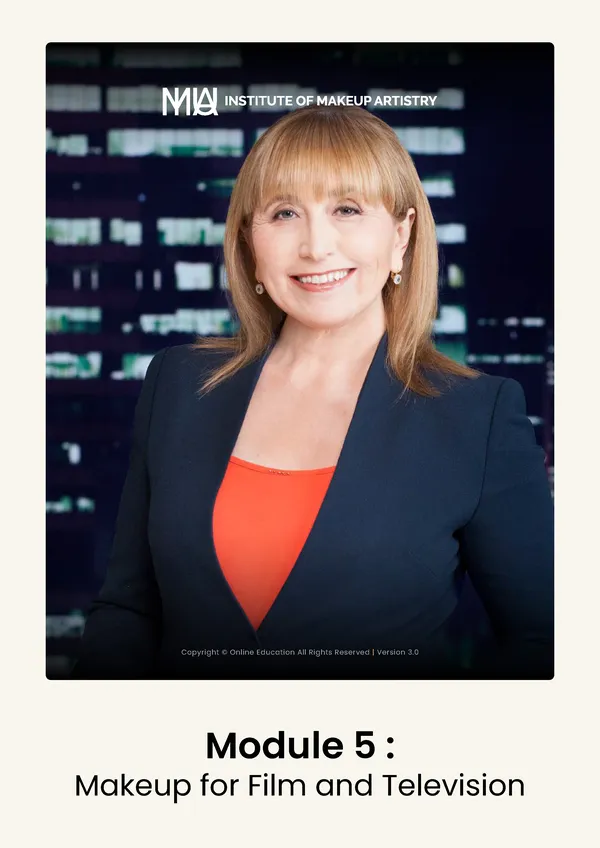 Module 5
Makeup for Film and Television
Lights! Camera! Action! This module introduces you to the exciting world of Film and Television makeup! Become familiar with the many industry-specific standards and how they affect makeup design and continuity, which is one of the most crucial elements of this field.
Module Content:
- Important Information
- Introduction to Film and Television
- Industry Overview
- Film/TV Crews and Their Duties
- Film/Television Crew Members and Their Duties
- Studio Protocol and On Set Expectations
- On Set Procedures and What to Expect
- Television Makeup
- High-Definition (HD)/Digital Television
- Floor Duty/On Set Maintenance for Television
- Male News Presenter Makeup
- Makeup for Men
- Makeup for Excellent Complexion
- Makeup for Average Complexion
- Unusual Problems and How to Fix Them
- Female News Presenter Makeup
- Applications for Female News Presenters
- Makeup for Female News Presenter
- Film Makeup
- Makeup for Film and the Differences Between Film and Television
- ‘No Makeup’ Makeup : Male
- ‘No Makeup’ Makeup : Female
- Script Continuity Analysis
- Steps to Set up a Continuity System
- Script Analysis : Life is Getting Better
- Continuity Considerations
- Character Breakdown Sheets
- Example of a Call Sheet From a Different Television Series for One Day’s Shoot
- Creating a Roster for the Makeup Department
- Creating a Makeup Budget
- Assignment 5
Module 6
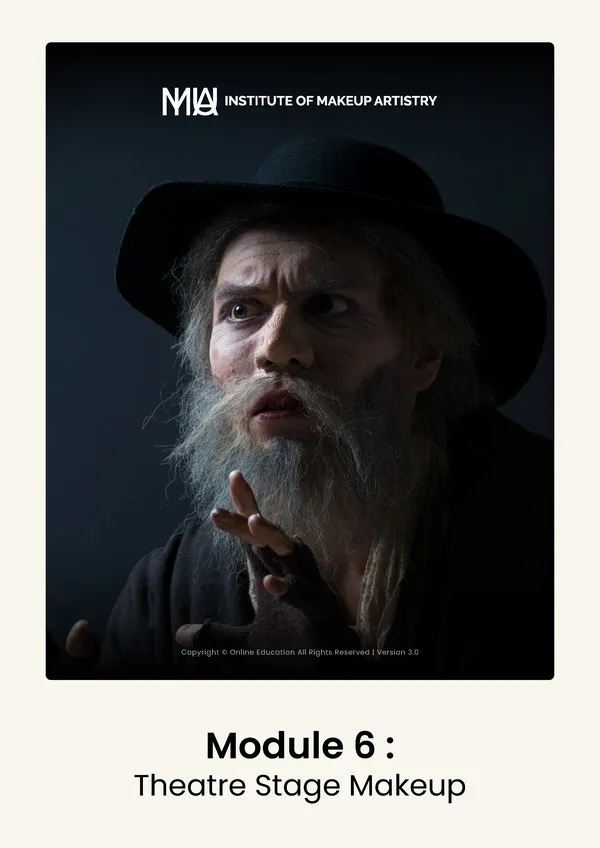 Module 6
Theatre Stage Makeup
As well as teaching you about the key differences between camera makeup and stage makeup, this module will take you back in time to provide you with in-depth insight into the fascinating history of makeup!
Module Content:
- Important Information
- Introduction
- Theatre Stage Makeup
- Designing the Makeup
- Lighting and Makeup
- Employment in the Theatre
- How to Collaborate in a Creative Process
- Basic Male Makeup Techniques for Theatre
- Historical Period Makeup
- Period-Based Productions
- Authentic Makeup vs Interpretations
- Ancient Egyptian Period : 3200 BCE (Before Common Era) – 400 CE (Common Era)
- Ancient Roman Period : 753 BCE – 476 CE
- Ancient Greek Period : 800 BCE – 146 CE
- Medieval and Renaissance Periods : 476 – 1350 CE (Medieval/Middle Ages), 1350 – 1500 CE (Renaissance)
- Tudor and Elizabethan Periods : 1485 – 1558 CE (Tudor), 558-1603 CE (Elizabethan)
- Stuart and Restoration Periods : 1603 – 1714 CE (Stuart), 1660 – 1688 CE (Restoration)
- Georgian Period : 1714 – 1830 CE
- Regency Period : 1811 – 1837 CE
- Victorian Period : 1837 – 1901 CE
- Edwardian and George V Periods : 1901-1910 CE (Edwardian), 1910–1920 CE (George V)
- 1920s Period : 1920-1930 CE
- 1930s Period : 1930-1940 CE
- 1940s Period : 1940-1950 CE
- 1950s Period : 1950-1960 CE
- 1960s Period : 1960-1970 CE
- 1970s Period : 1970-1980 CE
- 1980s Period : 1980-1990 CE
- Period Makeup Demonstrations
- Ancient Egyptian Makeup
- Georgian Makeup
- Victorian Makeup
- 1920s Makeup
- 1980s Makeup
- Common Theatrical Characters
- Geisha Makeup
- Clown Makeup
- Traditional White-Faced Clown
- Assignment 6
Module 7
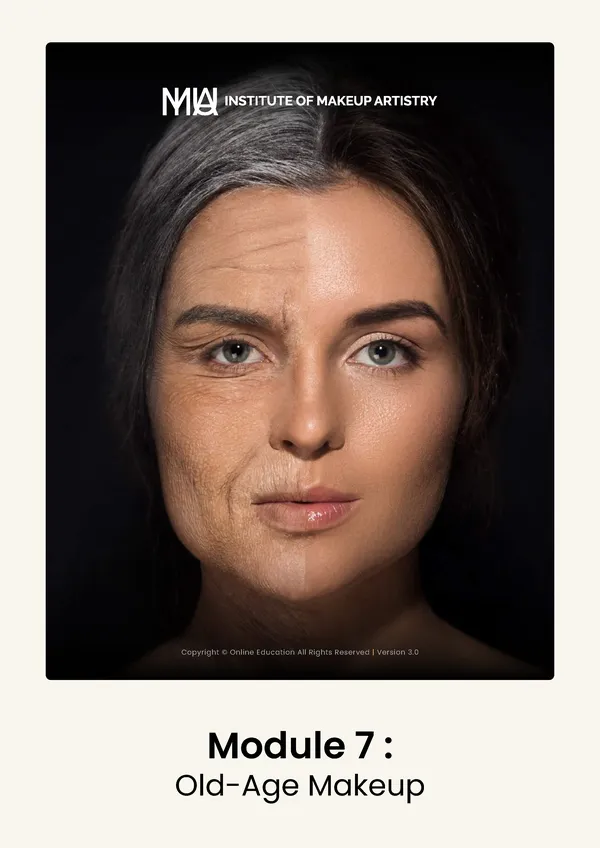 Module 7
Old-Age Makeup
This module is your first taste of Special Effects Makeup, exploring the various techniques available for adding years to your clients!
Module Content:
- Important Information
- Introduction
- Designing Old-Age Makeup
- Approaches to Aging Makeup
- Highlight and Shade : Approach and Method
- Latex or Stipple : Approach and Method
- Green Marble : Approach and Method
- Prosthetics : Approach and Method
- Old-Age Makeup Demonstration
- Assignment 7
Module 8
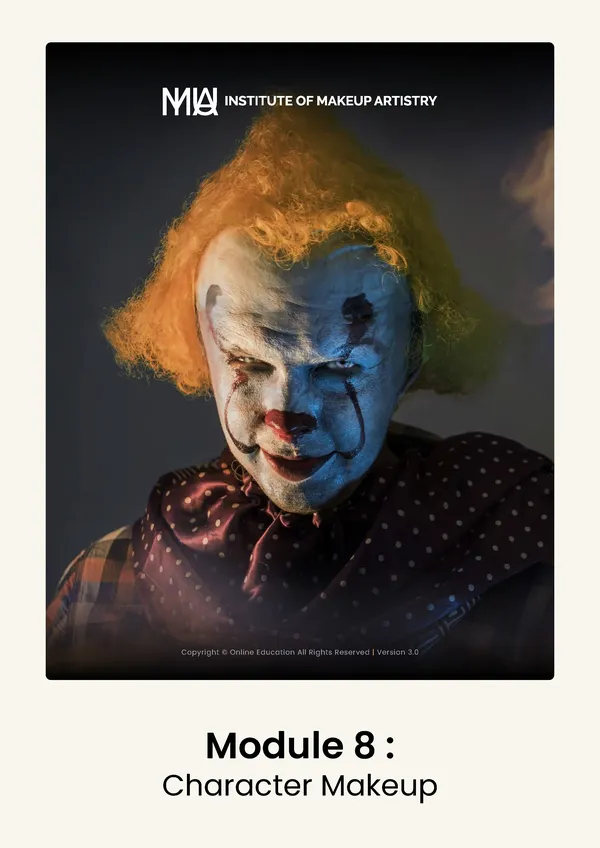 Module 8
Character Makeup
Attain the skills commonly used in the fantastical world of character makeup. This module will have you recreating your favourite characters in no time!
Module Content:
- Important Information
- Introduction to Character Makeup
- Designing for a Character
- Designing for Film and Television
- Designing for Theatre
- Theatre Makeup Techniques
- Video Demonstrations
- Witch : Traditional Theatre Makeup
- Fagin (Oliver Twist) : Traditional Theatre Makeup
- Assignment 8
Module 9
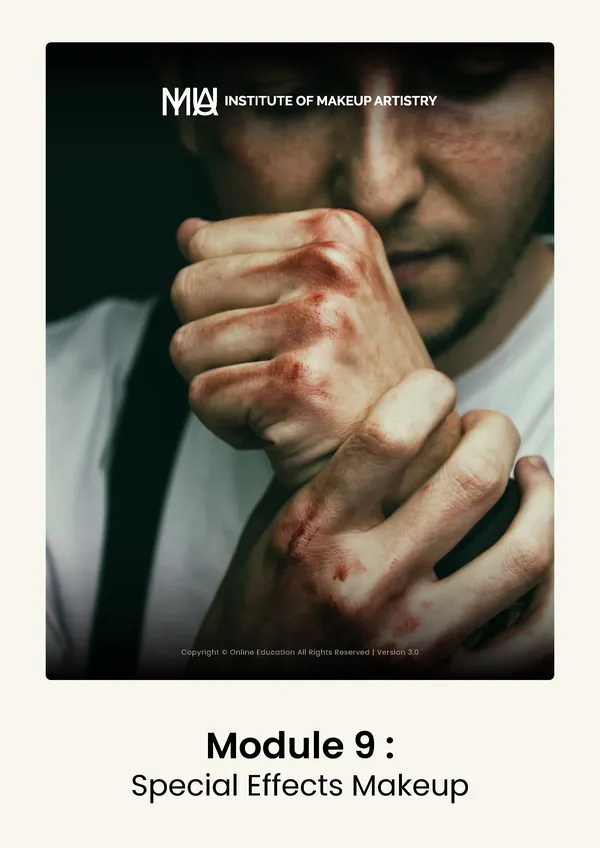 Module 9
Special Effects Makeup
This module officially welcomes you into the attention-grabbing and jaw-dropping world of special effects makeup. With a focus on injury and disease simulation, your creations are sure to give people chills!
Module Content:
- Important Information
- Introduction to SFX Makeup
- What is SFX Makeup?
- SFX Injury and Disease Simulation
- Bruising : Recreation
- Bruising : Application Technique
- Abrasions : Recreation
- Abrasions : Application Techniques
- Scabs : Recreation
- Scabs : Application Techniques
- Tears and Perspiration : Recreation
- Tears and Perspiration : Application Techniques
- Artificial Dirt : Recreation
- Artificial Dirt : Application Techniques
- Cuts and Lacerations : Recreation
- Cuts and Lacerations : Application Techniques
- Sutures/Stitches : Recreation
- Sutures/Stitches : Application Techniques
- Bullet Wounds : Recreation
- Bullet Wounds : Application Techniques
- Scars : Recreation
- Scars : Application Techniques
- Tattoos : Recreation
- Tattoos : Application Techniques (all Mediums)
- Chicken Pox (Varicella) : Recreation
- Chicken Pox (Varicella) : Application Technique
- Small Pox : Recreation
- Small Pox : Application Technique
- Burns : Recreation
- Burns : Application Techniques
- Injury and Disease SFX for Fantasy Characters
- Creating a Zombie Character
- Zombie Character : Application Technique
- SFX Film Makeup : Character Contact Lenses
- SFX Makeup Demonstrations
- SFX Film Makeup : Burns Simulation Demonstration
- SFX Film Makeup : Assault Simulation Demonstration
- Assignment 9
Module 10
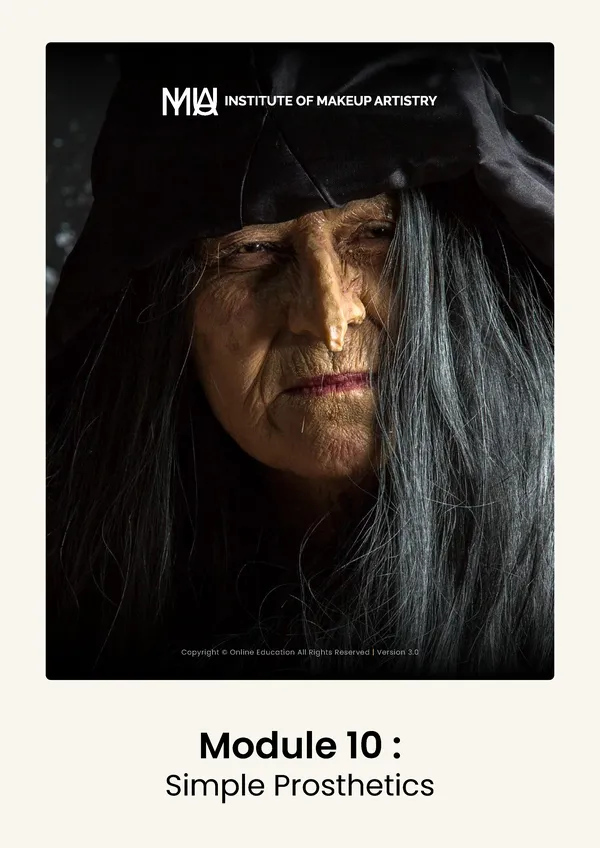 Module 10
Simple Prosthetics
A final look into the depths of special effects makeup, this module will give you the skills required for creating simple prosthetics!
Module Content:
- Important Information
- Introduction
- History of Prosthetic Makeup
- The Modern SFX Makeup Artist
- Prosthetic Manufacture Techniques
- Simple Prosthetic Techniques
- Out-of-Kit Prosthetic for Theatre
- Create Your Own Scar Plate
- Scar Plate Technique
- Assignment 10
Module 11
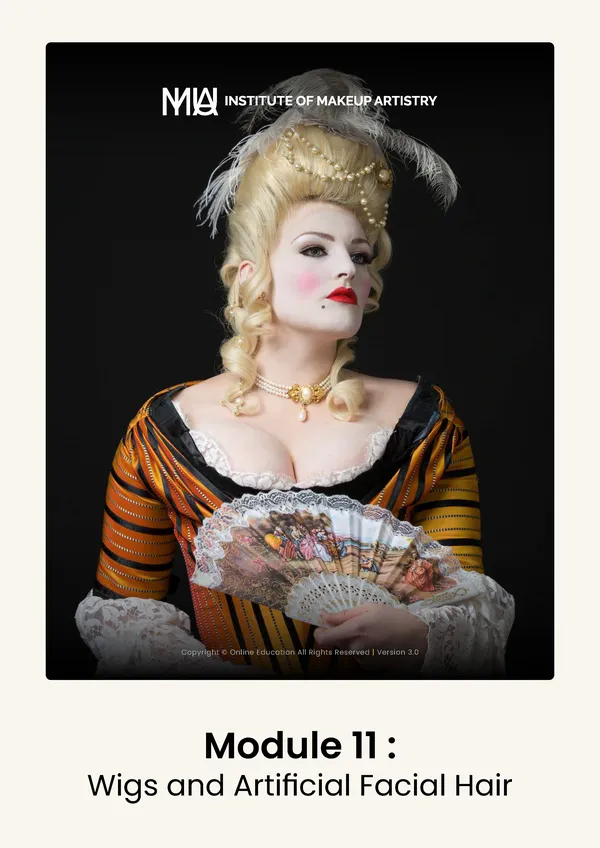 Module 11
Wigs and Artificial Facial Hair
Become acquainted with the basics of artificial hair application, which is a sought-after skill for the professional makeup artist, making you stand out from the crowd!
Module Content:
- Important Information
- Introduction
- Wig Types
- Measuring a Client
- How to Measure a Client for a Handmade Natural Hair Wig
- Preparing a Client
- Preparing a Client for Wig Application
- Wig Preparation and Care
- Care, Cleaning and Storage : Synthetic Wigs
- Care, Cleaning and Storage : Natural Hair Wig
- Wig Application
- Application of a Medium- and High-Grade Wig : Synthetic (Regular Front)
- Application of a Lace Front Wig Synthetic or Natural Hair
- Apply a False Moustache
- Apply a Artificial Hand Knotted Moustache
- Assignment 11
Module 12
 Module 12
Working as a Freelance MUA
The refining touch to your newly acquired skills can be found in this module, which will equip you with the knowledge required to put your skills into professional use!
Module Content:
- Important Information
- Introduction
- Establishing a Successful Makeup Business
- Setting up Your Business
- How to Get Clients
- Tips for Working in Specific Industry Sectors
- Wedding
- Fashion
- Film
- Television
- Theatre
- Working as an MUA Assistant
- Congratulations
- Assignment 12