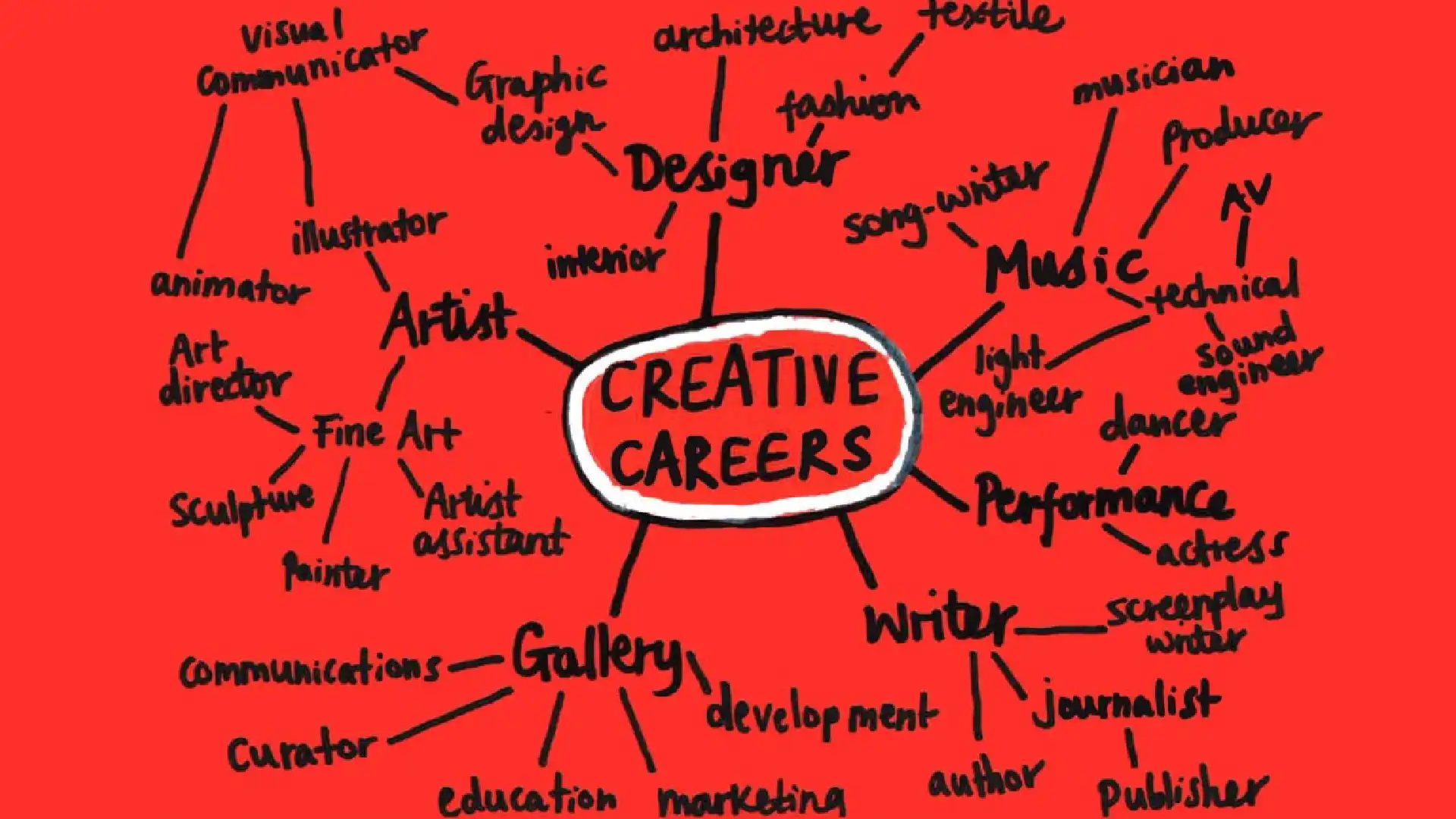
In a world where traditional education often prioritizes marks, memorization, and standardized answers, many students struggle to truly understand who they are and what they are capable of. This is where creative education plays a transformative role. Beyond teaching technical skills, creative education helps individuals build confidence, self-expression, and a strong personal identity, qualities that are essential for both personal growth and professional success.
Creative education is not limited to art or design alone. It includes fields like fashion, media, filmmaking, animation, interior design, music, writing, and digital storytelling, disciplines that encourage originality, exploration, and emotional intelligence.
The Conversation Around Fashion Careers & Why It’s Incomplete
When people talk about creative education today, the conversation usually sounds very familiar. Articles, panels, and brochures repeat the same benefits again and again. creativity helps students think differently, solve problems better, express themselves, and prepare for future careers. These points aren’t wrong. In fact, they’re important. But they barely scratch the surface of what creative education actually does.
The problem is that most discussions focus on visible outcomes. We talk about creative portfolios, innovative ideas, confidence on stage, or unconventional thinking. What we don’t talk about is what’s happening internally, how creative education quietly reshapes a student’s relationship with learning itself. That internal shift is harder to explain, harder to measure, and much harder to market, which is why it often gets ignored.
Another reason the conversation feels incomplete is that creativity is still framed as a skill, not a mindset. It’s treated like something you “add” to education rather than something that fundamentally changes how education works. As a result, creativity is often reduced to activities, a project here, a presentation there, instead of being recognized as a way of thinking that influences every decision a learner makes.
There’s also a strong focus on outcomes that look good on paper. Problem-solving, innovation, and confidence are easy to list, easy to justify, and easy to sell. But the deeper benefit of creative education doesn’t show up immediately. It appears slowly, over time, in how students respond to uncertainty, how they handle failure, and how they approach situations where there is no clear path or predefined answer.
Creative education is more than visible outcomes, it’s about inner transformation.
Learn how Le Mark Institute builds creative mindsets, not just portfolios
Why This Matters More Than Ever (Right Now)
We’re at a turning point in how education connects to real life, and that’s exactly why creative education matters more now than it ever has before. The world students are preparing for today looks nothing like the one traditional education systems were built for. Careers are no longer linear, industries are constantly evolving, and the idea of learning once and applying it forever simply doesn’t work anymore.
In the past, success depended heavily on knowing the right information and following established paths. Today, information is everywhere. What’s scarce, and increasingly valuable, is the ability to interpret, adapt, and apply knowledge in unfamiliar situations. This is where creative education quietly becomes essential. It trains students not just to absorb information, but to engage with it, question it, and reshape it based on context.
Technology has accelerated this shift dramatically. Automation and AI can now handle repetitive tasks, predictable workflows, and rule-based decisions far better than humans can. What they can’t replicate easily is original thinking, emotional intelligence, storytelling, contextual judgment, and the ability to connect ideas across domains. These are not “extra” skills anymore, they are survival skills. Creative education nurtures exactly these abilities by placing students in open-ended situations where thinking matters more than memorization.
There’s also the emotional reality of today’s world to consider. Young people are growing up in an environment filled with constant change, comparison, and uncertainty. Traditional education often responds to this by tightening structure and focusing on outcomes, which can increase fear of failure. Creative education does the opposite. It normalizes experimentation, reframes failure as feedback, and helps students build confidence in their ability to navigate the unknown. That emotional resilience is just as important as intellectual ability.
Experience a learning environment built for the future.
The True Value of Creative Education (Beyond Talent & Art)
Learning How to Learn (Not Just What to Learn)
One of the most powerful outcomes of creative education is that students learn how learning itself works. Instead of relying solely on instructions, notes, or predefined answers, they begin to explore ideas independently. They ask questions, test assumptions, and seek multiple ways to approach the same problem.
Comfort With Uncertainty & Open-Ended Problems
Traditional education often trains students to feel anxious when there isn’t a clear answer. Creative education does the opposite. It places students in situations where ambiguity is part of the process and encourages them to sit with uncertainty rather than rush past it.
Through creative projects, students learn that not knowing immediately isn’t a failure, it’s a starting point. They experiment, refine, discard ideas, and try again. This repeated exposure builds emotional resilience and patience, two qualities that are rarely taught directly but deeply needed in life and work.
Thinking With a Disciplined Mind
Creative education naturally breaks down the artificial boundaries between subjects. Students don’t see learning as separate compartments, theory here, application there, but as an interconnected system.
A creative approach might blend design with psychology, storytelling with marketing, or technology with aesthetics. This mirrors how the real world operates, where problems don’t arrive neatly labeled by subject. Solutions often require drawing from multiple areas at once.
Building Decision-Making Skills
Another overlooked value of creative education is that it forces students to make decisions. What concept should I pursue? Which idea communicates better? What should I change, and what should I keep?
Unlike rote learning, where choices are limited, creative work requires constant judgment. Students learn to evaluate options, justify their decisions, and take responsibility for outcomes. Even when a project doesn’t work as expected, the focus shifts from blame to reflection.
Learning how to think independently is a lifelong advantage.
Explore Le Mark’s student-centric creative education model
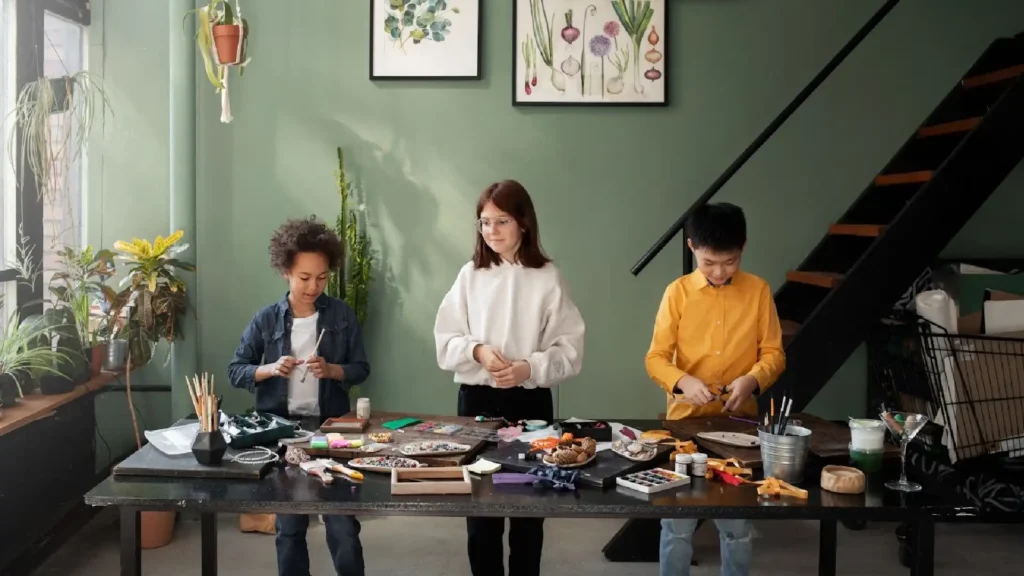
How Creative Education Prepares Students for The Future
Navigating Career Changes Without Fear
Career paths today are rarely straight lines. People switch roles, industries, and even professions multiple times in their lives. Students who come from rigid, instruction-based educations often struggle with this shift because their confidence is tied to familiarity and structure.
Communicating Ideas Clearly and Confidently
Having ideas isn’t enough, being able to explain them matters just as much. Creative education places strong emphasis on articulation, whether through presentations, critiques, storytelling, or visual communication.
Adapting Tools, Technology, & Roles
Creative fields are constantly evolving, and so are the tools used within them. Students exposed to creative education don’t grow attached to a single method or platform. Instead, they learn principles that can be applied across tools and technologies.
This flexibility makes transitions easier. When software updates, processes change, or entirely new technologies emerge, creative learners adapt faster because they understand underlying concepts rather than relying on fixed routines.
Recovering From Failure Without Losing Confidence
Creative work involves rejection, revisions, and ideas that don’t always succeed. Through this process, students learn that failure isn’t a reflection of their worth or intelligence, it’s feedback.
This repeated exposure builds emotional strength. Students learn how to separate their identity from their outcomes, reflect objectively, and improve without self-doubt taking over. This ability to recover and move forward is crucial not just professionally, but personally.
Thinking Independently in Structured Systems
Even within structured environments like organizations, institutions, or industries, independent thinking is essential. Creative education teaches students how to work within constraints without losing originality.
They learn how to respect guidelines while still questioning assumptions, suggesting improvements, and bringing fresh perspectives. This balance between structure and independence allows them to thrive in real-world systems rather than feeling restricted by them.
Explore future-ready creative education in action.
Takeway
Creative education is more than a career choice, it is a journey of self-discovery. By encouraging expression, independence, and resilience, it builds confidence from within and helps individuals form a strong, authentic identity.
In a world that constantly demands creativity, adaptability, and confidence, creative education doesn’t just prepare students for jobs, it prepares them for life.
If you’re someone who loves creating, thinking differently, and expressing ideas, creative education could be the path that helps you find your voice and build your future. Explore courses that don’t just teach skills but help you become who you’re meant to be.
Creative education doesn’t just build careers it builds people.
It helps students find their voice, trust their thinking, and grow with confidence in an uncertain world.
Explore Le Mark Institute and discover an education that goes beyond marks and memorisation.